
Tesla Motors Frustrates Dealers With Factory-Owned Stores
The electric vehicle manufacturer is taking a cue from Apple by selling its cars at stores it owns. But dealer associations aren’t happy with Tesla Motors.
Heads up: this content is over 5 years old, so some information may be out of date.
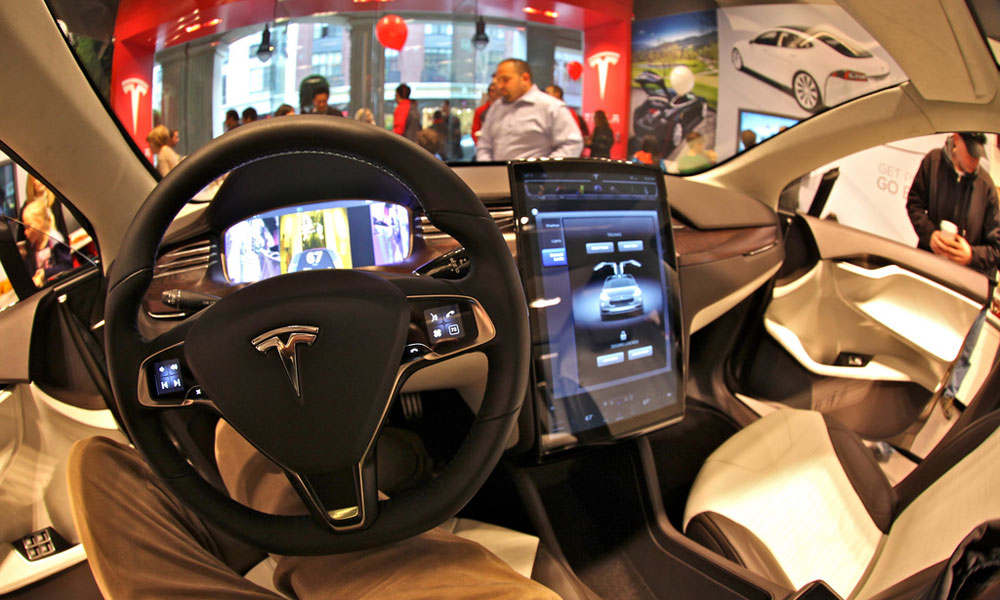
Should a car dealership work like an Apple Store?
According to a number of national and regional dealer associations, they shouldn’t. And that’s a problem for Elon Musk (opens in a new tab)-helmed electric car company Tesla Motors.
The high-profile luxury electric cars firm hired George Blankenship (opens in a new tab), the man who developed the Apple Store concept, as its vice president of sales in 2010. Since it started in 2003, the company has opened up 17 stores, owned by the factory, in 10 states and the District of Columbia. Another six are planned to open this fall.
If we can’t be a dealer in a mall, we won’t do reservations on-site. We tell people where to go on our website to make a reservation.
It’s a nontraditional approach to selling cars — and it’s that approach that makes dealers’ associations bristle.
“If a manufacturer sees that Tesla is successful with this kind of business model,” Massachusetts State Automobile Association Executive Vice President Bob O’Koniewski told CarScoop (opens in a new tab), “who’s to say they don’t break out their own EV product lines and create a separate system that bypasses dealers?”
On top of this, the National Automobile Dealers Association (NADA) argues that Tesla’s model is illegal in many states.
“Tesla may not yet recognize the value of the independent, franchised dealer system, but as its sales increase, NADA is confident it will re-examine its business model,” said NADA’s Bill Underriner in a statement to HybridCars (opens in a new tab).
In fact, Tesla’s Colorado store would be illegal in that state — if it was not grandfathered in. The store opened just before a law took effect blocking factory-run stores in that state, according to Automotive News (opens in a new tab).
For what it’s worth, Tesla Motors’ Blankenship says it works within the confines of the law — to the point where it avoids calling its stores dealerships. “We do what we’re capable of doing, and we do whatever they let us do,” he explains. “It’s unique for each location. If we can’t be a dealer in a mall, we won’t do reservations on-site. We tell people where to go on our website to make a reservation.”
The situation sounds similar to that of Uber, the cab company that has attempted to disrupt the traditional taxi model using technology — and that has run into resistance (opens in a new tab) from local taxi commissions.
If a company decides to veer away from a model favorable to your members’ interests, when is it time to speak out? Post your thoughts in the comments.
(photo by jurvetson/Flickr)

Comments
Comments are for ASAE members. Learn more about comments on this site.
Log in to your member account or join ASAE!