
Article Membership 2 min read
Yep, There’s An Association for Meteorite Collectors
Last week's historic Chelyabinsk meteor explosion has caused a sudden interest in meteorites, but without the help of an association, it's buyer beware.
Heads up: this content is over 5 years old, so some information may be out of date.
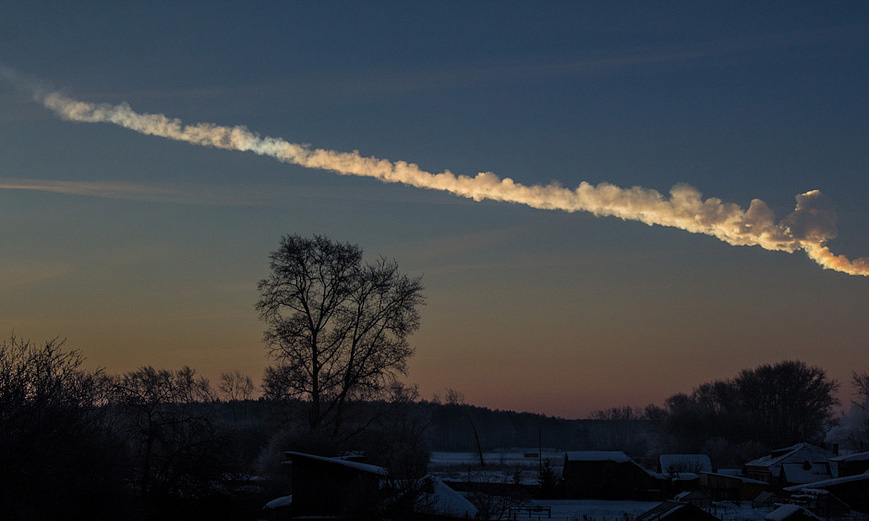
You may have seen the photos and the videos last week, but if you’re looking to take home a piece of the Chelyabinsk meteor, you may want to take a step back from eBay.
With the help of the International Meteorite Collectors Association, which upholds strict standards for finding and researching meteorites, you can ensure that the space rock you’re buying is the real thing.
More details below:
The only way to tell for sure is to look at the specimen under a microscope.
The BreathTaking Incident
Unless you were hiding under a rock—though not this specific one—last week, you know that a large meteor exploded over the Russian city of Chelyabinsk (opens in a new tab) on Friday, injuring more than 1,000 people and causing at least $33 million in damage. The explosion, shown in the clip above, is estimated to be the largest of its kind in a century.
The smoke had barely cleared before memorabilia hounds started hunting the web for pieces of the meteorite, with some going for hundreds or thousands of dollars on sites like eBay or their Russian equivalents.
That cost can be high, said Mark Ford, chairman of the British and Irish Meteorite Society. “Some meteorite falls are just a few kilograms, and they tend to be more valuable,” he told Bloomberg Businessweek (opens in a new tab). In this case, since the rock was so huge (between 7,000 and 10,000 tons, according to one estimate), prices may be lower.
Protection for buyers
As interest in the Chelyabinsk meteor surges, so does the risk that people interested in owning a piece of the space rock will be taken in by dishonest sellers offering fake meteorites online, claiming they’re from last week’s incident. While the Russian government has said it will prosecute people selling fake rocks, consumers may have better luck with the International Meteorite Collectors Association (opens in a new tab), a group whose main goal is “helping meteorite collectors in their search for authentic meteorites for their collections and assisting others in helping to learn more about meteorites.”
The group keeps a list of members verified by the association to be legitimate meteorite sellers, including codes that consumers can use to identify them. Members are required to “adhere to the highest standards of meteorite identification and proper labeling practices.”
“The only way to tell for sure [that a rock is a genuine meteorite] is to look at the specimen under a microscope,” says Dr. Natalie Starkey of Open University, speaking to The Guardian (opens in a new tab). “Some minerals, such as biotite, only form on Earth. A specialist will be able to identify those and then rule out whether it’s a meteorite.”
Ford, who is on the association’s list, warns that location may slow down the wave of meteorite dealers heading to Chelyabinsk since Friday. “This being Russia, it’s a bit more difficult. They have to get visas, and there are some security issues because Chelyabinsk is a nuclear city,” he told Bloomberg Businessweek.
(alexeya/Flickr)

Comments
Comments are for ASAE members. Learn more about comments on this site.
Log in to your member account or join ASAE!