
Article Executive Leadership 3 min read
Executive Coach Steven Snyder on How Struggle Pays Off
Executive coach Steven Snyder's new book highlights the benefits of struggle as a way to help you grow as a leader.
Heads up: this content is over 5 years old, so some information may be out of date.
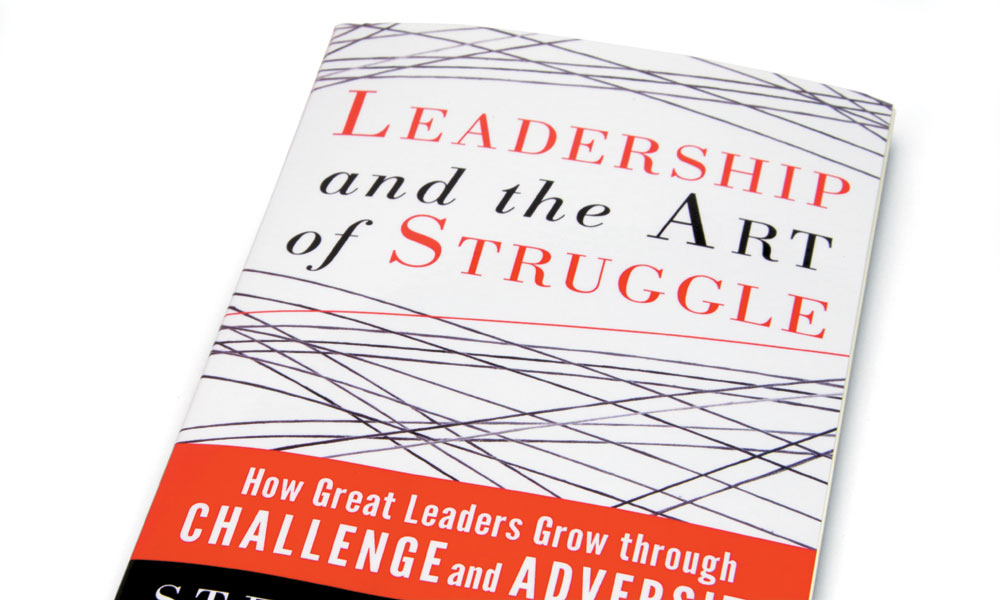
Leadership and the Art of Struggle: How Great Leaders Grow Through Challenge and Adversity
By Steven Snyder; Berrett-Koehler Publishers; 216 pages; $19.95
The challenges leaders face can be learning opportunities in disguise by kristin clarke
leaders often don’t like to acknowledge when they’re struggling, especially when that struggle is internal. But in Leadership and the Art of Struggle: How Great Leaders Grow Through Challenge and Adversity, executive coach Steven Snyder, who spent part of his career working with Bill Gates at Microsoft, says that struggle is a “gateway to learning and growth.”
The 150-plus CEOs he interviewed agree and share their revelations.
“One of the most remarkable findings from my research was how people’s perceptions of struggle evolve,” Snyder writes. “[Leaders] acknowledged that the passage of time had given them a broader perspective.”
Snyder defines three elements to a leadership struggle: change, its resulting tensions, and the off-kilter impacts on the leader from both. What residue remains post-battle is often determined by the leader’s mindset: fixed (a belief that good leadership competencies were naturally imbued in the individual) or growth (a belief the individual developed skills and talents via continuous, purposeful learning).
“Struggle comes from the process of clarifying newly emerging values and identity,” Snyder says. Tracking that metamorphosis takes effort, and he prescribes exercises such as leadership journaling and reflection on behaviors once viewed as assets that may no longer serve well. He also advocates personal vision statements that encapsulate what leaders want to say about their lives when they reach 70.
This book is a thoughtful exploration of the confidence-shaking, solitary struggles of C-suite occupants.
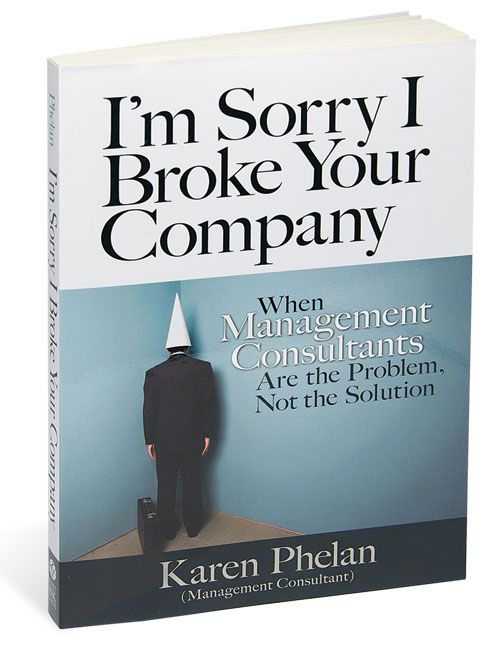
I’m Sorry I Broke Your Company: When Management Consultants Are the Problem, Not the Solution
By Karen Phalen; Berrett-Koehler Publishers; 240 pages; $19.95
i enjoy a crotchety business book that calls out even our favorite best practices in an emperor-with-no-clothes kind of way. I’m Sorry I Broke Your Company does that. Management consultant Karen Phalen identifies fallacies behind revered business management philosophies and strategies urged on organizations by outside experts. It’s a long, jargon-filled list you’ll recognize, but her points are worth considering: “Another misguided management mantra, ‘The numbers don’t lie,’ forgets that people are the ones monitoring, collecting, configuring, and reporting the measures. Measures are not objectives. Measures lie all the time, even financial ones.”
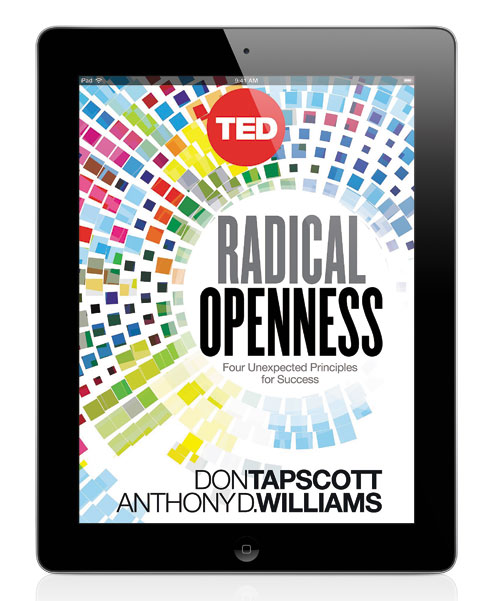
Radical Openness: Four Unexpected Principles for Success
By Don Tapscott and Anthony Williams; TED Books; 80 e-pages; $2.99
you’re missing a fascinating experiment in publishing, idea sharing, and brand building if you have yet to download any of the mini-length-but-mega-idea e-books released biweekly by the young publishing arm of the mighty nonprofit TED. Don Tapscott presented the premise of Radical Openness at the 2012 TED Conference. Anthony Williams sparked widespread debate with his provocative book Wikinomics: How Mass Collaboration Changes Everything. This new book is their mindmeld—a prediction that organizations must transition to collaborative, open technology and a culture of extreme transparency to compete effectively. It’s a must-read before any association debate on the future.

Comments
Comments are for ASAE members. Learn more about comments on this site.
Log in to your member account or join ASAE!