
Article Operations 2 min read
Are Airline Mergers Secretly Good For Consumers?
It's a common belief that major airline mergers end up costing consumers more in the long run, yet a recent PricewaterhouseCoopers report suggests the downside isn’t as bad as advertised.
Heads up: this content is over 5 years old, so some information may be out of date.
It’s a common belief that major airline mergers end up costing consumers more in the long run, yet a recent PricewaterhouseCoopers report suggests the downside isn’t as bad as advertised.
With the airline industry becoming more consolidated by the year, it stands to reason that travelers might be getting the short end of the stick, whether that’s because they pay higher fares or have fewer travel options. At least that’s the view of many consumer groups, which tend to oppose airline mergers.
But according to a new study from PricewaterhouseCoopers (opens in a new tab), such mergers come with side effects that actually benefit consumers. How’s that? A few of the points raised in PwC’s latest Aviation Perspectives report, The Impact of Mega-Mergers, A New Foundation for the US Airline Industry (opens in a new tab) [PDF]:
Low-cost carriers benefit: In recent years, the industry has seen the rise of low-cost carriers, such as Virgin Airways and JetBlue. Their growth—many reported more than $500 million in revenues last year—has tempered fare increases, forcing airlines to turn to secondary fees to make up for lost profits. Low-cost carriers benefit from the mergers because the consolidating airlines are generally required to forfeit some of their gates in large-market airports. Recently American Airlines and US Airways had to agree to give up some of their combined space in Boston and Washington, DC, airports as a condition of merger approval from the Justice Department. On Thursday, JetBlue announced it had been provisionally accepted (opens in a new tab) to take some of the divested spots at Ronald Reagan Washington National Airport. Low-cost carriers also boost competition and services for the industry at large, leading to innovations such as improved in-flight WiFi.
Operations improve: When airlines get larger, they also tend to become more efficient, with better on-time performance, fewer cancellations, and fewer mishandled bags, according to the PwC report. The benefits are more pronounced at larger airports. “Airline mergers have helped the industry achieve greater financial stability, which, in turn, has allowed carriers to make investments in improving their operations,” the study states. “Today, passengers are less likely to be inconvenienced by flights that are delayed or cancelled and are more likely to find their bags when they land.”
Businesses become more sustainable: Major carriers’ mergers also have ensured that airlines can maintain profitability by improving management and better focusing resources. “Largely due to consolidation, the network carriers have been able to exert ‘capacity discipline,’ eliminating redundant or unprofitable routes and rescheduling flights to better align with customer demand,” the report notes. The decline in capacity has another a side effect: It allows the airlines to focus on more-profitable routes and gradually upgrade the service on those flights.
Are you a heavy business traveler? Do the report’s findings match yours? Let us know your take in the comments.
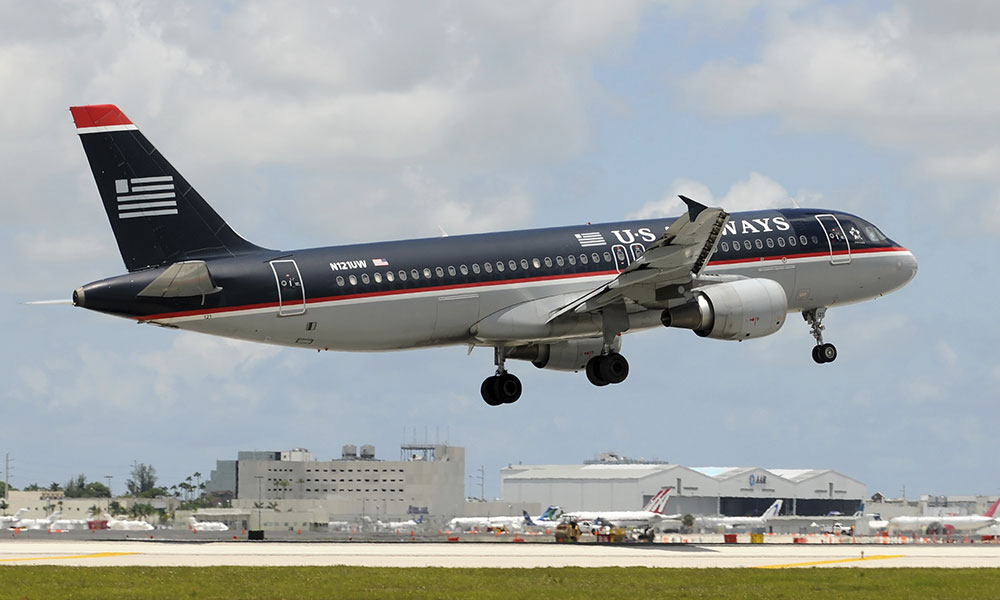
A plane owned by U.S. Airways, which merged with American Airlines last year. (iStock Editorial/Thinkstock)

Comments
Comments are for ASAE members. Learn more about comments on this site.
Log in to your member account or join ASAE!