
Fact-Checkers Work Toward Launching New Association
Attendees of Poynter's Global Fact-Checking Summit in London voted this week to launch a new association, with the goal of helping journalists work together on what can be a challenging line of work.
Heads up: this content is over 5 years old, so some information may be out of date.
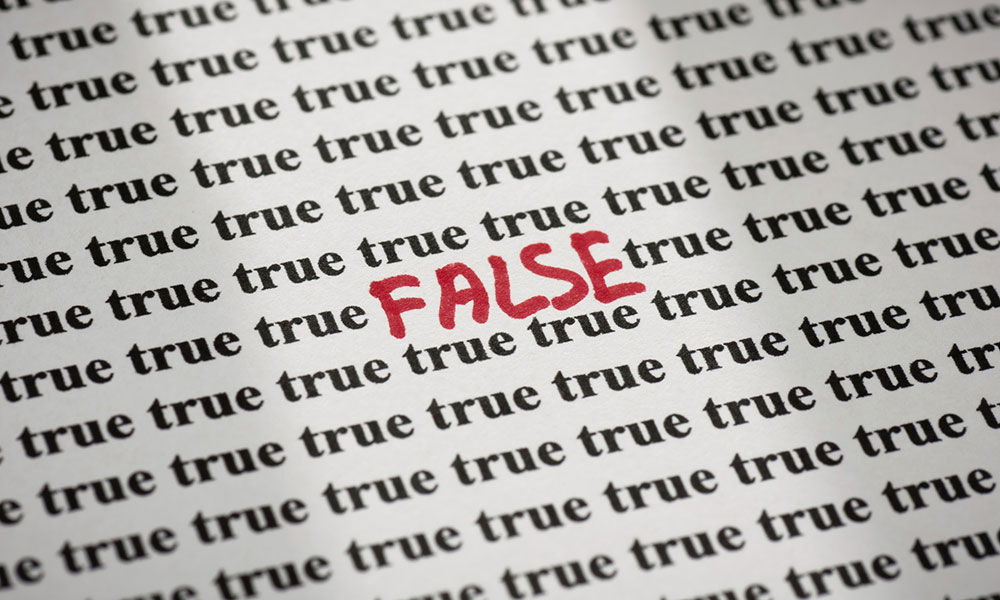
In the age of the internet, accuracy is harder than ever to come by.
So, it only makes sense that the fact-checkers of the world—working against a constant tide of misinformation from politicians, casual Twitter users, and rumor-mongers—would want to unite.
The Poynter Institute, a nonprofit educational organization that focuses on the journalism community, held an event in London this week with the goal of bringing these fact-checkers from around the world under a single roof.
And by the time the Global Fact-Checking Summit ended on Tuesday, the attendees had voted to launch an association of their own.
“The meeting showed there is a passionate community of fact-checkers that is growing around the world,” said Duke University professor Bill Adair, a Poynter faculty member, according to a news article on the organization’s website (opens in a new tab). “The association will keep the fact-checkers in touch with each other and help them learn from each other.”
A Global Movement
Adair knows a thing or two about this need. See, he’s the founder of perhaps the best-known of the world’s fact-checking websites, PolitiFact (opens in a new tab), a site that launched while he was a bureau chief at the then-St. Petersburg Times. (The publication, owned by Poynter, changed its name to the Tampa Bay Times in 2012. We made sure to fact-check that.)
But PolitiFact is far from the only such site out there. The Italian media outlet Pagella Politica (opens in a new tab), the Ukrainian site StopFake.org (opens in a new tab) (which has been working to correct misinformation about the crisis in the region), and the British site Full Fact (opens in a new tab) are only a few examples.
The summit drew dozens of attendees (opens in a new tab) from 21 countries and six continents. That doesn’t mean they agree on everything, however: A hot topic, according to Poynter, was whether rating systems such as PolitiFact’s “Truth-O-Meter (opens in a new tab)” and the Washington Post‘s “Pinocchio Test (opens in a new tab)” benefit readers or the public.
The jury’s still out on that one.
(iStock/Thinkstock)

Comments
Comments are for ASAE members. Learn more about comments on this site.
Log in to your member account or join ASAE!