
Luis Suarez: What to Do When Your Top Performer Is a Bully
When Uruguayan footballer Luis Suarez apparently bit a player at the 2014 FIFA World Cup in Brazil, his country’s football association defended him loudly and cast blame on others. One ethics expert explains why that’s not a model other groups should follow.
Heads up: this content is over 5 years old, so some information may be out of date.
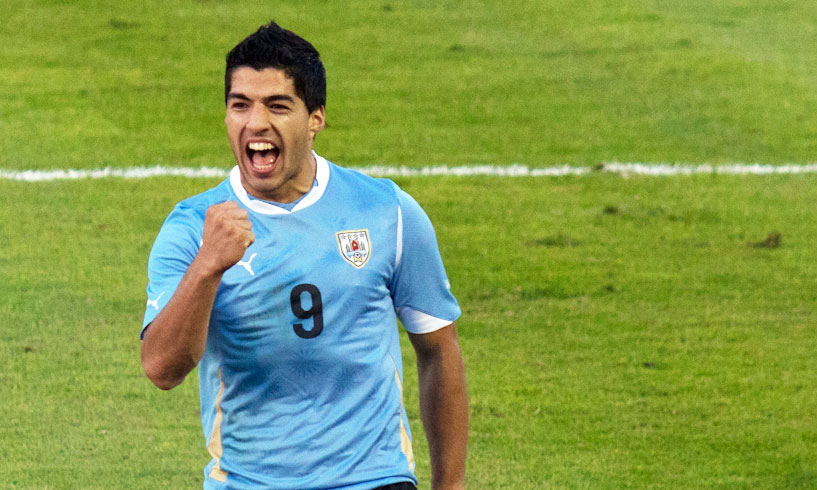
By now you’re probably aware of the bite seen ’round the world—the one where Luis Suárez, a star soccer player for Uruguay, sank his teeth into the shoulder of Italy’s Giorgio Chiellini during their match last week at the 2014 FIFA World Cup in Brazil.
“Organizations have an obligation to step in and, at the very least, talk to the person who is creating the disruption and come up with some way of addressing it.”
It was the third time in the last four years that Suárez had been accused of biting an opponent during a soccer match. FIFA, the sport’s governing body, handed down a hefty punishment (opens in a new tab): a nine international-match suspension and four-month ban from any football-related activity.
Despite the video and photographic evidence against him, the Uruguayan Football Association strongly defended Suárez, calling the evidence “not convincing” and claiming the media had a bias against the player and was conducting a “manhunt.”
“We’ve prepared another video of the game in which we discovered there was other behavior similar to Suárez’s in the game which did not generate a similar reaction from the press,” UFA president Wilmar Valdez told local media in Uruguay (opens in a new tab) during FIFA’s investigation.
The way in which the UFA defended its star player provides a perfect opportunity for organizations to think about how they handle breaches of professional ethics, said Jennifer Druliner, director of governance at the U.S. Green Building Council and the chair of ASAE’s Ethics Committee.
“What this situation reminded me of is [Stanford Professor] Robert Sutton’s book The No Asshole Rule (opens in a new tab), which basically describes how organizations of all kinds tend to hire people who have great contacts, great networks, or are great rainmakers, but sometimes they create a lot of internal strife because they’re either workplace bullies or prima donnas,” Druliner said. “A lot of organizations want to just keep those people because of the great results they produce, but Sutton’s argument is that organizations need to fire them. He goes so far as asking people to take a pledge to not hire them in the first place.”
The UFA might not make a similar pledge, but how the association responded to the biting incident was less than ideal, said Druliner.
“Honestly, they had an opportunity. They didn’t have to throw Suárez under the bus, but they could have said to him, ‘Look, you need to cop to what you’re doing and you need to change your behavior and we’ll support you in doing that,’” she said.
An organization’s public, on-the-record statements about the issue at hand should show a neutral tone, Druliner noted.
“Something along the lines of ‘We’re not going to rush to judgment, and we want to let the process that needs to be carried out be carried out,’” she said. “Comments like that make more sense to me than immediately standing up without having all of the facts and putting yourself in a position where you may have to walk back from a position of support.”
Bottom line: Organizations have an obligation to step in and, at the very least, talk to the person who is creating the disruption and come up with some way of addressing it, Druliner said. Otherwise, “it disincentivizes the type of behavior you might be trying to model elsewhere in the organization, because this person of influence is behaving in a different way and getting away with it.”
Luis Suarez, the Uruguayan football star responsible for “the bite seen ’round the world.” (photo by Jimmy Baikovicius/Flickr)

Comments
Comments are for ASAE members. Learn more about comments on this site.
Log in to your member account or join ASAE!