
Article Fundraising 2 min read
Study: Camp’s Tax Reform Plan Could Cut Charitable Giving
The charitable giving community has already spoken out against the proposed cap on the tax deduction for charitable giving, saying it would result in a decline in donations. A new study shows that the impact could be worse than originally thought.
Heads up: this content is over 5 years old, so some information may be out of date.
The question was posed by Associations Now earlier this year: Would 2014 be the year tax reform arrives?
It seemed on track to be when House Ways and Means Committee Chairman David Camp (R-MI) rolled out his tax reform plan in February, but almost nothing has happened in the months since. Still, that hasn’t kept the topic from staying on the front burner for many, including charitable organizations, which stand to be affected by any form of comprehensive reform.
If passed in its current state, the Camp plan, which would allow deductions to be made for contributions that exceed 2 percent of an individual’s gross income (opens in a new tab)—setting a floor rather than a cap—could result in a $34 billion decline in charitable giving, according to a new study (opens in a new tab) [PDF] released last week by the Tax Policy Center and the Urban Institute on Nonprofits and Philanthropy.
The study looked at four provisions of Camp’s plan that the authors said would collectively take a toll on charitable giving: tax rate structure, standard deduction and other nonitemized deduction provisions, itemized deductions other than charity, and the charitable deduction.
“While the Camp plan alters the charitable deduction in several ways, a large percentage of the overall effect on giving arises from indirect changes to tax laws that greatly reduce the number of taxpayers who itemize and generally lower statutory tax rates,” the study’s authors wrote.
Together, the total impact was estimated to be a reduction of individual giving in the range of 7 to 14 percent. Based on 2013 giving levels–which totaled $240 billion–that would mean a loss of somewhere between $17 and $34 billion.
“The wide range reflects uncertainty in the responsiveness of individuals to the tax incentive provided by the charitable deduction,” the authors said.
Changes to the charitable deduction would have the largest impact on taxpayers in the top-5 percent of income distribution. The study found that there would be a nearly 7 percent drop in charitable giving from individuals in the top-5 and top-1 percent.
Prior to the release of Camp’s plan, a study by the American Enterprise Institute estimated that a cap on charitable donations could result in a loss of $9.4 billion in charitable giving. The “28 percent cap” that the Obama administration had called for in any kind of tax reform plan “could be expected to lower total charitable giving in the short run by 4.35 percent,” Arthur C. Brooks, AEI president and the study’s author, wrote of the cap (opens in a new tab).
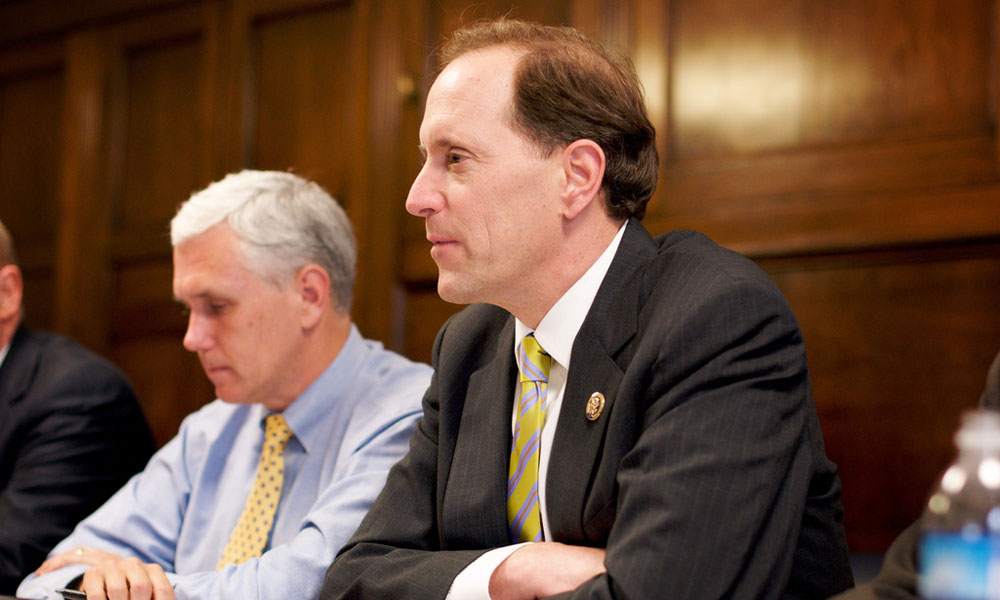
Rep. Dave Camp (R-MI), chairman of the House Ways and Means Committee. (photo via the House GOP’s Flickr page)

Comments
Comments are for ASAE members. Learn more about comments on this site.
Log in to your member account or join ASAE!