
Article Marketing / Communications 2 min read
Wednesday Buzz: Softball, Biotech-Style
How one industry group leveraged softball to boost membership camaraderie—and it worked so well that the league spun off into a nonprofit of its own. Also: Which company makes the most reliable hard drives?
Heads up: this content is over 5 years old, so some information may be out of date.
Want a sign that the Massachusetts biotechnology industry is booming? Look no further than its softball league.
Formed in the late 1980s by the Massachusetts Biotechnology Council, the league slowly grew from a handful of teams to a grand total of 64 this year. The league is such a big deal that it is no longer a part of the trade group but is a nonprofit of its own—the Massachusetts Biotech Softball League (opens in a new tab).
As the industry has evolved, notes The Boston Globe (opens in a new tab), so has the league.
“When the economy tanked and the recession took hold, many teams dropped out of the league,” writes Globe reporter Priyanka Dayal McCluskey. “Others left amid internal challenges, like layoffs and disappointing drug sales. Some later returned as their situations improved.”
The industry as a whole is strong these days, though the league is below its peak of 80-plus teams.
“It’s a fair barometer for what’s happening in the industry,” notes Amgen’s Alex Long, one of the league’s commissioners.
What’s fascinating about the league is that it started as a membership initiative but became something bigger in the long run. Can you see ways to leverage recreational opportunities like this one for your own organization?
Graphic of the Day
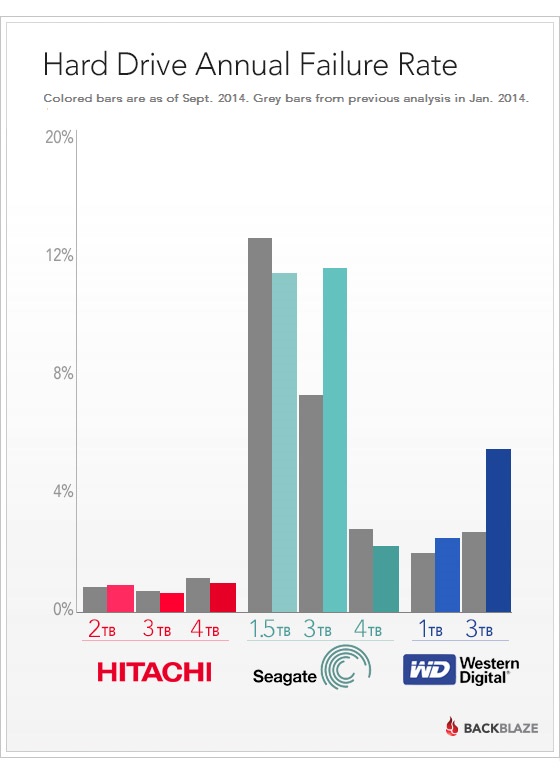
Last year, I wrote a blog post highlighting a fascinating case study from BackBlaze, a cloud storage company that—due to the very nature of its work—has to replace a lot of hard drives. But rather than using enterprise-grade hard drives, as one might expect from a cloud-storage company, it’s continuing to use consumer-grade drives.
In a recent update to a January brand comparison (opens in a new tab), the company has found that Hitachi hard drives have the lowest failure rate (opens in a new tab) among the three brands it uses. Seagate drives do the worst—and their quality appears to be worsening as time goes on. But nonetheless, thanks to their warranties, the consumer-grade drives offer a better cost-benefit ratio.
“Most of the drives we get have a three-year warranty, making failures a nonissue from a cost perspective for that period,” notes BackBlaze’s Brian Beach “However, even if there were no warranty, a 15 percent annual failure rate on the consumer ‘desktop’ drive and a 0 percent failure rate on the ‘enterprise’ drive, the breakeven would be 10 years, which is longer than we expect to even run the drives for.”
If your association’s IT department needs a fresh case study for your server rack, look no further.
Other good reads
Giving Tuesday is just 10 weeks away, notes Network for Good’s Nonprofit Marketing Blog—just enough time to get a campaign moving. The firm’s Jamie McDonald offers some tips (opens in a new tab).
Nearly half of all iDevice owners are now on iOS 8 (opens in a new tab). Not bad, huh?
Speaking of iDevices, if you’re finding the steep space requirements a little too high for yours, check out this deal on free cloud storage from Microsoft (opens in a new tab).
(iStock/Thinkstock)

Comments
Comments are for ASAE members. Learn more about comments on this site.
Log in to your member account or join ASAE!