
Robotic Lawn Mower Draws Astronomy Group’s Ire
In a plot line full of intrigue and some passive-aggressive arguing, the maker of the Roomba finds itself forced to defend its desire to use a restricted wireless range—one that an astronomy group already has dibs on. (And yes, it involves a robotic lawn mower.)
Heads up: this content is over 5 years old, so some information may be out of date.
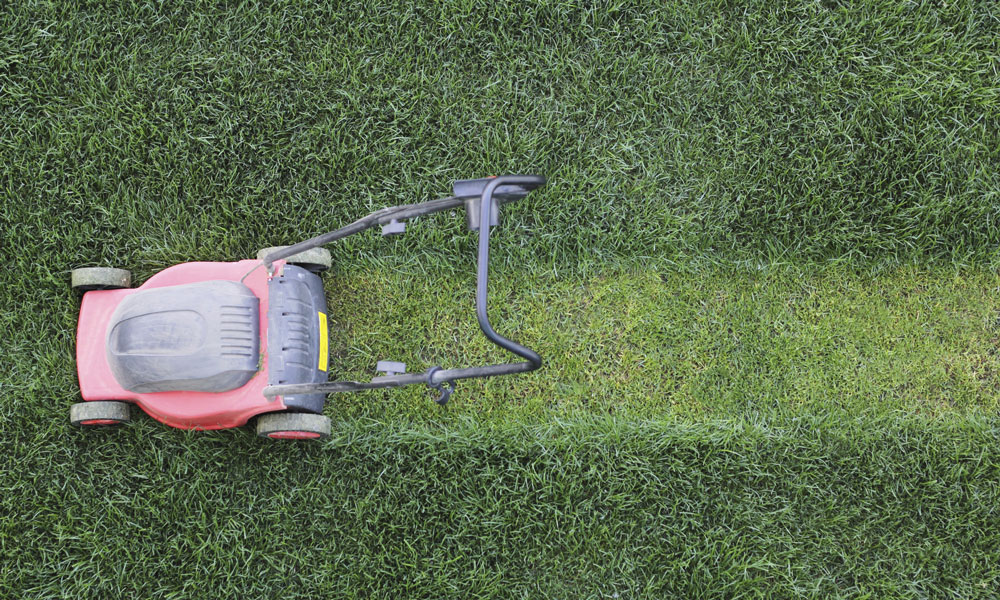
Satellites and robots are locked in a fight over the wireless airwaves—and knowledge about the future of the universe is at stake. It has all the makings of a great science fiction film, but the truth is a bit more mundane than that.
Not that it still isn’t interesting.
The tech company iRobot, the makers of the popular Roomba vacuum, has raised the ire of the National Radio Astronomy Observatory (NRAO) (opens in a new tab), a federally funded group of scientists, over a waiver the company requested for a robotic lawn mower. The mower would be operated using a series of beacons in a wireless range between 6240 and 6740 MHz. That range currently isn’t permitted for fixed outdoor structures.
This is where the turf battle comes in. Astronomers use a portion of that wireless range to spot methanol in space as a signifier of a star being born. NRAO says allowing the same range to be used to guide robotic lawn mowers could disrupt the collection of important data about the universe. But iRobot says there’s little chance of interference.
In competing filings to the Federal Communications Commission, the parties haven’t been above taking sarcastic jabs at one another.
“iRobot cited multiple statistics of grim accidents and spilt gasoline to assert the public benefit of approving its wireless robotic lawn mowers,” NRAO said in a response to iRobot’s initial filing (opens in a new tab) [PDF]. “However, there is already a competitive market for robotic lawn mowers using wire loops, which has somehow failed to stanch the stream of ghastly accidents and spilt gasoline that iRobot associates with the mundane practice of lawn-mowing.”
NRAO’s Harvey S. Liszt added that the FCC “should weigh the unproven need for another kind of robot lawn mower against the implications of waiving the rules.”
Mowing for Dollars
For its part, iRobot has been willing to make some compromises to get its lawn mower into stores—including adding a clause that the device is only allowed in residential areas.
If the mower passes FCC scrutiny, it won’t be the only such device out there. As Xconomy notes (opens in a new tab), iRobot’s robotic mower would compete directly with others that lack wireless technology the company hopes to use. A Bloomberg report notes that 47,000 such devices were sold worldwide in 2014 (opens in a new tab).
The Bloomberg report adds that fights over airwave spectrum have become more common, especially as such spectrums have grown in value. Last year, an auction for mid-range frequency spectrum drew nearly $30 billion in bids (opens in a new tab).
(iStock/Thinkstock)

Comments
Comments are for ASAE members. Learn more about comments on this site.
Log in to your member account or join ASAE!