
How Much Code Should You Know?
A common new kind of New Year's resolution—competing with old standbys like losing weight and quitting smoking—has been a pledge to learn a programming language. It sounds like a good idea, but perhaps the real goal for non-technical employees should simply be a pledge to become a little more tech-literate in 2016.
Heads up: this content is over 5 years old, so some information may be out of date.
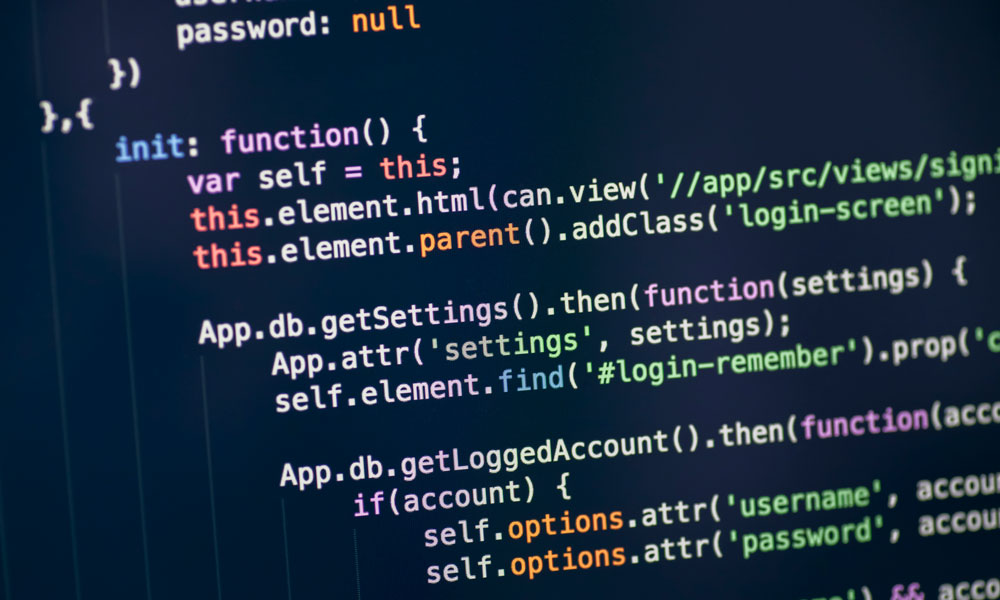
I love lots of stuff about technology and what it can offer to my life, but I have to admit that one of the things I struggle with to this day is learning the logic around coding.
It has been a pretty common New Year’s resolution (opens in a new tab) in the past four or five years (opens in a new tab), partly because careers across the spectrum suddenly require more technology know-how. (Think about it: How much more often do you talk about technology on a daily basis, compared to a decade ago?)
With my design background, I have some skills that translate effectively to online environments. I learned HTML and CSS in my own free time, and I can generally keep up with technical discussions about programming and other technical topics. And being an early adopter, I’m generally cognizant of both the tools and the basic ideas out there. I know how to jailbreak my iPhone, I can launch and maintain a server on my own, and I’ve even been known to use the command line!
But sometimes I feel like more traditional programming skills have fallen out of my wheelhouse completely. I would love, for example, to better understand how to use Javascript to build things effectively. But beyond a couple of tiny coding projects as part of bigger web design projects—HTML and CSS are scripting, not coding, in my book, as they don’t require logic-based programming skills—I’m not nearly as familiar with the ins and outs of computer code as I wish I were.
I’m definitely not the only person in this situation, nor do I think this problem will go away. The question, as technology becomes more of a defining factor in everything we do, is this: For people who don’t have to write code as part of their jobs, how much does it matter that they’re familiar with coding?
Learn to Code? We Barely Even Know How to Search
The answer is complicated, though in some ways the fact that this is a question at all represents progress in the world of technology, because the divide in the past has been vast. As an example, a 2011 story in The Atlantic reported on research (opens in a new tab) done by Google that found roughly 90 percent of internet users didn’t know how to use CTRL-F, a common command that allows users to easily search through text in a document.
The finding was so surprising among a certain set of internet users that the Mozilla Foundation released (opens in a new tab) its own research on the matter. It found that 81 percent of Firefox users never used the command themselves, despite the fact that its audience sample was likely more tech-savvy than the average computer user.
If nine in 10 people—or even, to be charitable, eight in 10 people—don’t know how to use a command that’s been hard-wired in operating systems for generations (one that, by the way, is pretty much essential to know if you’d like to to flutter through a page of code), how can we expect them to know how to code?
The answer, of course, is that we can’t. But we can definitely work harder on the computer literacy front here.
The Pros and Cons
Now, the option of learning how to program is definitely available to everyone, and there are differing schools of thought on the issue. President Obama, for one, is firmly in the learn-to-code camp:
And so is former New York City Mayor Michael Bloomberg, who famously claimed in 2012 that he was learning to code as part of a New Year’s resolution.
https://twitter.com/MikeBloomberg/status/154999795159805952
(No word on how that went.)
And there are advocates for learning programming out there who say it offers huge advantages to those who take the time to pick up the skill.
“Coding is increasingly more approachable for new learners, thanks to the huge number of online and offline resources, and it’s a skill that, once learned, can empower you with the ability to create and solve problems to an extent that few other skills can,” Khan Academy’s Pamela Fox, who helps devise the education nonprofit’s coding curriculum, told Business Insider (opens in a new tab).
But, at the same time the pro-coding argument has started to gain attention, there has been backlash against the idea that average people need to embrace programming. Jeff Atwood, the co-founder of the programming discussion platform Stack Exchange, suggests the idea of learning how to code has been blown out of proportion over the years, and gets in the way of tangible lessons that might be better to focus on.
“Look, I love programming. I also believe programming is important … in the right context, for some people. But so are a lot of skills,” Atwood wrote in a 2012 rebuke of Michael Bloomberg (opens in a new tab). “I would no more urge everyone to learn programming than I would urge everyone to learn plumbing. That’d be ridiculous, right?”
Combine this thought process with the insight of famous George Mason University economist, author, and blogger Tyler Cowen (opens in a new tab), and suddenly it feels like the anti-coding pitch has some meat on those bones.
“There is often this naive reaction a lot of people have,” Cowen said in an interview with 99U (opens in a new tab) a couple of years ago. “They say, ‘Now I need to take X number of years off, learn all the skills of computer programming and become a programmer.’ Very often that’s a bad way to go. It’s people who integrate technical skills with knowledge of a concrete area and who understand marketing, presentation, and persuasion.”
Why It’s OK Not to Speak in Code
Cowen’s a smart guy and his points stick perhaps a little better than Atwood’s do, because they’re a lot closer to reality for a number of folks in the association space.
Association executives are the masters of the jack-of-all-trades philosophy. They understand the realities driving the business as well as the thought processes that make those actions happen. And, in some ways, programming would be another thing to juggle on top of all these other bits of knowledge.
Ultimately, I think this question comes up because we want to understand our own limitations and plow through them. We think that the next time we talk with the IT guy, we can discuss some of the things he’s talking about and not get totally lost. And perhaps, we figure, by understanding what goes into programming, we might be able to think more creatively about the problems we’re looking to solve.
But those problems are generally business problems, not technical ones, and not having a hang on the tech end of things doesn’t make you a bad person; it just means you have other things in your life to worry about. Don’t fret if you don’t know—instead, be smart enough to hire or associate with someone who does.
If you’re not looking to learn a new language, focus instead on your computer literacy skills—learn CTRL-F, along with every other command on the keyboard. Dive deeper into social media and get a handle on the world of online tools. And think about how these skills could slowly but surely apply to what you’re doing on the job.
I think this year I may personally spend some time trying to dig into the coding—because I really do want to be better at it, and I think that it’ll make me better at what I do—but I don’t think it’s something that everyone must jump into because President Obama or any other smart person said so.
Treat it like playing a guitar: Not everyone knows how to play a barre chord, but those who do know the lingo and can gain some benefits from that.
(iStock/Thinkstock)

Comments
Comments are for ASAE members. Learn more about comments on this site.
Log in to your member account or join ASAE!