
Article Membership 2 min read
Supreme Court to Hear Membership-Related Antitrust Case
The Supreme Court announced last week that it will hear a case looking at whether association members participating in shaping the organization’s rules and governance structure can be seen as engaging in a conspiracy.
Heads up: this content is over 5 years old, so some information may be out of date.
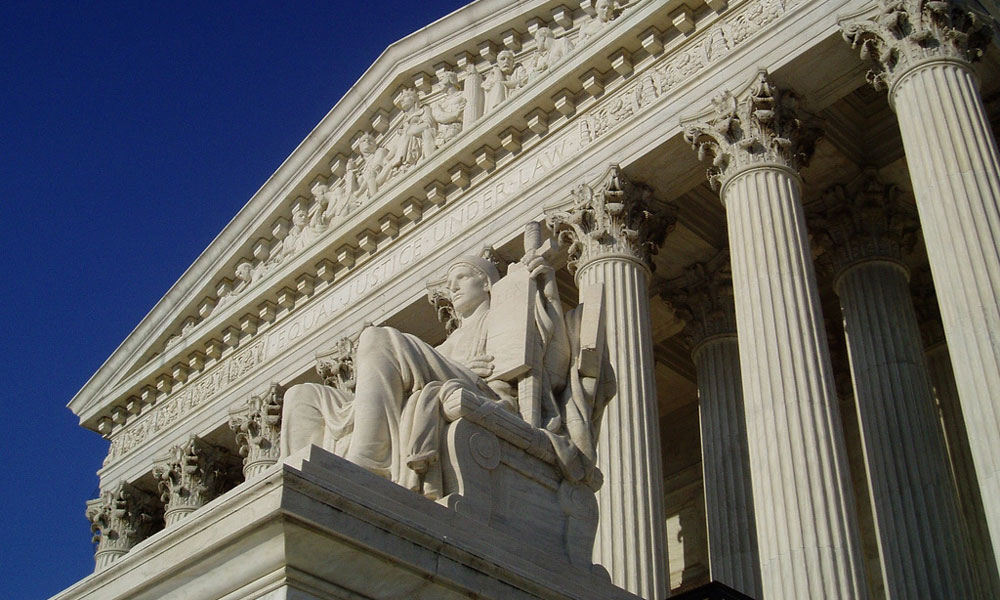
The Supreme Court agreed last week to hear an antitrust class action dispute (opens in a new tab)—in which ASAE filed an amicus brief earlier this year—over whether membership and governance rights in a trade association are enough to constitute a conspiracy in the event of anticompetitive behavior.
The lawsuit was initially filed in 2011 by several independent or nonbank operators of automated teller machines (ATMs) who alleged that the agreement that allows them access to the Visa and MasterCard networks is anticompetitive, based on rules established by banking industry associations.
Though the case, Osborn v. Visa, Inc., was dismissed by the U.S. District Court for the District of Columbia, the DC Circuit Court of Appeals reversed (opens in a new tab) the decision last August, ruling that Visa and MasterCard “member banks used the bank associations to adopt and enforce a supracompetitive pricing regime for ATM access fees.”
In essence, the plaintiffs argued that members of the banking associations voted for particular board members who then created ATM access fee rules with the purpose of protecting themselves and Visa and Mastercard from competition from alternate ATM networks. This allegedly made the associations complicit in a conspiracy.
ASAE’s interest in the case concerns the legal rules governing associations and their members. ASAE said in its amicus brief (opens in a new tab) that the appeals court decision “dials back critical limits on the pleading requirements for a Sherman Act conspiracy and puts a target on the backs of associations of all kinds, as well as their members.”
ASAE argues that the consequence of the court of appeals decision is that member banks—or members of any association, by extension—could be found to be engaged in unlawful concerted action based on conduct that is simply part of being an association member, such as abiding by its rules or voting for its board members.
“The notion that these organizations and their members can be blamed for acting like associations without any indication of complicit design, imperils the good that associations do and risks chilling the societal benefits that come with them,” the brief argued.
The Supreme Court, which is currently shorthanded due to Justice Antonin Scalia’s death in February, will hear the case sometime after its summer recess and before the end of the calendar year.
(Matt Wade/Flickr)

Comments
Comments are for ASAE members. Learn more about comments on this site.
Log in to your member account or join ASAE!