
Article Organizational Strategy 7 min read
Resolutions From the C-Suite
Heads up: this content is over 5 years old, so some information may be out of date.

Association C-suite executives sit in the driver’s seat, so it’s up to them—with the board’s assistance—to set the organization’s direction and decide where to go next. As 2017 approaches, they have a lot of options to consider as they choose their destinations for the new year and determine what routes to take, how to get past roadblocks, and ultimately how to keep the association moving forward.
What does that look like in the real world? Associations Now talked with a few execs about their goals for the coming year and the kind of work they’ll need to do to get there.
Michelle Mills Clement, CAE
President and CEO, Commercial Brokers Association
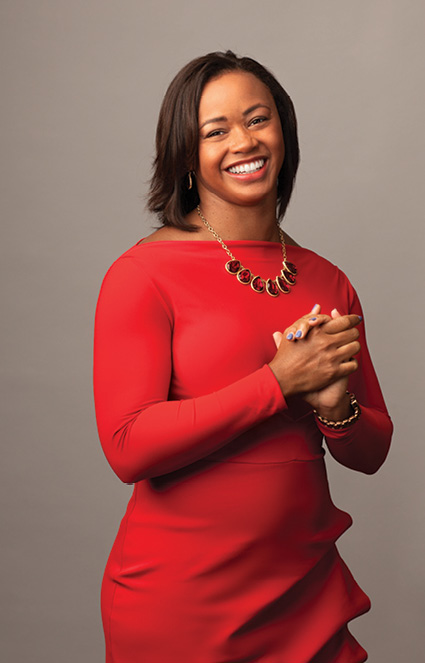
Top resolution for 2017: Define the association’s culture
Why? CBA has 20 staff, some of whom are relatively new, and it may be growing. “We realized we don’t have a clearly defined culture,” Mills Clement says. “We need to make sure everyone’s on the same page.”
One of the questions she wants to explore: Does CBA have a truly collaborative work environment? Mills Clement says she wants to “build the team to be confident enough to be collaborative—and comfortable expressing opinions.” Now, part of the problem is that staff might be unaware of how everyone else works, so work expectations might differ widely. “We need to find out, first, how does everyone perceive the work culture? And then have a dialogue around that,” she says.
Whose help do you need? With only 20 people on staff, everyone will have a say. Mills Clement worried that limiting the discussion to the executive team would create the impression that culture was being dictated from the top down. To succeed, the effort will need to involve the whole team, she says.
How will you get started? The staff has begun discussing people’s perceptions, and in 2017, they will look more closely and “get everything on the table, almost like a vent session,” Mills Clement says. Then they will flesh out a definition of the culture and begin to implement policies and procedures aligned with it that “really weave into every aspect of our work,” including the strategic plan.
Ed Dellert
Chief Learning Officer, American Society for Gastrointestinal Endoscopy
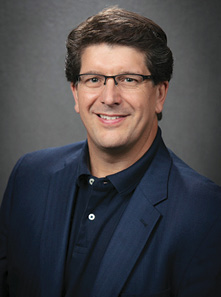
Top resolution for 2017: Revamp ASGE’s learning management system as part of a broader technology infrastructure assessment
Why? “The technology environment for our members continues to evolve,” Dellert says, “and we’ve reached a saturation level of attendance at some of our face-to-face ‘live’ courses.” ASGE’s technology infrastructure could better meet its members’ needs through alternative and supplemental online education, including customizing its offerings to members, he says. Those improvements could boost revenue, especially for some products that use video content heavily.
Whose help do you need? The infrastructure improvements will require all departments’ collaboration. For the learning management system, the education and IT teams will be the key drivers.
How will you get started? Phase I of the technology infrastructure assessment was redesigning the society’s website, a project that is under way now. For the learning management system, the next steps are drilling down to determine what ASGE needs from its system and selecting a partner through an RFP, which Dellert expects to happen around the end of the second quarter in 2017.
Christina Wurster
Chief Revenue Officer, Heart Rhythm Society

Top resolution for 2017: Increase member engagement, including developing online communities for members and using their expertise to build the organization’s education and training resources
Why? “We have an extremely passionate membership,” Wurster says. “We have more people interested in volunteering than we have opportunities, and we want to build more opportunities for them to engage.”
Getting people involved early in their careers and keeping them engaged is important for the organization’s long-term health, she says. “You want to take advantage of that energy.” To do this, HRS will put members’ expertise to use in developing content for the organization’s online learning center and will give them robust online communities where they can exchange ideas.
Whose help do you need? The organization’s strategic advisory group, including Wurster, is leading the effort, and the director of membership and vice president of marketing and communications will have direct oversight. Member input will be important, too.
How will you get started? HRS has an existing platform for online communities but is looking for partners to help make it more robust. The communities are private social networks that allow members to post and comment, and members can join existing communities or start their own based on areas of interest, certain disciplines, specific disease states, and geographical areas.
“They have been organically growing,” Wurster says, and improving them will better facilitate member engagement. Enlisting members to develop educational content in the coming months might take the shape of creating an online webinar or a pocket guide resource, for example.
Christine Clements
Chief Diversity and Inclusion Advocate, AACSB International
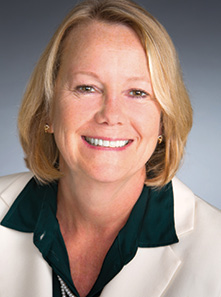
Top resolution for 2017: Refine membership segments
Why? AACSB International—The Association to Advance Collegiate Schools of Business serves different membership segments, and Clements aims to make sure the organization is responding to what those groups need. She wants to “really listen to members talk about their needs and wants.” Members value the network the association provides, she says, but “we felt like we had gaps in the network that kept the community from being optimal.”
Members should be able to “leverage the network to strengthen the impact of the work they’re doing.”
The full value of the association can be realized only when all member segments are engaged, Clements says. Enhancing the network’s value includes an emphasis on diversity and inclusion—an example is AACSB’s work to increase the number of diverse faculty in business schools.
Clements says the association also needs to assess whether current resources, products, and services fully meet members’ needs.
Whose help do you need? Everyone, including staff and members.
How will you get started? “We have identified a framework for the membership segments,” Clements says. In 2017, AACSB will continue to refine the segments and seek member input to understand the value proposition for each one. “We are developing a map of our network, identifying distinct member groups and what they’re really looking for,” she says. For example, “as a global organization, how do products and services translate into different regional contexts?”
Resolve, Then Achieve
It’s easy to bite off more than you can chew when making resolutions. To keep goals realistic, Robert Nelson, CAE, founder and president of Nelson Strategic Consulting, recommends making an objective assessment of what you need to do to achieve the goal.
Early on, “map out the process you’ll have to pass through, and give some thought to who needs to be involved, such as the board and staff,” he says. Doing so can provide a reality check.
“In associations, two things always occur: The year goes by very quickly, and the system moves slowly,” Nelson says. Setting clear monthly or quarterly objectives or milestones can help keep you on track.
A few additional tips:
Make sure the goal makes sense. “It’s critical that the goal is aligned with the association’s strategic goals,” Nelson says. He recommends engaging staff in vigorous debate about the goal. If everyone puts their input on the table, you’ll increase buy-in and better define the goal. Have qualitative and quantitative research that supports your goal, and be sure to consider the opportunity costs. If a project will take 200 staff hours and cost $50,000, for example, what else does it prevent you from doing?
Size up the barriers. People often overlook this step. “Identify the barriers—the restraining forces—and then identify tactics that will weaken or mitigate these barriers,” Nelson says. At the same time, look at how “current environmental forces are pushing toward that goal, and consider how to strengthen or exploit these driving forces.”
Sharpen your message and identify champions. “It’s important to develop messaging that allows you to articulate the goal in a clear and crisp manner”—an elevator pitch of sorts, Nelson says. As soon as you are able to articulate the goal, find champions who will help you get other people on board.—A.T.B.

Comments
Comments are for ASAE members. Learn more about comments on this site.
Log in to your member account or join ASAE!