
New Illinois Domestic Violence Law Leans On Hairstylists’ Unique Role
Taking effect next year, an Illinois law mandates that hairstylists receive education on how to handle instances of suspected domestic violence. The initiative, backed by cosmetology groups, expands ongoing industry efforts.
Heads up: this content is over 5 years old, so some information may be out of date.
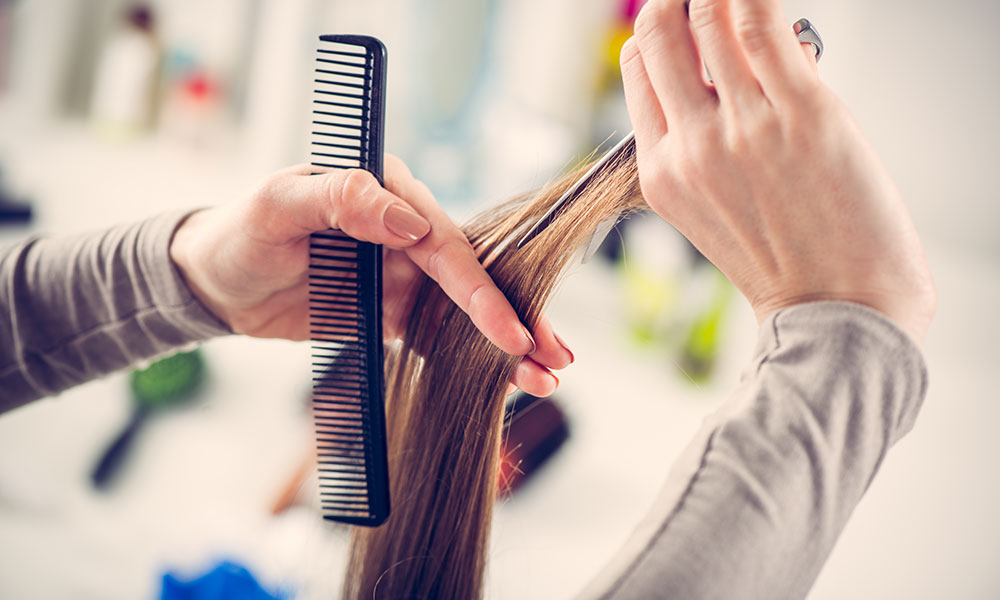
You can learn a lot about people from cutting their hair.
But that cuts both ways: It creates intimate relationships and even friendships, but it can also put a hairstylist in a position where he or she can spot some major red flags that aren’t obvious to anyone else.
Now, a new state law in Illinois could help hairstylists act on signs that something might be seriously wrong. The law, signed in August by Illinois Gov. Bruce Rauner, provides funding for education efforts (opens in a new tab) that will help hairdressers spot signs of domestic violence or sexual assault among their customers. It’s the first program of its kind nationally, and it will take effect on January 1.
The idea behind the law, notes Vickie Smith of the Illinois Coalition Against Domestic Violence, is not to require hairstylists to report incidents they spot, but to encourage them to offer resources to their customers.
“We don’t want to put people in a place where they feel like they have to respond or help beyond knowing where to refer,” Smith told The Huffington Post (opens in a new tab).
The law was passed with assistance from Cosmetologists Chicago, which helped forge the language of the bill. In comments to The New York Times (opens in a new tab), Spokeswoman Vi Nelson said the group acted on the issue out of concern for both the salons and the employees who work there.
“We were concerned not only for the safety of domestic violence and sexual assault victims, but also for [hairstylists and salons] to be safe,” Nelson told the Times.
As the Herald-Whig notes, the law expands on an existing program run by the Professional Beauty Association called Cut It Out (opens in a new tab).
“The salon is a safe place to go. People tell their stylists things they don’t even tell their family or friends,” PBA Director of Charitable Programs Rachel Molepske told the newspaper (opens in a new tab). “We have gotten testimonials from people that said this program saved them. I’m glad more will be trained to spot the signs and symptoms of domestic violence and to respond appropriately.”
In her comments to HuffPost, Smith added that this strategy works because it boosts awareness around what can be a difficult issue.
“The more the public recognizes what domestic violence and sexual assault looks like, the more we are all likely to be able to say, ‘This is not your fault, there is help you can get, you don’t have to live like this,” she added. “It’s a form of prevention.”
(iStock/Thinkstock)

Comments
Comments are for ASAE members. Learn more about comments on this site.
Log in to your member account or join ASAE!