
University Group Shows Off Schools’ Renewable Energy Work
Renewable energy is becoming increasingly more sophisticated, says the Association of American Universities, which is highlighting some of those success stories with its new website.
Heads up: this content is over 5 years old, so some information may be out of date.
With climate and energy science becoming an increasingly fraught part of the political landscape (opens in a new tab), the move by the Association of American Universities to highlight the energy research happening at its member schools is certainly timely.
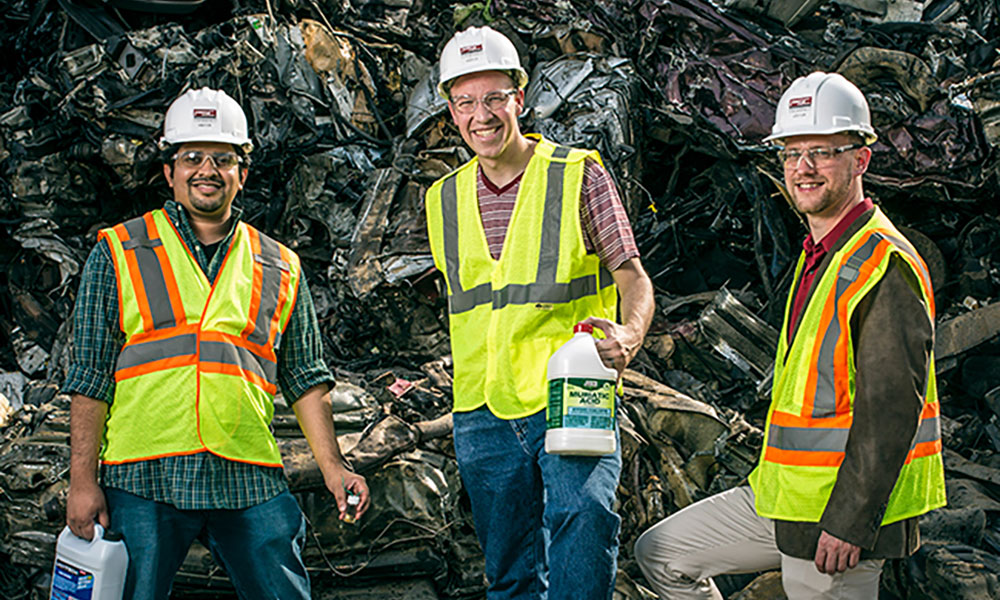
But even if politics or time weren’t a factor, AAU’s Research to Secure Our Energy Future (opens in a new tab) microsite would still be an important and fascinating read, highlighting work from around the academic world—including Vanderbilt’s creation of batteries (opens in a new tab) from junkyard scraps and Michigan State’s efforts at producing energy for smartphones simply through normal human motion (opens in a new tab).
(AAU’s microsite is the fourth one it’s done about technical innovation—it also has sites about protecting fresh water (opens in a new tab), securing the online world (opens in a new tab), and researching the brain (opens in a new tab).)
The association’s president, Mary Sue Coleman, says these energy initiatives (which also include MIT’s creation of renewable diesel fuel based on yeast (opens in a new tab)) highlight the ways the academic space could make things better for the world as a whole.
“AAU universities are at the frontier of discovery and invention as we seek ways to make energy resources cleaner, cheaper, and abundant,” Coleman said in a news release (opens in a new tab). “We want policymakers and the public to understand the extraordinary value of the work carried out at research universities to address our nation’s most serious problems.”
It’s a situation such that when Cornell Earth and Atmospheric Sciences Professor Charles H. Greene says “we may have stumbled onto the next green revolution,” the odds are good he’s not just talking about his own university’s algae-based biofuel endeavor (opens in a new tab), but the way the academic world as a whole is making our energy more eco-friendly and useful.
The lesson here: Sometimes the initiatives speak for themselves.
Vanderbilt researchers shown at a junkyard. The researchers have created a way of building batteries from wasted metal scraps. (handout photo)

Comments
Comments are for ASAE members. Learn more about comments on this site.
Log in to your member account or join ASAE!