
Dark Mode: Why This Association Wants Less Light Pollution
The International Dark-Sky Association says that there are a lot of reasons that a sky unaffected by light pollution is way better than one that isn’t. The group is putting much of its energy into the state of Idaho at the moment.
Heads up: this content is over 5 years old, so some information may be out of date.
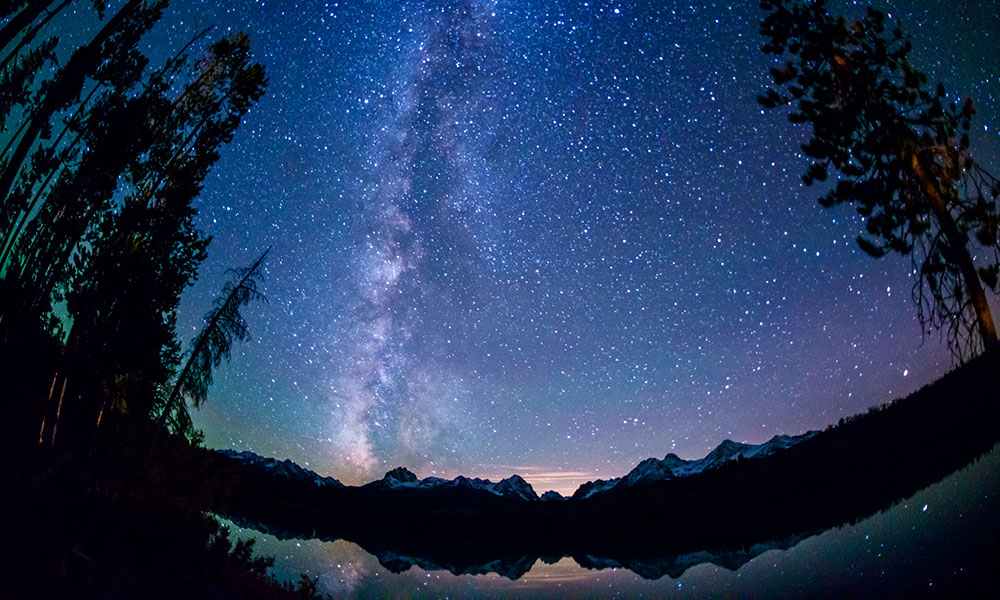
If you want to see an unadorned sky in all its beauty, don’t just look at the background on your smartphone—head to Ketchum, Idaho, and see the real thing.
It’s the newest of just 16 cities globally that the International Dark-Sky Association (opens in a new tab) (IDA) has designated as an International Dark Sky Community.
The designation means that, thanks to the lack of light pollution from nearby cities, you can see the stars in the sky as they’re intended.
“We are so pleased with today’s designation of Ketchum as Idaho’s first Dark Sky Community,” IDA Executive Director J. Scott Feierabend said in a news release (opens in a new tab). “Not only is Ketchum’s achievement a first for the Gem State, but it represents important first steps toward the active conservation of dark skies over one of the last remaining large regions of a natural nighttime darkness in the continental United States.”
The group, formed in 1988, has put its energy toward protecting the night skies and the environment from the harmful effects of human-made lighting.
(The environment? Yep. IDA says that light pollution has a negative effect on wildlife and ecosystems, by negatively affecting natural cycles (opens in a new tab).)
The group has put much of its attention on Idaho in recent months, and is angling to build a reserve in the state that highlights the natural beauty of a sky unaffected by high amounts of pollution. Ketchum, which spent years working toward its designation, would be included as part of that reserve area.
The initiative has come in no small part to IDA’s collaboration with the Idaho Conservation League, which has worked with the association for two years on putting forward the Dark Sky Reserve lands proposal.
“When we lose the night sky, we lose a piece of ourselves,” the league’s Dani Mazzotta told The Washington Post (opens in a new tab). “Being able to look into the cosmos, look past the earth, look into the heavens, that is a really strong, profound experience.”
It’s the difference between a murky sky where you can only make out a few of the stars and one where the celestial beauty is apparent. And for Ketchum in particular, it means potential interest as a tourism hot spot—extending its stargazing popularity during the recent solar eclipse, notes Skift (opens in a new tab).
“This is terrific news for the city, its residents, and visitors who enjoy and value the unique view we have to the stars, planets, and deep space,” Ketchum Mayor Nina Jonas said in the news release. “This is also a testament to the work of so many who have devoted time and energy to reducing light pollution across our city and neighborhoods so that we can enjoy the truly terrific views we have of the night sky.”
The scene from Little Sawtooth Lake, located an hour north of Ketchum, Idaho. (vkbhat/iStock/Getty Images Plus)

Comments
Comments are for ASAE members. Learn more about comments on this site.
Log in to your member account or join ASAE!