
Science, Medical Groups Criticize “Banned Words” in Federal Budget Documents
While government officials downplayed the impact of a list of banned words received by the Centers for Disease Control and Prevention and other agencies, groups in the science and medical industries used the incident to underline the value of “science-based” and “evidence-based” decision making—as those two phrases were part of the ban.
Heads up: this content is over 5 years old, so some information may be out of date.
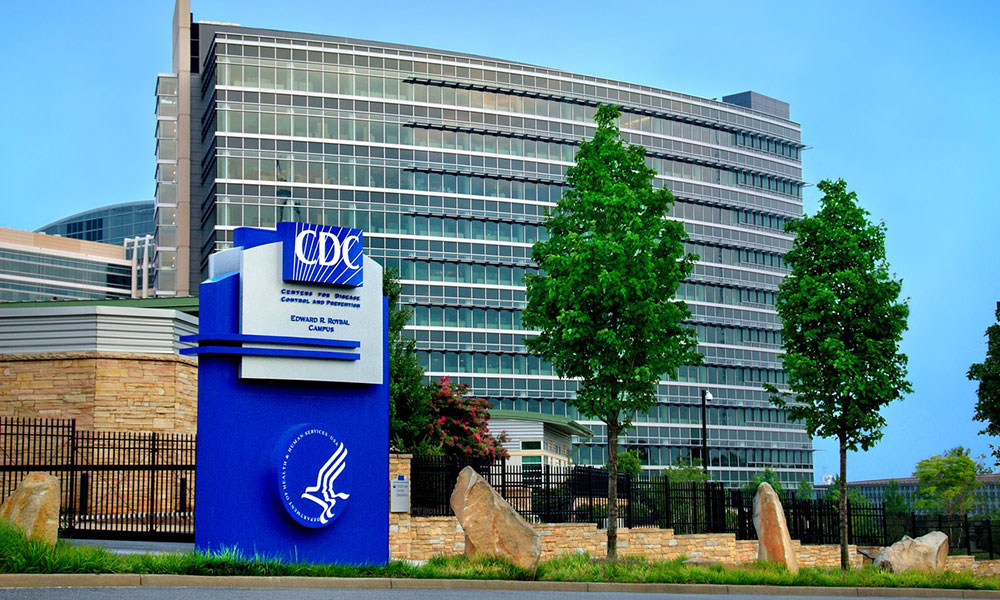
A report last week that suggested that the Centers for Disease Control and Prevention (CDC) received a list of “banned words” for official budgetary documents (opens in a new tab) led to a major outcry in the science and medical worlds over the weekend—particularly from the association space.
Federal officials have since tried to downplay these claims (opens in a new tab), calling them a “mischaracterization” of what was taking place.
“HHS will continue to use the best scientific evidence available to improve the health of all Americans,” the U.S. Department of Health and Human Services (HHS) said in a statement to ABC News (opens in a new tab). “HHS also strongly encourages the use of outcome and evidence data in program evaluations and budget decisions.”
However, that failed to calm the uproar over the report, which suggested that the words “vulnerable,” “entitlement,” “diversity,” “transgender,” “fetus,” “evidence-based,” and “science-based” would be discouraged from use in CDC budgetary documents. A later Washington Post report (opens in a new tab) suggested that another agency within HHS was told to use “Obamacare” in all references to the Affordable Care Act, and that the State Department would use “sexual risk avoidance” in reference to sex education.
Whatever the case, a variety of groups made it known that this approach flew in the face of how science and medicine work. In particular, the leaders of The National Academies of Sciences, Engineering, and Medicine spoke in the toughest terms against what appeared to be an attack on science.
“We are especially stunned that ‘evidence-based’ and ‘science-based’ are reportedly among the barred terms,” the presidents of the three groups said in a statement Monday (opens in a new tab), adding that these approaches were fundamental to the groups’ creation. “Evidence-based advice to inform policymakers and public discourse has been the foundation of National Academies’ counsel since the creation of the NAS more than 150 years ago by Abraham Lincoln. Evidence-based advice drove American prosperity, health, and national security throughout the 20th century, and continues to do so today.”
In comments to the Post, American Association for the Advancement of Science (AAAS) CEO Rush Holt echoed this sentiment in a tough statement of his own: “Among the words forbidden to be used in CDC budget documents are ‘evidence-based’ and ‘science-based.’ I suppose one must not think those things either. Here’s a word that’s still allowed: ridiculous.”
Public health officials also spoke out against the move, with Laura Magaña, the president and CEO of the Association of Schools and Programs of Public Health calling on White House Office of Management and Budget Director Mick Mulvaney to “immediately and publicly withdraw this censorship order regardless of where or how it originated.”
“We are particularly incensed that this act of censorship first came to light at the CDC. The CDC is our nation’s leading public health agency, tasked with the critical mission of protecting the nation from ‘health, safety, and security threats,’” Magaña wrote in a letter (opens in a new tab) [PDF] to Mulvaney and leaders at HHS and CDC. “On its website, the CDC promises in a ‘Pledge to the American People’ to ‘base all public health decisions on the highest quality scientific data that is derived openly and objectively’ and to ‘treat all persons with dignity, honesty, and respect.’”
Even a group focused on the words used in government documents cried foul in response to the Post stories. The Center for Plain Language (opens in a new tab), a nonprofit that encourages federal agencies to use simple language in their documents, said in a news release (opens in a new tab) that “these proposed changes discourage clarity and transparency, and could create public harm.”
The backlash to the move caps off a year when many scientific groups felt compelled to respond to a political climate that appeared to stand in opposition to science by taking part in a March for Science in April. At the time of the event, groups such as AAAS and many others pledged to take its lessons and put them in their advocacy strategy.
CDC’s Edward R. Roybal campus in Atlanta. (Wikimedia Commons)

Comments
Comments are for ASAE members. Learn more about comments on this site.
Log in to your member account or join ASAE!