
Farm Equipment Groups Pledge to Make Equipment Repairs More Accessible
The Association of Equipment Manufacturers and the Equipment Dealers Association have pledged to boost access to information related to the repair of heavy machinery like tractors. The move comes as legislation requiring that devices be repairable gains momentum at the state level.
Heads up: this content is over 5 years old, so some information may be out of date.
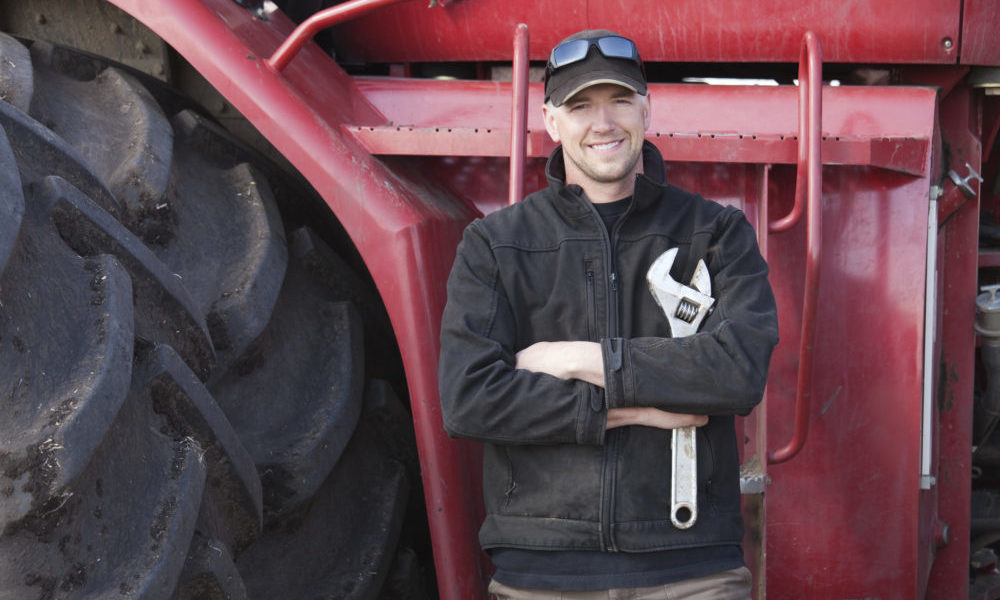
The right-to-repair movement, generally associated with electronics like smartphones and laptops, has found unlikely support from the agricultural world.
And associations representing equipment manufacturers and sellers have published a response of sorts to the issue.
Recently, the Vice publication Motherboard released a documentary (opens in a new tab) that highlighted the issues many farmers have faced because of the increasing technical complexity of farm equipment. It was an extension of a story (opens in a new tab) the outlet published last year that helped draw mainstream attention to the issue.
The story and video showed that many farmers were willingly hacking the computing systems in their own farming equipment to repair it, rather than go through the arduous process of working through resellers for repairs to basic functionality.
The situation has led to the rise of proposed right-to-repair legislation in some states, bills that have put those farmers in legislative conflict (opens in a new tab) with Apple and other tech companies. John Deere and other major equipment manufacturers have also opposed the bills.
In response to the attention the issue is getting, the Association of Equipment Manufacturers (AEM) and the Equipment Dealers Association (EDA) recently released a statement of principles (opens in a new tab) [PDF] emphasizing that the groups would make available diagnostic and repair materials for farm equipment owners.
Additionally, the groups have launched R2R Solutions (opens in a new tab), an online resource designed to offer more information on the right-to-repair issue.
“Equipment manufacturers are proud to act decisively to provide our customers with common-sense solutions they have asked for to easily make simple repairs to their tractors or combines, or assess when to involve a dealer,” AEM President Dennis Slater said in a news release (opens in a new tab). “This strikes the right balance in the way ‘Right to Repair’ legislation would not.”
But the approach taken by AEM and EDA does have its limits. Successful Farming notes that the groups do not consider a “right to repair” a “right to modify,” and Slater says manufacturers have important reasons for not making the underlying software available to farmers. (In other words, the tractor hacking highlighted by Motherboard would still not be allowed.)
“Manufacturers invest considerable resources in developing software that has revolutionized farm equipment. These innovations have made combines and tractors safer, more productive, and more sustainable than ever,” Slater told Successful Farming (opens in a new tab). “Allowing access to the underlying software on farm equipment will risk the machinery’s compliance with laws governing emissions and safety and will undercut the resources manufacturers invest in developing the best possible products for their customers.”
Of course, farm equipment is far from the only front for right-to-repair issues. In Washington state, the recently announced House Bill 2279 (opens in a new tab) would ban the sale of devices whose batteries are difficult or impossible to remove, among other things designed to discourage repairability. The move comes weeks after a scandal (opens in a new tab) related to Apple’s throttling of outdated iPhones with declining battery life—an issue that gave right-to-repair proponents new momentum.
(LivingImages/E+/Getty Images Plus)

Comments
Comments are for ASAE members. Learn more about comments on this site.
Log in to your member account or join ASAE!