
Article Organizational Strategy 3 min read
“Infinity War” Strategy: Why You Should Borrow From Marvel’s Planning Prowess
Whether or not you’re a fan of the Marvel Cinematic Universe, there’s still a lot to respect from the studio behind the films, which has forged a well-strategized mega-franchise over the past decade. The hits keep coming, and that’s not an accident.
Heads up: this content is over 5 years old, so some information may be out of date.
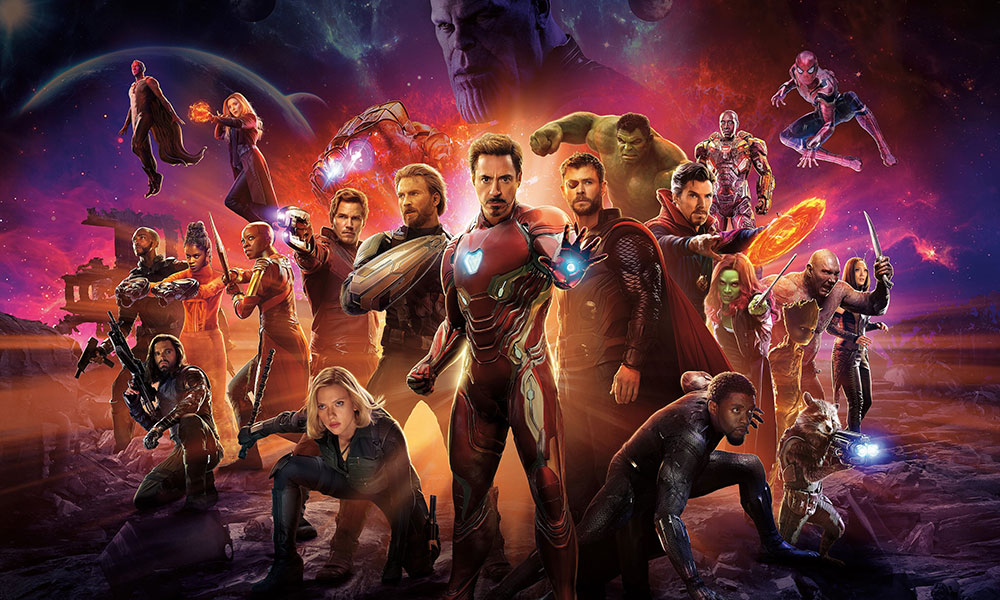
No spoilers in this piece. Promise.
But in the wake of the massive success of Avengers: Infinity War, it’s worth talking about the amazing feat that Marvel Studios just pulled off with its signature film series, which scored the highest opening weekend in movie history (opens in a new tab).
The reason it matters? Simply, it was not a victory that the studio (and its owner, Disney) could have pulled off without investing in an interconnected universe of films that built on one another through their storylines and marketing.
The marketing strategy is comparable to drawing from an island of misfit toys. Without the film rights to big names like Spider-Man and X-Men in its control, Marvel took a number of franchises that were largely unheralded outside of their comic book form and turned them into a mega-franchise that pays dividends every single year. This was done through superhero-focused films like Black Panther and Iron Man, along with The Avengers series, which is designed to bring together both the superheroes and their fan bases in one fell swoop.
And Marvel Studios did this in a way that’s not all that dissimilar from the comic series themselves, though recreating these ideas in film form definitely takes a lot more money and time to pull off. One estimate of Infinity War put the film’s cost at $321.2 million, an absurdly high level of investment (opens in a new tab) that the studio was only likely to make because of its track record of success. In a way, it was basically guaranteed money.
Here are a few factors from Marvel’s magic that your organization can borrow from:
Plan—do meticulous, in-depth planning. Kevin Feige, the president of Marvel Studios, helped to architect the universe years out, making room for lots of superheroes whose initial lower profile could benefit from a cinematic universe. (He was talking about plans for the franchise as early as 2006.) It’s a process that is continuing to this day, with Feige recently telling the Associated Press (opens in a new tab) that the company was already thinking about what was coming in 2024 and 2025—a level of future planning that most organizations don’t even do.
Mine your cultural history. Of course, being able to plan for that future was only made possible by diving deep into the vaults, and Marvel’s first comic came out in 1939. (Captain America (opens in a new tab), a fundamental part of the Avengers team, dates back to 1941.) Some of the company’s high points came from artists who worked for the company more than 50 years ago, like living legend Stan Lee. Rather than letting this history lie in the past, the company has leveraged it in ways that have given the stories and characters that inspired those stories modern vitality.
Make room for surprises. Despite meticulous planning, Marvel Studios tries to avoid being cornered in a single creative direction. “We’re always thinking ahead. Just when people think they can pin us down, we go somewhere else and that’s going to happen again after ‘Infinity War’ in the build-up to the next Avengers film,” Feige told the AP. This approach keeps fans on their toes even as the company works within a clear formula.
Remember execution still matters. All this planning isn’t easy—as anyone who has attempted to revive or build a film franchise will tell you. For instance, the sequel to Avatar, the highest-grossing film of all time, doesn’t come out (opens in a new tab) for another two and a half years. Despite having the same corporate parent, Lucasfilm hasn’t had as easy (opens in a new tab) a time replicating Marvel’s machine-like success.
The reason why the Marvel Cinematic Universe works is because of consistent creativity and consistent execution. Marvel is a factory, and it’s always producing culture-defining films.
And that execution wouldn’t work without a whole lot of planning.
(Marvel Studios)

Comments
Comments are for ASAE members. Learn more about comments on this site.
Log in to your member account or join ASAE!