
Article Conscious Inclusion 2 min read
Daily Buzz: Taking a Stand on All-Male Speaking Panels
Want the director of the NIH to speak at your conference? Women better be included too. Also: Can associations cure loneliness?

Heads up: this content is over 5 years old, so some information may be out of date.
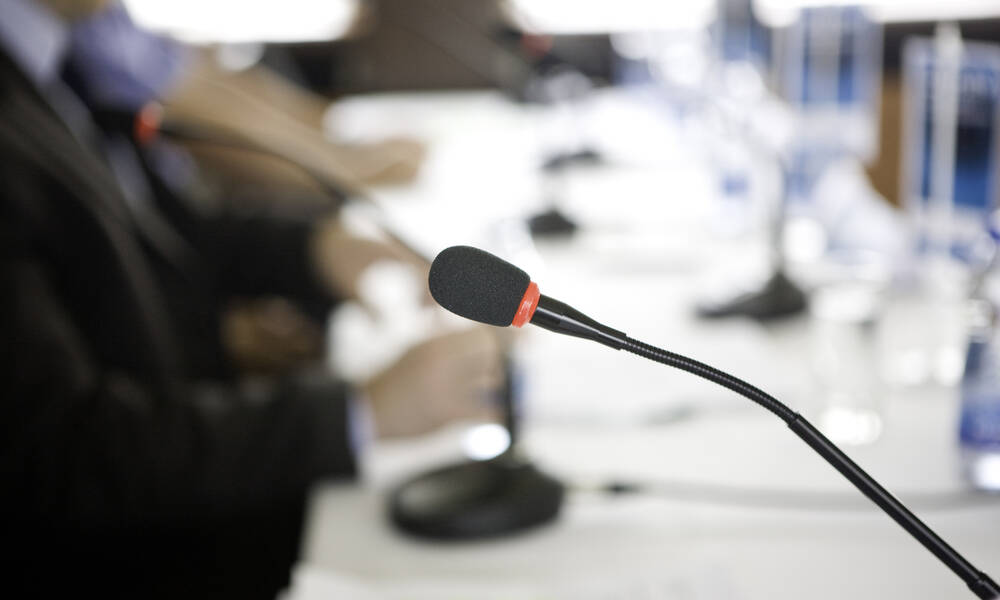
“Manel” (noun): an all-male speaking panel that frequently occurs at scientific meetings.
See also: a concept the head of the National Institutes of Health (NIH), a federal agency and the world’s largest public funder of biomedical research, will no longer take part in.
“It is time to end the tradition in science of all-male speaking panels, sometimes wryly referred to as ‘manels.’ Too often, women and members of other groups underrepresented in science are conspicuously missing in the marquee speaking slots at scientific meetings and other high-level conferences,” said NIH Director Francis S. Collins in a June 12 press release (opens in a new tab).
“Starting now, when I consider speaking invitations, I will expect a level playing field, where scientists of all backgrounds are evaluated fairly for speaking opportunities. If that attention to inclusiveness is not evident in the agenda, I will decline to take part.”
With Collins taking on about 125 speaking engagements per year, many in the industry are eager that his stand brings a wave of change. Maryam Zaringhalam, a member of the leadership team at 500 Women Scientists (opens in a new tab), told The Washington Post (opens in a new tab) that she hopes Collins’ message prompts other men to join the inclusivity conversation.
“Just to introduce this little bit of friction into the way we think of what an invitation means, and what it means to be included, is a very powerful message he’s sending,” she said.
How Associations Can Beat Loneliness
Associations provide an antidote to the loneliness epidemic | WBT Systems https://t.co/NaeE53kqmv (opens in a new tab) #assnchat (opens in a new tab) #membership (opens in a new tab) #associations (opens in a new tab) pic.twitter.com/k6Z8ixwFhq (opens in a new tab)
— TopClass LMS (@TopClassLMS) June 11, 2019 (opens in a new tab)
We all feel lonely sometimes. But for about 50 percent of Americans, those feelings are persistent, according to research from Cigna (opens in a new tab).
That’s where associations can step in.
“Associations are facilitators of human interaction and connection,” says the WBT Systems team on its blog (opens in a new tab). “You satisfy the very human need for belonging and offer an offline and online support system of peers and mentors.”
With opportunities to get involved in their communities, both personal and professional, and purpose-driven activities, associations can help alleviate feelings of being left out or alone.
“Focus your marketing on the impact of these social membership experiences,” the team says. “Show how membership and professional development can improve someone’s life by reducing social isolation and loneliness, and helping them develop new relationships and a greater purpose.”
Other Links of Note
Cultivating a passionate team? Don’t exploit its enthusiasm (opens in a new tab), or risk creating a siloed, ineffective culture, says the Bloomerang blog.
Conference food can make or break a meeting. The Eventbrite blog explains the do’s and don’ts of event catering (opens in a new tab).
It’s common for leaders to doubt their management abilities. These 10 traits (opens in a new tab) can reveal their “toughness” in challenging situations, from Forbes.
(webphotographeer/E+/Getty Images Plus)

Comments
Comments are for ASAE members. Learn more about comments on this site.
Log in to your member account or join ASAE!