
Why Open Access To The ACM Digital Library Matters
ACM, in the midst of both a landmark celebration and a broader open-access initiative, is putting its history online for anyone to access. The archives give computing enthusiasts something to celebrate—and interested parties a window into ACM’s evolution.
Heads up: this content is over 2 years old, so some information may be out of date.
This is the first part of a three-part series on association history. Part 2 examines the American Psychological Association’s apology for its contribution to historic systemic racism. Part 3 highlights the National Association of Credit Management’s long history.
The computing industry has changed significantly over the past 75 years, and the Association for Computing Machinery was there for all of it.
Over that time, the educational and scientific group representing nearly 100,000 members across 190 countries has collected a number of published works within its archives, many of which discuss fundamental work within the world of computers—for example, the first mention of UNIX (opens in a new tab), a groundbreaking operating system that has deeply influenced modern computing, in 1973, or an in-depth interview with Steve Jobs (opens in a new tab) from 1989.
Once, this information—immensely valuable to historians and researchers alike—might have been locked behind a paywall. But as a part of its landmark campaign for its 75th anniversary celebrations, ACM is opening up a large portion of its archives, making the first 50 years of its published records—more than 117,500 documents dating from 1951 to 2000—accessible to the public without a login.
Vicki L. Hanson, the group’s CEO, noted that the ACM Digital Library initiative (opens in a new tab) is part of a broader effort to make its archives available via open access by 2025.
“Our goal is to have it open in a few years, but there’s very real costs associated with [the open-access work],” Hanson said. “We have models so that we can pay for it.”
While the organization is still working through its open-access effort, it saw an opportunity to make its “backfile” of materials available, timed to the organization’s 75th anniversary.
“It’s nice to link it to the 75th celebration year in general, but the emphasis was really coming from what it takes to get the Digital Library fully open,” she said. “All those seminal articles from years ago can be made available to everyone.”
From a technical standpoint, opening up the system wasn’t the biggest challenge, according to Hanson, as the organization’s existing digital system is designed to allow documents to be opened up to the public.
“Thinking to do this was maybe more of a creative effort,” she said. “But everybody, when they heard the idea of opening up the first 50 years, that was something that was very supported by everyone.”
Documenting Computing—and ACM’s—History
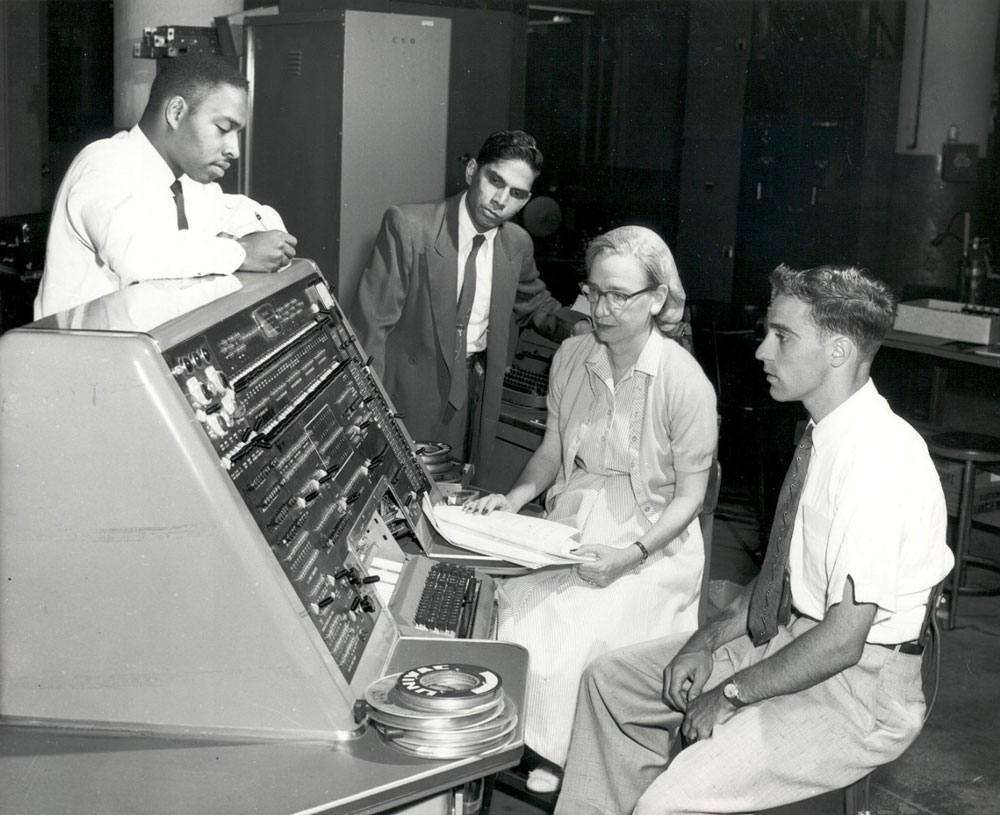
The collection has some of what you’d expect: technical documents, magazine articles, and research papers, many of which highlight the history of computing—for example, one of the first documents ACM ever published (opens in a new tab) was about the groundbreaking UNIVAC system. But the treasure trove also goes to the heart of ACM itself, with a number of pieces related to the creation of the organization and how it was run, with in-depth records from early conferences (opens in a new tab) included within the digital library.
The organization’s communications, both internal and external, illustrate the evolution of the group. “There’s a lot of people who write about their thoughts at the time, or the president writes letters so that people know what’s going on,” Hanson said.
The efforts to collect and manage this information have been shepherded with the help of the association’s narrowly focused special interest groups (opens in a new tab), which have taken steps to document their evolution through the help of ACM’s history committee (opens in a new tab).
“Going back to how the field of computing is changing, the special interest groups are an excellent reflection of that,” Hanson said. “You can see which new specializations felt that they needed to form their own groups to have more emphasis on that field. And you can see how those have come and gone over the years.”
(Another factor helping keep ACM’s history alive is the Charles Babbage Institute (opens in a new tab) at the University of Minnesota, which contains an archive of ACM materials.)
Celebrating a Milestone
The opening of ACM’s digital backfile is one of many components to marking the organization’s 75th anniversary—the largest of which, a celebratory panel (opens in a new tab), took place June 10 as a hybrid event that brought together well-known figures in computer science, such as noted social media scholar danah boyd of Microsoft Research, Stanford University’s Jure Leskovec, and Google chief economist Hal Varian.
ACM is also highlighting its history on its social media channels, including by showcasing notable papers (opens in a new tab) within its archives.
Beyond playing a role in a landmark celebration, opening the ACM archives has potential to draw in computing enthusiasts—and a new generation of members, said Jim Ormond, the association’s communications manager.
“There’s a lot of young people out there, and they’re used to accessing things for free online,” he said. “So they may not know about ACM, but this will maybe give them a foot in the door.”
Ormond added that ACM will be keeping track of the interest in their digital library to see where enthusiasm emerges.
“It’ll be interesting for us to see how the numbers respond, and how people respond, what they’re downloading, and what they’re interested in,” he said.
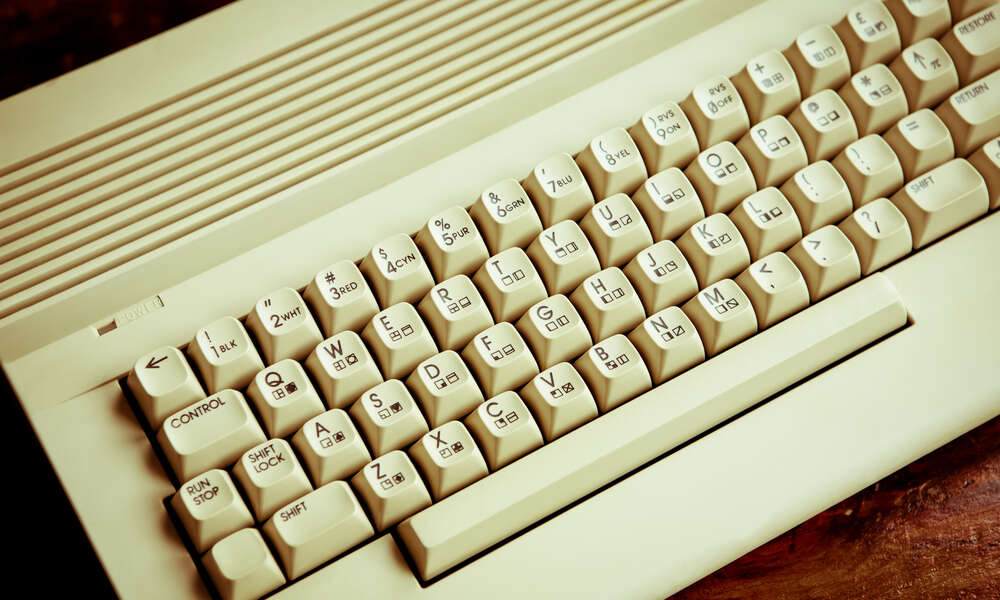
A variant of the Commodore 64, a landmark personal computer. (gianlucabartoli/E+/Getty Images Plus)

Comments
Comments are for ASAE members. Learn more about comments on this site.
Log in to your member account or join ASAE!