
California Legalizes Self-Driving Cars—and There’s an Association for That
The Association for Unmanned Vehicle Systems International sees possibilities for the technology that go way past Google's prototype.
Heads up: this content is over 5 years old, so some information may be out of date.
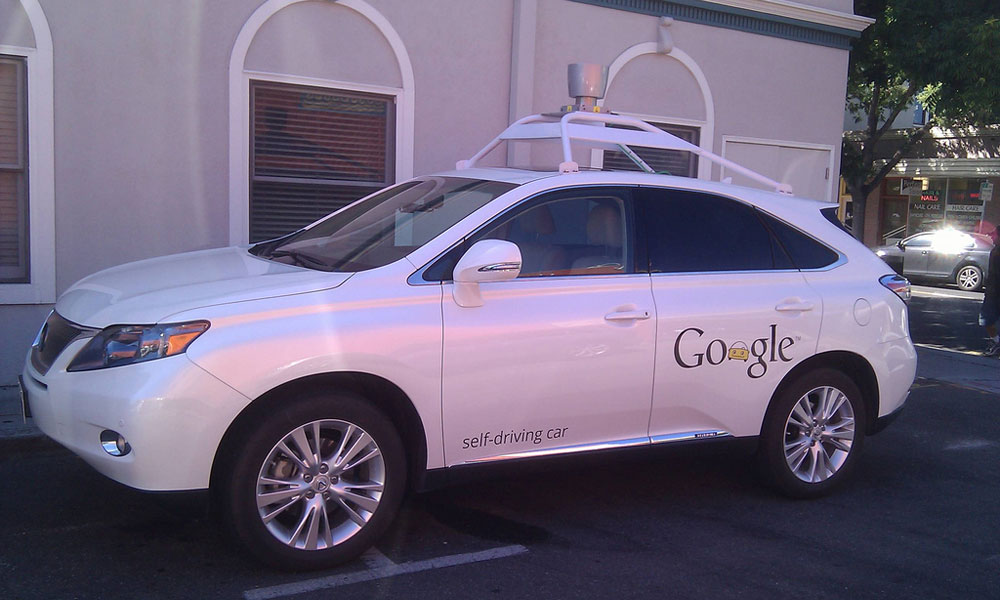
If you see a driver on the California highways who doesn’t have his hands on the wheel, it may not be what you think.
On Tuesday, California became the third state to legalize (opens in a new tab) self-driving vehicles, giving Google the ability to continue working on its high-profile unmanned vehicle project. Gov. Jerry Brown signed the bill, written by State Sen. Alex Padilla, into law.
And the 7,000-member Association for Unmanned Vehicle Systems International (AUVSI) — generally known for its work with unmanned drone planes and other industrial products — was cheering the state on.
“AUVSI applauds Sen. Padilla and the California state legislature for taking a leadership role in advancing legislation that will provide the opportunity for ongoing testing of this technology with the hopes that one day self-driving cars will become a reality in California and across the country,” the group said in a statement.
But as Mario D. Mairena, government relations manager for AUVSI, explained, the phenomenon goes deeper than Google. Although the search company gets most of the press, major car companies, including General Motors, BMW and Audi, are also working with autonomous vehicle technology.
The group is bullish on the long-term potential for unmanned ground vehicles, especially for consumers.
“Part of our goal is to have full autonomy in the next 15 to 20 years,” he explained, noting the safety value of the self-driving cars, given a population that is quickly growing older, and the potential for added accuracy and efficiency.
How does AUVSI plan to do that? Mairena says the organization’s goal has been to “bring the industry together,” as well as to ensure on the regulatory end that the 5.9 GHz wireless spectrum used for vehicle-to-vehicle (V2V) and vehicle-to-infrastructure (V2I) communications will remain open for years to come.
There are issues that still need work, including how privacy, insurance, and the potential for software hacking might hinder the technology long term. (Cost is also an issue, but Mairena, citing General Motors, says it would likely only add $2,000-$2,500 to the cost of a vehicle.)
Nonetheless, AUVSI sees the prospects for a strong industry. “Vehicle-to-vehicle technology has a potential to be a game changer for roadway safety,” Mairena says.
(photo by Flickr user MarkDoliner)

Comments
Comments are for ASAE members. Learn more about comments on this site.
Log in to your member account or join ASAE!