
Article Membership 3 min read
Baseball Writers’ Association of America’s Steroids Statement
When the Baseball Writers’ Association of America announced that no players would be allowed into the Baseball Hall of Fame this year, the decision drew some tough opinions. Sound like anything your board has faced?
Heads up: this content is over 5 years old, so some information may be out of date.
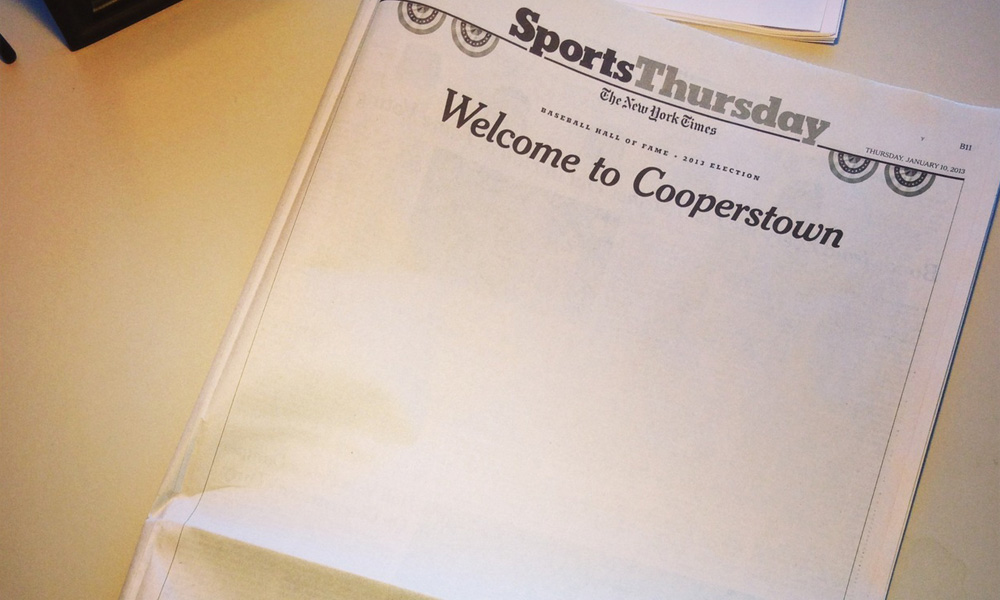
It’s not the first time, but with an era of steroids defining the sport of baseball, Cooperstown is staying quiet this year.
On Wednesday, the yearly voting process of the Baseball Writers’ Association of America (BBWAA) for baseball’s Hall of Fame went quiet, with no players reaching the 75 percent threshold allowing them entry. Some considerations about how this defines the organization and its membership:
Setting a standard: While some were critical of the decision to block players like Barry Bonds and Roger Clemens (both of whom faced trials tied to alleged steroid usage), longtime Hall of Fame members supported the vote, saying it maintained an appropriately high standard. “I’m kind of glad that nobody got in this year,” Al Kaline, a longtime Detroit Tigers star, told the Associated Press (opens in a new tab). “I feel honored to be in the Hall of Fame. And I would’ve felt a little uneasy sitting up there on the stage, listening to some of these new guys talk about how great they were.”
In 1998, 473 ballots were cast. Last year there were 573—an increase of more than 21 percent. Are there really 100 more qualified voters now than there were 15 years ago?
Ignoring history? Others were much harsher. ESPN’s Jayson Stark argued that, by blocking the entry of a number of players, the association did a disservice to the sport by hiding its warts. He listed several baseball greats who are not yet in the Hall, including a number whose reputations are tarnished by scandal. “Do we really want a Hall of Fame that basically tries to pretend that none of those men ever played baseball? (opens in a new tab) That none of that happened? Or that none of that should have happened? Hey, here’s a bulletin for you: It happened,” he writes, noting that it appeared players such as legendary catcher Mike Piazza, whose career wasn’t marred by steroid accusations, suffered as a result of sharing the ballot with more controverial nominees.
Is the issue the membership itself? One argument made before the vote was announced is that the voting association membership isn’t really serving the needs of the Hall, as the number of voters has increased significantly over the years. “The number of voters should be drastically reduced, while the types of voters should be expanded,” Tyler Kepner, a member of the association, wrote in The New York Times (opens in a new tab). “In 1998, 473 ballots were cast. Last year there were 573—an increase of more than 21 percent. Are there really 100 more qualified voters now than there were 15 years ago?” Kepner suggests that many members are no longer sportswriters and hold onto the membership essentially to vote.
Or maybe it’s simpler: Jack O’Connell, the secretary-treasurer of the association, suggests that there may not be a deeper motive at all (opens in a new tab) and that there may just have been a weak slate of nominees this year. “Sometimes the ballot just flushes out like that. We all know this time what the 800-pound gorilla in the room is, but sometimes the ballot is just weak or voters aren’t ready to induct those particular players. In some ways, that’s what people are thinking this year. They aren’t ready yet to vote for these players.”
If your association, its board, or your membership made a decision that was controversial or divisive in your industry or with the public, how would you handle it?
Thursday’s New York Times sports front, left intentionally blank in reaction to the vote. (USA Today/Tumblr)

Comments
Comments are for ASAE members. Learn more about comments on this site.
Log in to your member account or join ASAE!