
Domestic Drone Information Center: Lawyers Group’s New Resource
With little on the books to help define the regulations around drone usage, the National Association of Criminal Defense Lawyers is working to start the conversation with a new information center.
Heads up: this content is over 5 years old, so some information may be out of date.
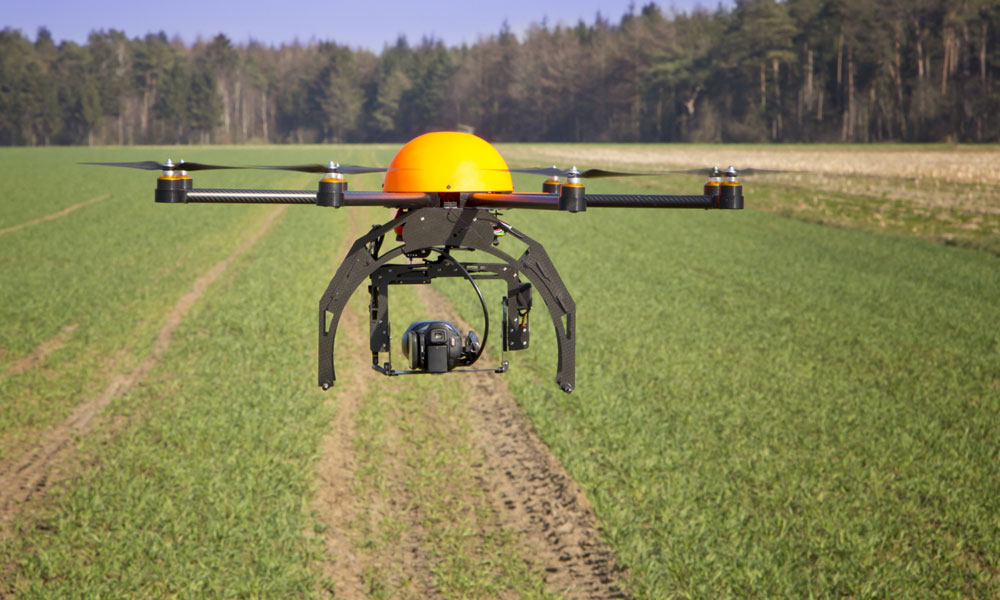
Talk about getting in front of a major issue.
At the moment, people’s concerns about how drones will be used domestically are increasing, but information remains scattered.
While just one American citizen has been arrested with the help of a drone, that hasn’t stopped the National Association of Criminal Defense Lawyers (NACDL) from setting up a new program to help track where drone-related issues come up in criminal cases.
Why’s that? Simple: There’s very little law on the books to deal with such cases. More details on what NACDL is doing:
Why now? As Norman Reimer, the executive director of the group, told U.S. News and World Report (opens in a new tab), “We’re concerned there aren’t adequate safeguards [against drone use by law enforcement]. At the moment, law enforcement is basically going to be making up the rules as they go along, and that’s very troubling from a constitutional perspective.”
The offerings: NACDL’s Domestic Drone Information Center (opens in a new tab) is offering a state-by-state breakdown of legislation currently being debated at the state and national levels, a list of noteworthy news items related to drones (opens in a new tab), and a selection of related case law. And as the law on the issue develops, the site’s content will expand. “At the moment, people’s concerns about how drones will be used domestically are increasing, but information remains scattered,” NACDL President Steven D. Benjamin told The Washington Times (opens in a new tab). “The Domestic Drone Information Center aims to put everything in one place.”
An early case: In June 2011, North Dakota resident Rodney Brossart became the first person arrested with the help of a drone, the result of a 16-hour standoff in which Brossart threatened to kill police officers who entered his property. To determine whether they could safely arrest Brossart, officers deployed a Predator drone (opens in a new tab) to identify his location. While Brossart’s lawyer, Bruce Quick, called the use of the drone “outrageous government conduct,” a court ultimately found last August (opens in a new tab) [PDF] that “there was no improper use of an unmanned aerial vehicle” and denied Brossart’s motion to dismiss the case.
NACDL’s Reimer says it’s “inevitable” that more such cases will arise in the future, which is why the group is trying to get information to its members ahead of time.
“Drones are going to be there, and there will be valid, legitimate uses for them,” Reimer told U.S. News. “But without any framework, any technological tool is subject to abuse by law enforcement.”
Associations outside the legal sphere have also been active on drones, including the just-launched Aerial Robotics Industry Association (opens in a new tab) and the Airborne Law Enforcement Association, which has defended use of the devices (opens in a new tab) in law enforcement situations.
(iStockphoto/Thinkstock)

Comments
Comments are for ASAE members. Learn more about comments on this site.
Log in to your member account or join ASAE!