
Article Marketing / Communications 2 min read
Maybe Facebook Isn’t Fading: Mobile Drives Record Quarter
The company may have faced multiple knocks on its ability to adapt its platform for an increasingly-mobile world, but despite negative press about its ongoing growth, the company’s financial results suggest otherwise.
Heads up: this content is over 5 years old, so some information may be out of date.
For a social network that’s lost 10 million U.S. users in the past year, Facebook sure adapts well.
The company, which has been dogged by critics over its mobile strategy ever since its initial public offering fell flat last year (opens in a new tab), quieted them this week with news that it pulled off a successful quarter with mobile as its biggest rising star.
And a culture shift—one that offers multiple lessons for observers—helped pave the way for that improvement. More details:
Beating predictions: In second-quarter results (opens in a new tab) announced Wednesday, Facebook reported $1.81 billion in revenue and $333 million in net profit. More than 40 percent of its total ad sales—$656 million—were strictly for mobile devices. Overall, the company’s numbers for the quarter surged past analysts’ estimates, and the growth in use of mobile devices was a big part of the reason. Of the company’s 1.15 billion total users (a 21 percent increase year over year, by the way), 819 million visit the site monthly on mobile devices, and 219 million experience the site exclusively through them. “We’ve made good progress growing our community, deepening engagement, and delivering strong financial results, especially on mobile,” Facebook founder and CEO Mark Zuckerberg said in a statement.
The mobile factor: The results were surprising because Facebook had previously struggled to monetize its mobile applications and for years had treated them as a secondary part of its model. At the time of its IPO in mid-2012, the company had stated in its S-1 filing that mobile, despite being a huge source of growth for Facebook, was not at the time generating any revenue. “We do not currently directly generate any meaningful revenue from the use of Facebook mobile products, and our ability to do so successfully is unproven,” the document stated (opens in a new tab). The comments proved damaging to its early stock performance, and the company changed its mobile approach in significant ways, including completely recoding its HTML-based apps to work natively (opens in a new tab).
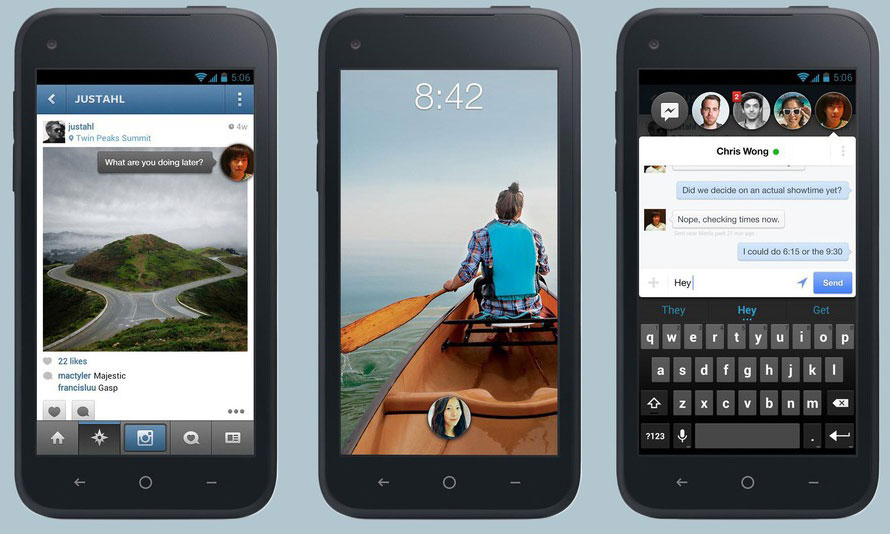
The secret’s in the culture change: How did Facebook suddenly turn from mobile also-ran to dynamo? Simply, a deliberate change was made—a top-down focus on mobile experience over desktop, to the point where employees were encouraged to switch to Android phones (opens in a new tab) and Facebook’s own site was temporarily blocked from desktop usage (opens in a new tab) on the company’s campus. And while the company’s riskier bets, like Facebook Home, have earned negative reviews (opens in a new tab) and gained limited traction (opens in a new tab), they certainly reflect its strong push to focus more aggressively on mobile.
Another factor in Facebook’s improvements—and one that might be useful for associations to keep in mind—is that the company has streamlined its advertising and marketing offerings, making them simpler to use, according to Bloomberg (opens in a new tab).
Screenshots of Facebook Home, one of the company’s more high-profile mobile efforts. (Facebook photo)

Comments
Comments are for ASAE members. Learn more about comments on this site.
Log in to your member account or join ASAE!