
Trucking Industry Warns Not to Rush New Fuel Standards
While President Obama’s announcement of plans to strengthen fuel-efficiency and emission standards for large trucks drew applause over the potential benefits from environmentalists, the trucking industry cautioned about the danger of rushing the change.
Heads up: this content is over 5 years old, so some information may be out of date.
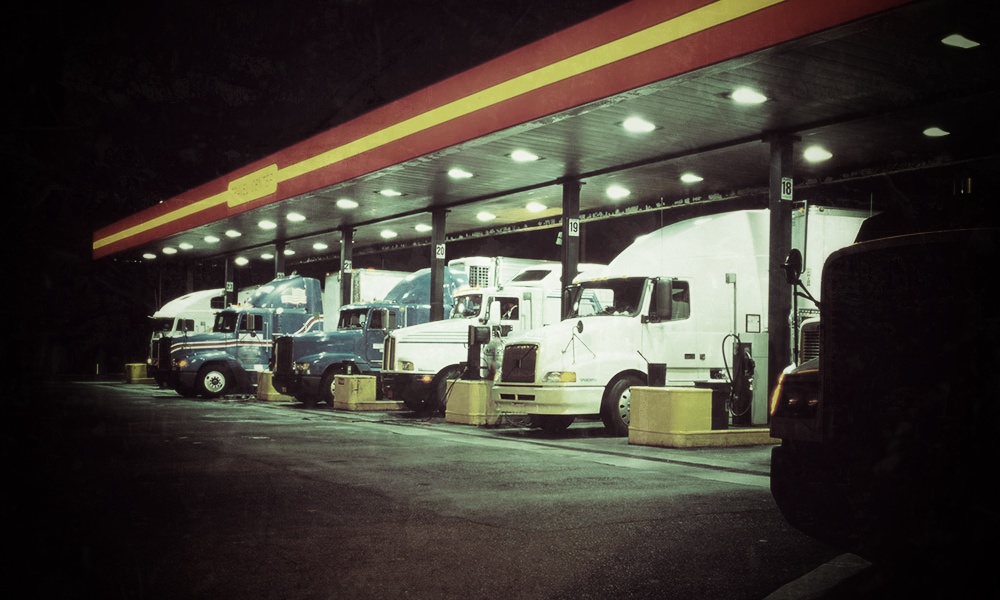
Fuel is expensive, and big trucks use a lot of it as they travel America’s highways. But that doesn’t mean the trucking industry is completely in favor of the higher fuel-efficiency standards proposed by the Obama administration. Industry groups say they could come with some negative side effects. More details:
About the standards: This week, President Obama announced that the Department of Transportation and Environmental Protection Agency would begin to develop a set of fuel-efficiency standards for medium- and heavy-duty trucks for model year 2019 and beyond (rules for model years 2014 to 2018 were implemented in 2011). “For the first time in nearly 20 years, America produces more oil here at home than we buy from other countries. Our levels of dangerous carbon pollution, that contributes to climate change, have actually gone down even as our production has gone up,” the president said in an announcement on Tuesday, according to CNN (opens in a new tab). Major truck manufacturers, such as Cummins, told the Wall Street Journal (opens in a new tab) that they’ve already been working closely with the U.S. Department of Energy on the issue and that the changes to their processes would not be radical. But discussions on the new standards are ongoing, and Obama offered no specifics in his speech.
Proceed with caution: In the wake of the president’s announcement, Bill Graves, president of the American Trucking Association, said in a statement (opens in a new tab) that the idea makes sense in theory, but he warned that rushing the rules could lead to problems. ATA told The Washington Post (opens in a new tab) that the administration will give it a voice in creating the new standards. “Fuel is one of our industry’s largest expenses, so it makes sense that as an industry we would support proposals to use less of it,” Graves said. “However, we should make sure that new rules don’t conflict with safety or other environmental regulations, nor should they force specific types of technology onto the market before they are fully tested and ready.” The Owner-Operator Independent Drivers Association echoed the sentiment in a statement of its own (opens in a new tab), noting the pressure that additional costs could put on independent drivers.
Full speed ahead: The eco-friendly Natural Resources Defense Council welcomed the announcement, noting that, like prior energy-efficiency programs in the auto industry, the effort could create new jobs. “The president’s initiative is an important step driving America toward a cleaner energy future,” NRDC President Frances Beinecke said in a statement (opens in a new tab). “Strong heavy-truck efficiency standards will not only cut carbon pollution that fuels climate change, but also save consumers money every time they go to a store and save truckers money at the pump.” In a statement to The Post, the National Association of Clean Air Agencies, which backs the move, noted the industry’s cooperative approach.
(Comstock/Thinkstock)

Comments
Comments are for ASAE members. Learn more about comments on this site.
Log in to your member account or join ASAE!