
Article Marketing / Communications 2 min read
Social Media Roundup: Meet Your New Twitter Profile
Twitter takes a page from Facebook's playbook and gives profiles a new look. Also: A new online security threat emerges.
Heads up: this content is over 5 years old, so some information may be out of date.
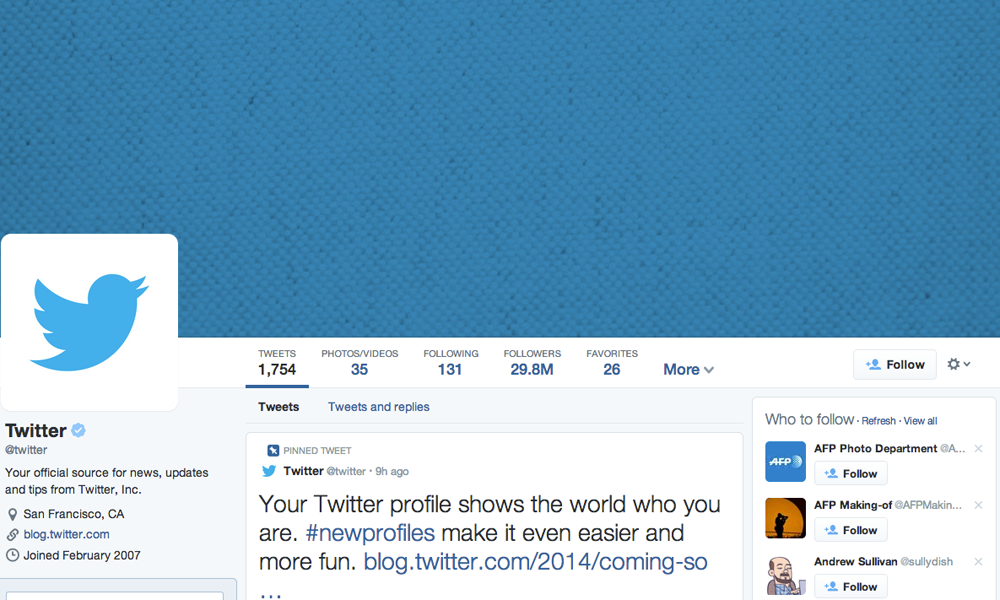
For those of you who are dissatisfied with the way Twitter looks, take heart! A revamp is headed your way. If you were happy, let’s hope you like the way Facebook looks.
Plus: A new security bug has emerged that demands your attention. More in today’s Social Media Roundup:
The New Face of Twitter
https://twitter.com/twitter/status/453501042332688385
Rumors of a Twitter redesign have been percolating for some time, and earlier today the company put speculation to rest and unveiled its new profile layout.
If you think the new design looks a little familiar, you’re not alone. Critics have (opens in a new tab) already loudly decried it (opens in a new tab) as too similar to that of other social networks, including Facebook, Google Plus, and Pinterest, with the large banner image and personal information gobbling real estate that could go to tweets themselves—that is, if you’re even using Twitter to send your tweets (opens in a new tab).
But for associations, the new layout presents a great opportunity to gather some top-notch visual assets and present a fresh, visual-rich face to your audience.
Everyone’s profiles won’t be revamped for a few weeks; you can check them out live on (opens in a new tab) select accounts (opens in a new tab) and prepare your own account for the shift. (ht @Twitter (opens in a new tab))
Bug Causes Sites to Bleed Confidential Data
Everything you need to know about Heartbleed, the terrifying bug that just exposed the Internet’s secrets: http://t.co/Tgf3xayI25 (opens in a new tab)
— Digg (@digg) April 8, 2014 (opens in a new tab)
Another day, another new security challenge that could leave sensitive user data exposed to those with malicious intent.
Last night the Heartbleed bug was discovered (opens in a new tab), an oversight in the OpenSSL (Secure Sockets Layer) security protocols that are commonly used to encrypt vulnerable data exchanges. OpenSSL is denoted by the “https” prefix you’ll find on many websites, including Facebook and Twitter, and is used to protect data such as your Amazon account information.
Thanks to OpenSSL, exchanges of privileged information, whether they be communications with others or your credit card number, are supposed to be securely transmitted. But because of Heartbleed, that information can be lifted from sites using unpatched versions of OpenSSL. Indeed, there have been reports of sites as large as Yahoo being subject (opens in a new tab) to prying eyes.
On the bright side, patched versions are protected, and you can check whether your association’s site is up-to-date with this test (opens in a new tab). And, as always, be cautious where you click. (ht @digg (opens in a new tab))

Comments
Comments are for ASAE members. Learn more about comments on this site.
Log in to your member account or join ASAE!