
A Coming of Age Story: FDA Backtracks After Cheesemakers Controversy
After an FDA official suggested a ban on a common cheese-aging method over bacteria concerns, a leading association in the space pushed back—and the FDA stepped away from the cheese, at least for now.
Heads up: this content is over 5 years old, so some information may be out of date.
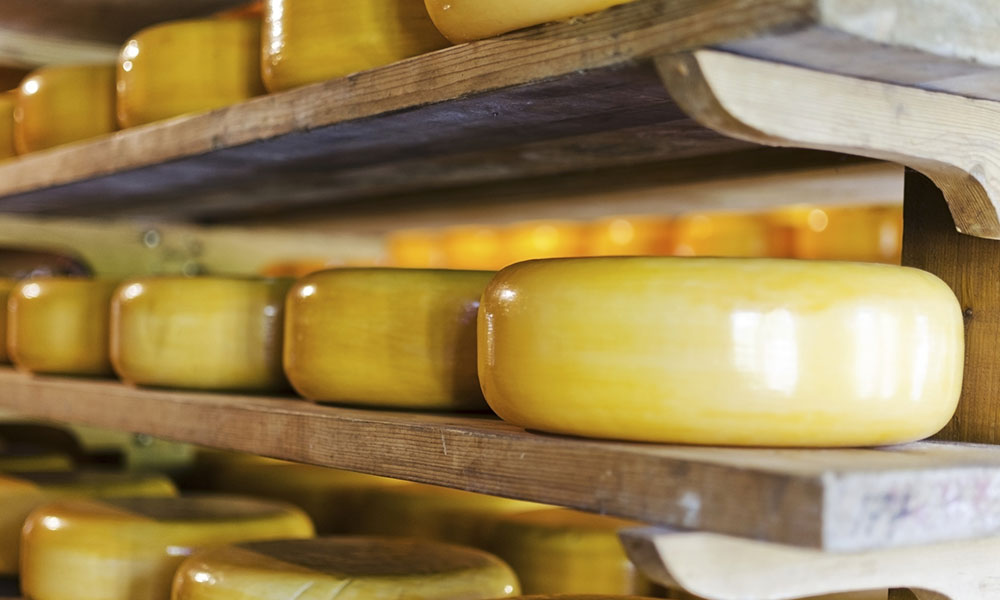
The moral of this story? Don’t mess with the artisanal cheeseheads.
This month, the Food and Drug Administration drew attention for a statement suggesting that a ban on aging fancy kinds of fromage via wooden boards—a common practice an FDA official claimed was unsanitary—was forthcoming. But pushback from the American Cheese Society quickly led the FDA to backtrack. More details:
No foodborne illness outbreak has been found to be caused by the use of wood as an aging surface.
Why the proposed ban? According to Monica Metz, who leads the FDA’s Center for Food Safety and Applied Nutrition’s (CFSAN) Dairy and Egg Branch, the practice could lead to unsafe varieties of bacteria getting into the food supply. “Wooden shelves or boards cannot be adequately cleaned and sanitized,” according to a statement by Metz (opens in a new tab) [PDF]. “The porous structure of wood enables it to absorb and retain bacteria, therefore bacteria generally colonize not only the surface but also the inside layers of wood. The shelves or boards used for aging make direct contact with finished products; hence they could be a potential source of pathogenic microorganisms in the finished products.” As the cheese-industry magazine Culture notes (opens in a new tab), the FDA previously did not have jurisdiction over the issue, taking its current role in 2011 only as part of the Food Safety Modernization Act, which allows the it to take preventive roles with food safety.
The cheese industry responds: Once Metz’s comments hit the blogosphere, the American Cheese Society stepped in, offering a policy statement on the issue (opens in a new tab) [PDF] and noting something cheesemakers have known for centuries: The bacteria makes the cheese. “Today’s cheesemakers—large and small, domestic and international—continue to use this material for production due to its inherent safety, unique contribution to the aging and flavor-development process, and track record of safety as part of overall plant hygiene and good manufacturing practices,” the association argued. “No foodborne illness outbreak has been found to be caused by the use of wood as an aging surface.” It argued that state and federal agencies should work together on the issue, that wood was generally safe to use, and that a number of cheeses “are at risk of disappearing from the U.S. market” if the policy goes into effect—most notably Parmigiano Reggiano cheese—if said rule changes go through.
The FDA steps back: In response to the controversy, the FDA moved in the other direction Tuesday, saying it did not intend to ban wood-aging for cheeses—though it did have some concerns. “In the interest of public health, the FDA’s current regulations state that utensils and other surfaces that contact food must be ‘adequately cleanable’ and properly maintained,” the regulatory body said in a statement (opens in a new tab). “Historically, the FDA has expressed concern about whether wood meets this requirement and these concerns have been noted in its inspectional findings. However, the FDA will engage with the artisanal cheesemaking community, state officials and others to learn more about current practices and discuss the safety of aging certain types of cheeses on wooden shelving.”
The ACS welcomed the FDA’s statement and said it would work to make more progress on the issue.
“We are delighted that cheesemakers may continue crafting the cheeses we love using this traditional cheesemaking practice, and are encouraged that further discussions between the artisan cheese community and FDA will preserve wood aging and other traditional cheesemaking methods for all styles and types of cheeses,” the association said on Facebook (opens in a new tab).
(iStock/Thinkstock)

Comments
Comments are for ASAE members. Learn more about comments on this site.
Log in to your member account or join ASAE!