
Jailed Without Cause? Advocacy Group Assists in Deaf Man’s Legal Fight
A deaf homeless man jailed for weeks on theft charges that turned out to be unfounded is suing a Virginia county for violations of the Americans with Disabilities Act, asserting that, without access to an interpreter, he had very few ways to communicate with the outside world. A key advocacy group for the deaf is helping with the lawsuit.
Heads up: this content is over 5 years old, so some information may be out of date.
The goals of the National Association of the Deaf (NAD) are tightly focused on issues that ensure that people who are deaf or hard of hearing get a fair shake.
Often, the issues that get the most attention involve encouraging organizations to improve accessibility for their customers or the public at large.
But a recent case involving a deaf man who was jailed without an immediate explanation of why he was incarcerated points out the potential challenges the deaf can face when their disability is not taken into account.
What Happened?
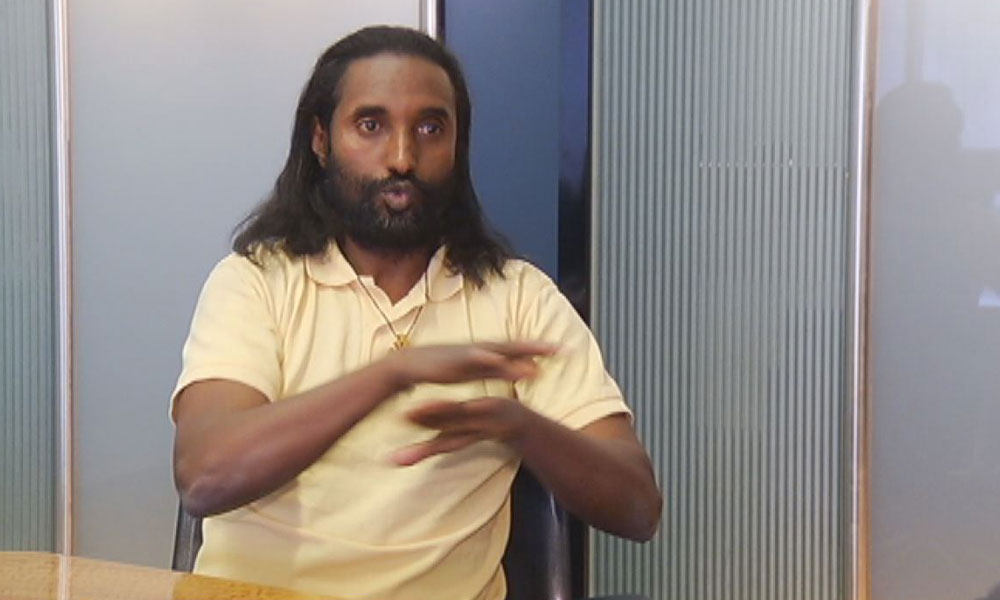
Last February, Abreham Zemedagegehu, a naturalized U.S. citizen from Ethiopia, was arrested for theft while in Washington, DC’s, Reagan National Airport. Zemedagegehu, who is homeless and was seeking shelter in the terminal, did not have immediate access to an interpreter to help him understand what was happening. This created challenges while he was incarcerated; he knows American Sign Language but understands little written English.
Zemedagegehu didn’t learn about the charges he faced—theft of an iPad—until nearly two days after his arrest. During his six-week stint in jail, he was forced to undergo medical procedures without his consent, despite choosing not to sign documents that he could not understand.
I felt like I was losing my mind. I thought Virginia would give me an interpreter and they said no. That’s why I felt lost.
He also had little opportunity to communicate with the outside world. While he was offered access to a TTY machine, he noted it was useless to him because of his limited knowledge of English and because the machine had fallen out of favor within the deaf community.
“I felt like I was losing my mind,” Zemedagegehu told the Associated Press through an interpreter (opens in a new tab). “I thought Virginia would give me an interpreter and they said no. That’s why I felt lost.”
(Calling it “accepted practice,” a lawyer for the Arlington County, Virginia, sheriff’s department defended its offer of the TTY machine. The department also told MyFoxDC.com (opens in a new tab) that, counter to Zemedagegehu’s claims, it does make interpreters available.)
Eventually, Zemedagegehu pleaded guilty to a misdemeanor and was released on time served. But problems with the case surfaced after he’d accepted the sentence: It became clear that the man who’d claimed his iPad was stolen had merely lost it—and found it long before Zemedagegehu accepted a plea deal.
The judge, however, would not let Zemedagegehu change his plea, claiming it was too late.
Zemedagegehu’s case is particularly frustrating for deaf advocates because he was once featured in The New York Times (opens in a new tab) in a 2013 piece that highlighted his ability to better communicate through the use of an iPad.
Taking Action
NAD, which is working with law firm Akin Gump to represent Zemedagegehu in a federal lawsuit accusing the county of violating the Americans with Disabilities Act (opens in a new tab), notes that cases like Zemedagegehu’s are common.
“This comes down to recognizing basic human decency,” Caroline Jackson, a lawyer for the group and a member of the team representing the Zemedagegehu, told The Washington Post (opens in a new tab). “Our client was jailed for six weeks with basically nobody to communicate with. It was hell for him.”
Helping Educate to Advance the Rights of the Deaf (HEARD) (opens in a new tab), an advocacy group based in the Washington, DC, area, notes that such limited communication can have significant mental and emotional effects on people being held, something HEARD refers to as “prison in a prison.”
“Many deaf prisoners experience prolonged communication deprivation that leads to mental health conditions and to these prisoners losing their ability to socialize and communicate with anyone in any language,” HEARD explains in a fact sheet (opens in a new tab) [PDF]. “This holds true even for deaf prisoners housed in the general population.”
NAD often participates in cases where communication issues come into play in jail—a situation the organization says often hinders the inmates’ right to due process (opens in a new tab). The communication barriers can also raise issues when a person, such as in Zemedagegehu’s case, is attempting to manage a legal case at the same time.
“When a deaf or hard of hearing person is not able to communicate with a lawyer, there is no real representation,” the association states (opens in a new tab). “When a deaf or hard of hearing person does not understand what is going on in the courtroom, justice has not been served.”
(MyFoxDC.com screenshot)

Comments
Comments are for ASAE members. Learn more about comments on this site.
Log in to your member account or join ASAE!