
IATA Bags Controversial Carry-On Plan After Outcry
The International Air Transport Association appears to have kicked up a hornet’s nest of backlash in North America regarding its plan to standardize carry-on bag sizes—and as a result, the association has decided to put the plan on hold.
Heads up: this content is over 5 years old, so some information may be out of date.
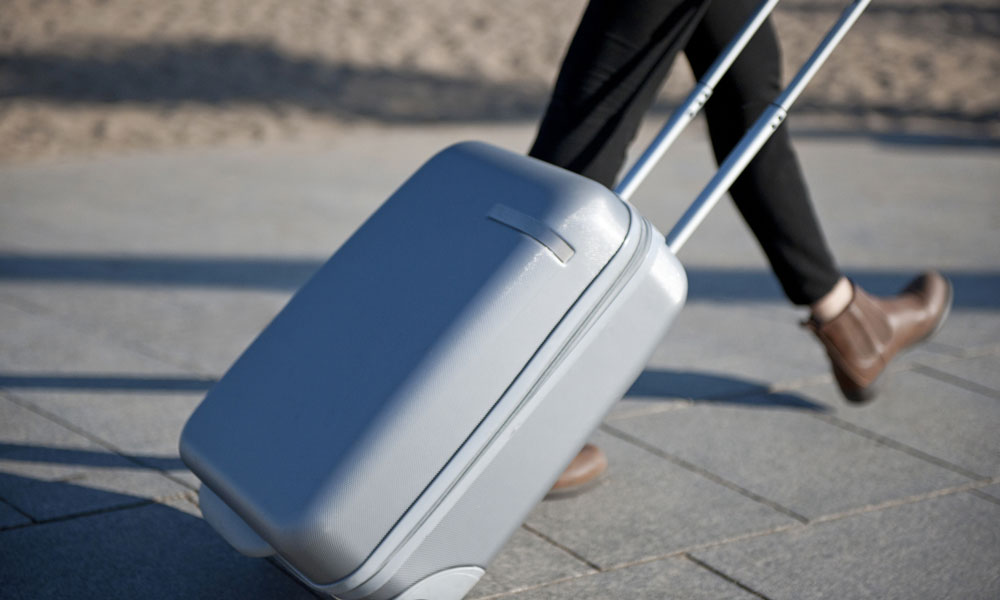
The International Air Transport Association may have had its reasons for recommending a new, standardized carry-on bag size.
But those reasons failed to win over some prominent critics, including top-ranking members of Congress and even the primary trade group for the U.S. airline industry.
This is clearly an issue that is close to the heart of travelers. We need to get it right.
That’s why IATA has decided to back off its plan for now, citing the concerns of airlines, politicians, and North American passengers.
Cabin OK, as the plan is called, would have benefited travelers on international flights, where overhead space is much smaller. The goal, IATA noted, was to ensure that every bag works on nearly every airline. But for airlines that allow larger bags—including those that mostly serve the U.S.—this posed a big problem.
“This is clearly an issue that is close to the heart of travelers,” Tom Windmuller, senior vice president of airport, passenger, cargo, and security at IATA, said in a statement (opens in a new tab). “We need to get it right. Today we are pausing the rollout and launching a comprehensive reassessment of the Cabin OK program, with plans to further engage program participants, the rest of our members, and other key stakeholders.”
The issue stoked a number of strong responses, including:
Airlines for America (A4A): Just as IATA announced it was stepping back from its proposal, the airline trade group announced it opposed the plan. “Our members already have guidelines in place on what size bags they can accommodate, making this action unnecessary,” A4A President and CEO Nicholas Calio said in a news release (opens in a new tab). “We agree with IATA’s action to reassess this initiative and take into account stakeholders’ views and recognize work already underway to improve baggage facilitation.”
Sen. Charles Schumer (D-NY): Schumer, who is considered likely to replace the retiring Harry Reid (D-NV) as the Senate’s Democratic leader in 2017, held a press conference on Sunday criticizing the proposed initiative, particularly its effect on the popular wheeled carry-on. “This new proposal will not only put a dent in families’ wallets but will also hurt business travelers, because the proposed policy also prevents the use of roller bags,” Schumer said, according to CNN (opens in a new tab). He added: “Enough already! We pay extra for checked baggage, leg room, head phones, pillows, and even peanuts. The airlines are making record profits and don’t need to add this further burden on the backs of travelers.”
Sen. Bob Menendez (D-NJ): The ranking member of the Senate Banking Subcommittee on Housing, Transportation, and Community Development, Menendez led a group of other senators, including Schumer, in penning a letter to the CEOs of major U.S. airlines (opens in a new tab) [PDF] asking whether they would adopt the IATA bag standard and, if so, whether they would reduce or eliminate baggage fees. In a news release, Menendez praised IATA’s reconsideration (opens in a new tab) of the “ill-conceived move.” “Air travelers have had enough, enough bait-and-switch, enough with getting nickel-and-dimed for every conceivable service,” he said. “After standing up for consumers and saying ‘no’ to the airline industry, I am pleased that the IATA has done the right thing and parked its proposal in the hangar. Fliers who own previously approved carry-on bags should not have had to cough up another baseless fee to the airline industry.”
Rep. Steve Cohen (D-TN): Over in the House, the congressman has submitted a bill called the Carry-On Freedom Act, which would prevent U.S. airlines from shrinking carry-on sizes. “Consumers are tired of being squeezed—physically and fiscally—by airlines, and this proposal is a step too far,” Cohen said in a statement on Cabin OK (opens in a new tab).
In the end, IATA noted that, despite the backlash, the plan would cause no harm to consumers.
“Cabin OK is a guideline for an optimally sized cabin bag, not an industry standard,” the group stated. “Cabin OK does not seek to define a maximum size for carry-on bags, which is something each airline does individually. And no consumer will be forced into buying a new bag as a result of this voluntary initiative.”

Comments
Comments are for ASAE members. Learn more about comments on this site.
Log in to your member account or join ASAE!