
How a Dancing Baby Could Change Copyright Law
In a ruling involving a Prince song and a baby, an appeals court decided that fair use must play a role in copyright notices submitted online. The decision could complicate the use of automated takedowns—a common tactic of groups in the software, movie, and music industries.
Heads up: this content is over 5 years old, so some information may be out of date.
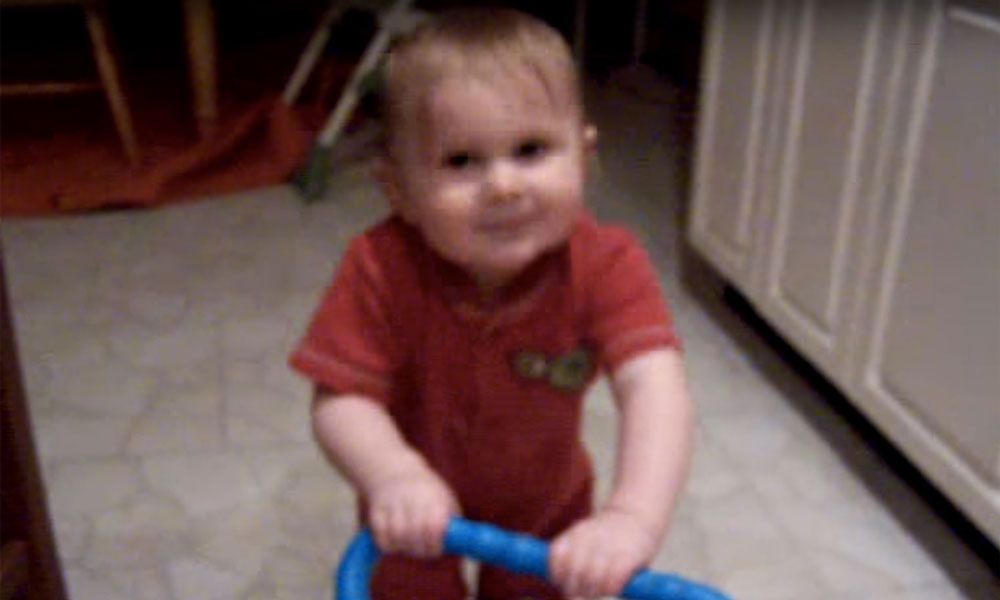
In a ruling involving a Prince song and a baby, an appeals court decided that fair use must be considered in copyright notices submitted online. The decision could complicate the use of automated takedowns—a common tactic of groups in the software, movie, and music industries.
It all started with a dancing toddler and a barely audible Prince song. The result could create big challenges for the media industry in stopping piracy.
On Monday, the 9th U.S. Circuit Court of Appeals in San Francisco sided with Stephanie Lenz (opens in a new tab) on a key issue in her copyright case, which involved a 29-second video she had shot and posted to YouTube. The appeals court ruled that copyright owners “must consider the existence of fair use before sending a takedown notification” to a content provider. That extra consideration could complicate the largely automated process.
Universal Music claimed that Lenz’s 2007 video, which featured her toddler son dancing to a Prince’s “Let’s Go Crazy,” infringed the song’s copyrights and submitted a takedown notice to YouTube. Lenz argued that Universal had failed to properly consider fair use before submitting the notice.
In a mixed result for Lenz, the appeals court held that copyright enforcers must consider whether the use of disputed content is fair before submitting a takedown notice. But it sent the question of whether Universal had considered fair use in this case back to a jury to consider.
Lenz received pro bono assistance from the Electronic Frontier Foundation (EFF), which called the decision a victory for free expression. “Today’s ruling sends a strong message that copyright law does not authorize thoughtless censorship of lawful speech,” EFF Legal Director Corynne McSherry said in a news release (opens in a new tab). “We’re pleased that the court recognized that ignoring fair use rights makes content holders liable for damages.”
Public Knowledge, a free-speech advocacy group that backed Lenz in an amicus brief, noted that the appeals court judges didn’t make a clear-cut decision on whether Universal knowingly submitted the clip without researching its fair-use status. That could complicate things for those fighting takedown notices in the future.
“While we had hoped that the case could have provided a much clearer path for attacking bogus takedown notices, the decision still means that fair use cannot be ignored, and that the takedown process is not meant to be a one-sided affair,” said Sherwin Siy, vice president of legal affairs for Public Knowledge, in a statement (opens in a new tab).
What This Means for Takedowns
The ruling was the first to address the issue of automated takedown notices, which have become a popular strategy for copyright enforcement since passage of the Digital Millennium Copyright Act (DMCA). The 1998 law puts the onus on creators when takedown requests are necessary, leading to the increased use of automation. Groups such as the British Phonographic Industry, the Recording Industry Association of America, and the Motion Picture Association of America have become prominent users of automated takedown requests. The ruling could make it more challenging to automate those requests, which often number in the millions.
Nevertheless, the MPAA said the ruling could still allow media owners to rely on automated takedown notices.
“While we disagree with aspects of the Ninth Circuit’s opinion, we are pleased that it recognized that a copyright owners’ use of automated processes to identify infringements would appear to be a ‘valid and good faith’ means of satisfying the requirements of the DMCA, including any requirement to consider fair use,” the association said in a statement to The Hollywood Reporter (opens in a new tab).
The dancing baby in question. The case has been going on so long that the child is about 10 years old these days. (YouTube)

Comments
Comments are for ASAE members. Learn more about comments on this site.
Log in to your member account or join ASAE!