
Article Career Development 2 min read
German Association Launches Refugee Employment Program
The German Chamber of Commerce Association is taking the lead on helping refugees find the jobs they need to regain their footing after fleeing tragedy.
Heads up: this content is over 5 years old, so some information may be out of date.
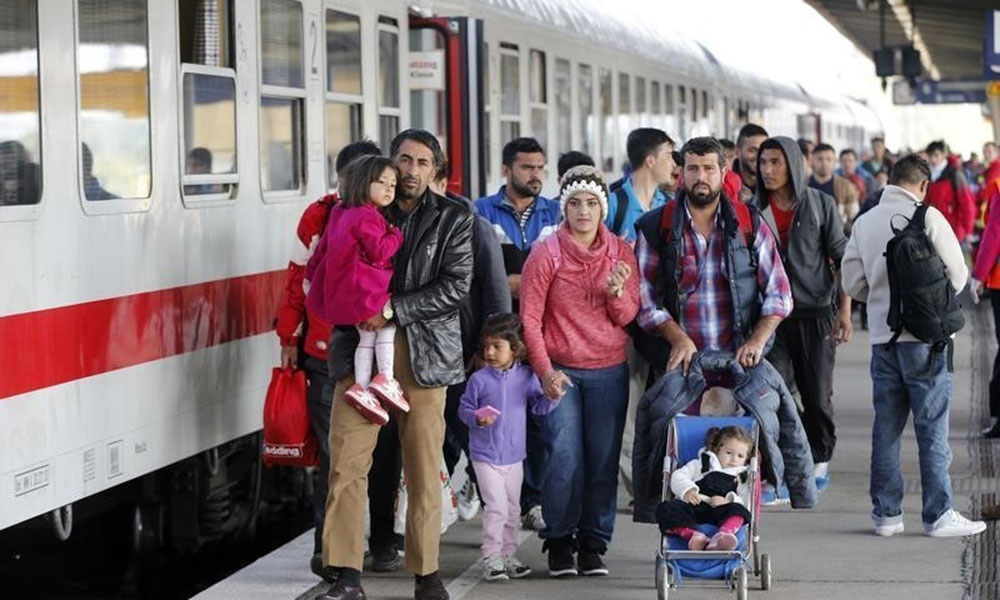
From transportation and security to housing and financial aid, European countries are facing a number of challenges prompted by the influx of refugees from conflict zones in the Middle East and North Africa. And beyond the immediate concerns of food and shelter, governments are having to address even more complicated issues, such as employment and integration.
Germany, which has already taken in nearly 1 million refugees this year (opens in a new tab), is turning to its tradition of apprenticeship to help refugees find their footing in their new home. Last week, the Association of German Chambers of Industry and Commerce (DIHK), announced “Arriving in Germany,” a $21.7 million program that will open access to the country’s renowned dual training system (opens in a new tab) for migrants.
There are a number of job opportunities in Germany; the country’s Federal Employment Agency cites a current total of 612,000 vacancies (opens in a new tab). And that need for workers is exacerbated by Germany’s projected decline in population.
“For the past few years we have been gaining people thanks to immigration, but soon we will start to shrink, and this will continue until mid-century,” Berlin Institute for Population and Development Researcher Stephan Sievert told New Yorker contributor Ben Mauk (opens in a new tab). “It’s going to become increasingly harder to make up for natural population loss, even with immigration, because of the growing gap between deaths and births.”
So there’s a need for young workers across the country, but the training and the experience young refugees may have doesn’t always align with the requirements of German workplaces. It’s that gap that DIHK’s employment program aims to address.
“I am thoroughly convinced: training, qualification and entry into a career are the best preconditions for integration,” Eric Schweitzer, DIHK president, said in a statement (opens in a new tab).
The organization faces an uphill battle, as the skill and language gaps are just two of the problems faced by many migrants (opens in a new tab). They all face competition from German workers and other European Union citizens, and those without official refugee status have difficulty finding work due to their uncertain long-term residency prospects, which makes lengthy training programs and apprenticeships even harder to obtain.
But by offering informational sessions, orientation, and language instruction, DIHK hopes to bolster preexisting programs of the Federal Office for Migration and Refugees to provide the support needed to help migrants better acclimate to an unfamiliar employment landscape.
Syrian migrants seen arriving in at Schoenefeld railway station in Berlin. (Fabrizio Bensch/Reuters)

Comments
Comments are for ASAE members. Learn more about comments on this site.
Log in to your member account or join ASAE!