
International Olympic Committee Takes on IAAF’s Russia Ban
In the lead-up to the Rio Olympics, the International Olympic Committee this week took a stand on a hot-button topic: whether Russian track and field athletes will be banned from competing amid a doping scandal. Ultimately, they tried to find a compromise.
Heads up: this content is over 5 years old, so some information may be out of date.
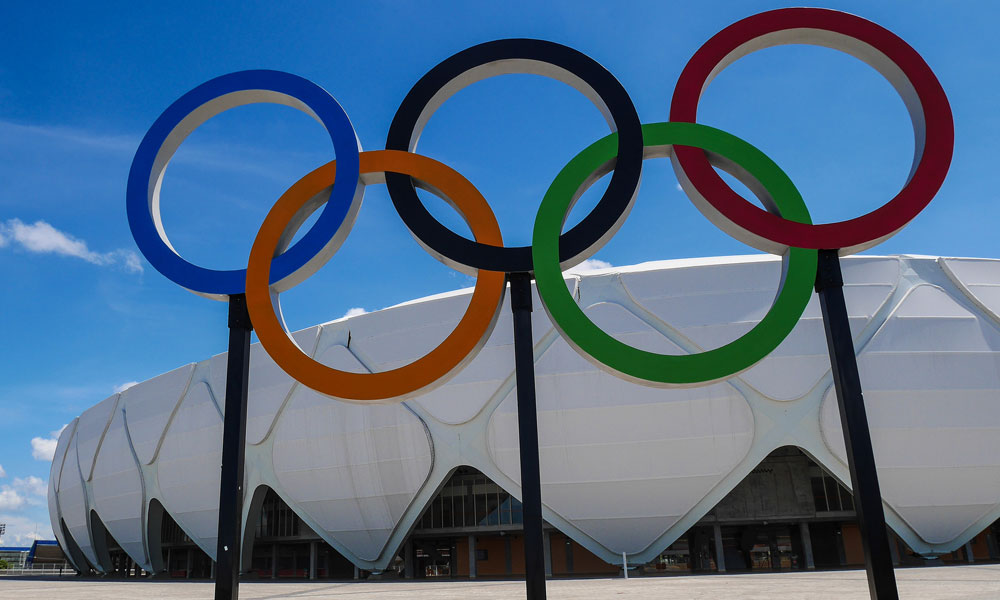
Faced with whether to uphold a decision by the International Association of Athletics Federations (IAAF) to ban Russian track and field athletes from this summer’s Olympic Games, the International Olympic Committee (IOC) tried this week to find a middle ground.
Ahead of the August games, the Olympics’ governing body upheld the IAAF ban against Russia because of pervasive doping among the country’s athletes. But IOC also said it would let individual Russian athletes undergo evaluations to determine whether they should be allowed to compete. Athletes from Kenya, which is also dealing with a doping scandal, will be given the same opportunity.
The IOC issued a five-point plan this week that called for the retesting of samples taken from the two most recent Olympics and for the World Anti-Doping Agency to undertake a full review of the anti-doping program.
The IOC also emphasized that punishments should not be limited to individual athletes and said the committee itself would be held to similar rules.
“All [national Olympic committees] and [international federations] should sanction not only doped athletes, but also their coaches, officials, doctors or any other persons implicated,” the committee wrote in its five-part plan (opens in a new tab). “They should in addition not request accreditation for the Olympic Games for any person currently implicated in an anti-doping rule violation.”
Though the IOC’s decision appears final, there may be more to come: Russia is likely to appeal the IAAF ruling (opens in a new tab) to the Court of Arbitration for Sport next week.
Mixed Reaction
The IOC decision led to mixed responses in different quarters. USA Today sports columnist Nancy Armour (opens in a new tab), for example, suggested that leaving an opening for Russians to continue to compete under their own flag, no matter how few, amounts to a major concession.
“It’s a chaotic mess, with no real resolution in sight,” she wrote.
Others disagreed, including Canadian hurdler Perdita Felicien, who said that the loophole gives athletes more say in the process.
“For a long time, clean athletes have been asking for protection, they’ve been asking for justice, and they haven’t gotten it at all, so I think it’s about time. There has to be collective responsibility,” Felicien told the Toronto Star (opens in a new tab).
Felicien’s stance matches that of the World Olympians Association (WOA), which previously spoke out against blanket bans like the one by the IAAF.
WOA argued this week that doping analysis should be done by a body that is “fully independent” and that a permanent process should be set up to allow individual athletes to show their personal eligibility.
“The present situation presents world sport with a great opportunity to fix a system which patently does not fully function and to move toward a situation which everyone wants: a real level playing field for all,” WOA President Joël Bouzou said in a statement (opens in a new tab).
(Mark_JH/Flickr)

Comments
Comments are for ASAE members. Learn more about comments on this site.
Log in to your member account or join ASAE!