
Why Mental Health Experts Shouldn’t Discuss Donald Trump
The two APAs---the American Psychiatric Association and the American Psychological Association--are reminding practitioners that opinions on a person's mental health can't be rendered from a distance. It's an ethical principle that goes back 50 years, to the candidacy of Barry Goldwater.
Heads up: this content is over 5 years old, so some information may be out of date.
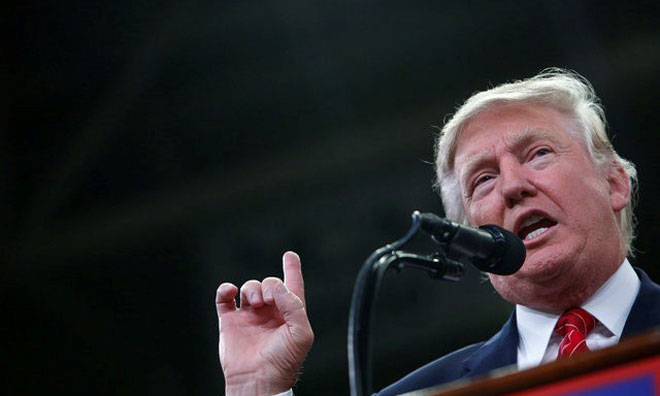
Amid the current flurry of debate around the suitability of Republican nominee Donald Trump to serve as president, with some critics going so far as to question his mental health, the American Psychiatric Association has a reminder for its members: Don’t practice psychoanalysis from afar.
“The unique atmosphere of this year’s election cycle may lead some to want to psychoanalyze the candidates, but to do so would not only be unethical, it would be irresponsible,” APA President Maria A. Oquendo, M.D., wrote in a blog post (opens in a new tab) published last week.
Oquendo invoked the organization’s so-called Goldwater Rule, which prohibits psychiatrists from offering opinions on the mental health of a public figure they have never personally examined. The APA adoped the policy in 1973, nearly a decade after similar questions of psychological fitness arose during the 1964 presidential race about GOP nominee Barry Goldwater.
That fall, the magazine Fact led with a cover story titled “1,189 Psychiatrists Say Goldwater Is Psychologically Unfit to Be President! (opens in a new tab)” based on a survey the magazine had conducted. The number was misleading (opens in a new tab): While 1,189 psychiatrists made comments to this effect, the magazine reached out to more than 12,000 people, most of whom didn’t respond. The article led to a libel suit, which Goldwater won.
In explaining why APA adopted the rule nine years later, Oquendo noted:
While there was no formal policy in place at the time that survey was published, the ethical implications of the Goldwater survey, in which some responding doctors even issued specific diagnoses without ever having examined him personally, became immediately clear. This large, very public ethical misstep by a significant number of psychiatrists violated the spirit of the ethical code that we live by as physicians, and could very well have eroded public confidence in psychiatry.
Such concerns haven’t stopped mental health professionals in a variety of fields from rendering opinions on Trump. In the June issue of The Atlantic, for example, the head of Northwestern University’s Department of Psychology, Dan P. McAdams, wrote a lengthy profile of the candidate and businessman. “For psychologists, it is almost impossible to talk about Donald Trump without using the word narcissism,” McAdams wrote (opens in a new tab).
The American Psychological Association had previously issued a statement (opens in a new tab) from its president, Susan McDaniel, that such long-distance diagnoses are in conflict with its ethics code.
“Similar to the psychiatrists’ Goldwater Rule, our code of ethics exhorts psychologists to take precautions that any statements they make to the media are based on their professional knowledge, training, or experience in accord with appropriate psychological literature and practice and do not indicate that a professional relationship has been established with people in the public eye, including political candidates,” McDaniel said.
Oquendo’s statement left no fuzzy gray area for practitioners: “Simply put, breaking the Goldwater Rule is irresponsible, potentially stigmatizing, and definitely unethical,” she wrote.
(Eric Thayer/Reuters)

Comments
Comments are for ASAE members. Learn more about comments on this site.
Log in to your member account or join ASAE!