
Article Operations 3 min read
Laptop Ban Dropped, But Groups Mixed on Added Airport Security Measures
New security measures for foreign passengers entering the U.S.—an alternative to a proposed ban on laptops—are expected to cause slowdowns in airports abroad, and airline groups say that while the solution beats banning laptops, it might still be a bumpy road.
Heads up: this content is over 5 years old, so some information may be out of date.
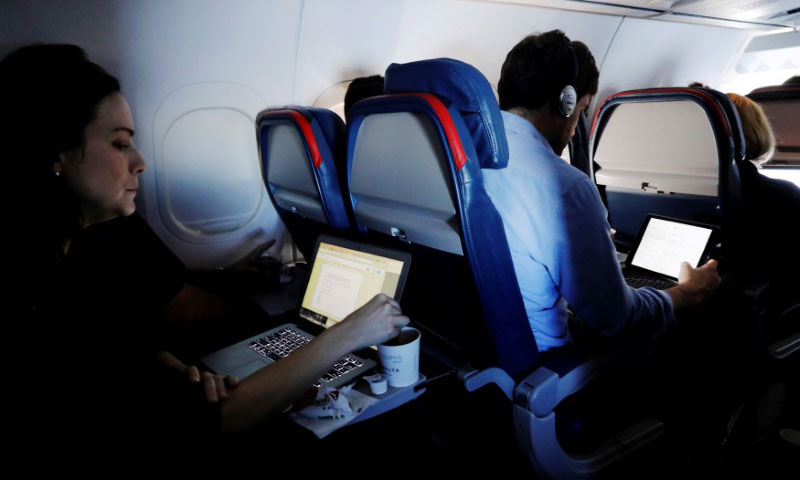
The good news is that travelers heading to the United States will be able to bring their laptops with them on the flight.
The bad news? The line at security is about to get a lot longer. The U.S. government on Wednesday announced a set of new security measures for ensuring electronic devices were not explosive in nature. The new strategy (opens in a new tab) replaces a regulation that banned laptops from being used in flight cabins on planes traveling from certain Middle Eastern countries, but will take effect globally, affecting the travel plans of 325,000 people on 2,000 commercial flights each day.
The plan was put in place largely to prevent an expansion of the laptop ban to European airports—a plan that had been widely criticized by airline and travel groups. While the new solution is better than the alternative, some industry groups nonetheless expressed concern with the latest move, while others were hopeful it would ultimately prove the correct solution.
Airlines for America President and CEO Nicholas E. Calio said his organization’s membership would go along with the plan but said the industry felt left in the dark by the development of the new measures.
“While we have been assured that carriers will have the substantial flexibility necessary to implement these measures on a global scale, we believe that the development of the security directive should have been subject to a greater degree of collaboration and coordination to avoid the significant operational disruptions and unnecessarily frustrating consequences for the traveling public that appear likely to happen,” Calio stated (opens in a new tab).
In Europe, industry stakeholders are bracing for impact. In comments to Reuters, an ACI Europe spokesman warned that implementation costs “will ultimately fall on airports, airlines, and air travelers.”
“It’s difficult to estimate, at this point, how much the new measures will cost, but it is likely to be significant,” the spokesman, whose organization represents European airports, told the wire service (opens in a new tab).
On the other hand, U.S. Travel Association Executive Vice President for Public Affairs Jonathan Grella credited stakeholders for making progress on the issue but emphasized to the federal government that messaging was key at the moment—especially considering the forthcoming re-implementation (opens in a new tab) of travel restrictions following a Supreme Court decision.
“Once again, we urge the Trump administration to offset any limiting security messages and policies with a serious and sustained welcome message to legitimate travelers,” Grella said in a statement (opens in a new tab). “The world must hear that we are closed to terror, but open for business.”
Meanwhile, ASAE President and CEO John H. Graham IV, FASAE, CAE, in a statement to Associations Now, expressed hope that the compromise would prove the right solution to the issue.
“We’re hopeful that airlines and airports will be able to smoothly implement the enhanced security and screening measures announced by Homeland Security officials this week,” Graham said. “The good news is that it appears the government has found a way to raise the bar in terms of necessary security precautions without the need for a wide-scale laptop ban or other policies that would inconvenience the traveling public.”
(Lucas Jackson/Reuters)

Comments
Comments are for ASAE members. Learn more about comments on this site.
Log in to your member account or join ASAE!