
Cattlemen’s Association Calls for Tougher Meat Labeling Standards
The U.S. Cattlemen’s Association, responding to member concerns, has called on the USDA to issue stricter standards so that meat-like plant analogues or lab-grown alternatives can’t be labeled “meat” in stores.
Heads up: this content is over 5 years old, so some information may be out of date.
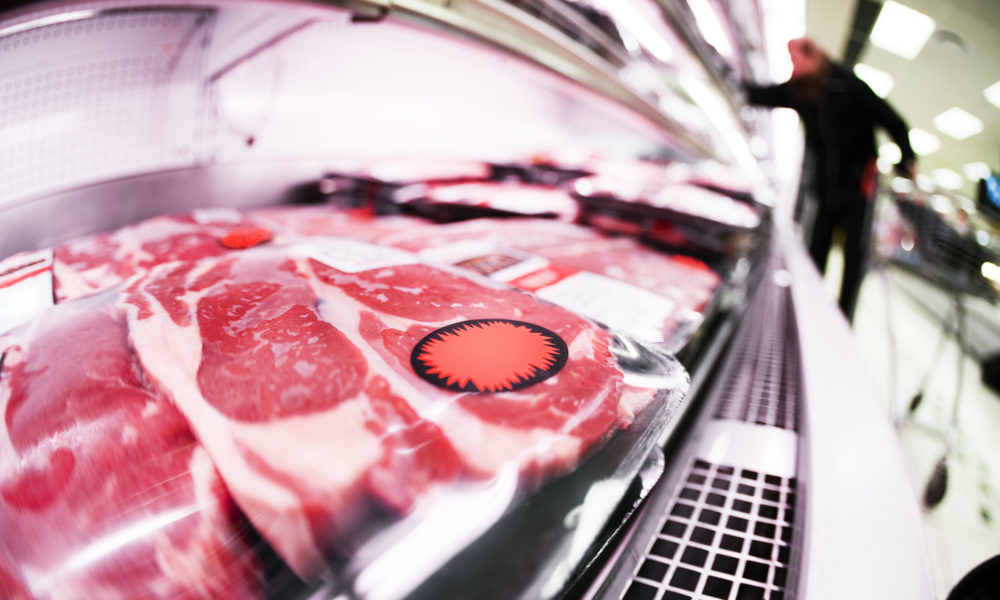
It turns out that the question consumers should ask isn’t “Where’s the beef?” Rather, they should be asking, “Did the beef come from a lab?”
That’s the message from the U.S. Cattlemen’s Association to federal regulators. USCA recently filed a petition with the U.S. Department of Agriculture’s (USDA) Food Safety and Inspection Service (FSIS) to change the way beef is labeled to ensure that consumers can tell the difference between traditional cuts of beef and meat analogues that look like the real thing.
In its petition (opens in a new tab) [PDF], USCA expressed concern that no current rules prevent makers of alternative products from calling them meat:
USCA has learned that some major U.S. meatpackers and companies in other countries are heavily investing in creating alternative products that may resemble in appearance and taste beef products, including synthetic beef and beef grown in laboratories using animal cells, known as in vitro meat, bio meat, clean meat, or cultured meat. Such products, which are not derived from animals born, raised, and harvested in the traditional manner, should not be permitted to be marketed as beef, or more broadly as meat products.
The move comes at a time when meat analogues are becoming increasingly sophisticated. The plant-based Impossible Burger, for example, attempts to re-create the look and feel of a beef patty (opens in a new tab), down to its ability to “bleed” like a traditional hamburger. Meanwhile, the startup Memphis Meats has gained much buzz over its “clean meat” process (opens in a new tab), which has successfully grown beef, chicken, and duck from stem cells using biotechnology.
Impossible Burgers are a hot commodity (opens in a new tab) in the restaurant world at the moment (especially at actor Mark Wahlberg’s chain (opens in a new tab)), while Memphis Meats is a few years off from releasing a commercial product. Meanwhile, interest in the alternatives is growing, from both investors and the public.
The beef industry is putting on a brave face. “We’ll see what the marketplace says, but we feel good about the growth of beef and the consumer’s confidence in our product,” Nebraska Cattlemen Executive Vice President Pete McClymont told the Omaha World-Herald (opens in a new tab) last month.
But the USDA petition highlights the industry’s response to member concerns that consumers may not be able to distinguish what’s traditional beef from what isn’t.
“Accurate labeling of U.S. beef products has always been a number one priority for the U.S. Cattlemen’s Association,” USCA President Kenny Graner said in a statement quoted by Ag Daily (opens in a new tab). “Our members brought forth their concern with the labeling of products as ‘meat’ that are not in fact derived from bovine animals, and USCA leadership and staff moved ahead with this petition to address that concern.”
(RapidEye/E+/Getty Images Plus)

Comments
Comments are for ASAE members. Learn more about comments on this site.
Log in to your member account or join ASAE!