
Rest Stop Commercialization Push Runs Into Association Opposition
Trade groups representing convenience stores and truck stops, as well as the National League of Cities, have spoken out against attempts to commercialize rest stops at state and federal levels. Despite this, the idea is drawing interest from President Trump and some state governors.
Heads up: this content is over 5 years old, so some information may be out of date.
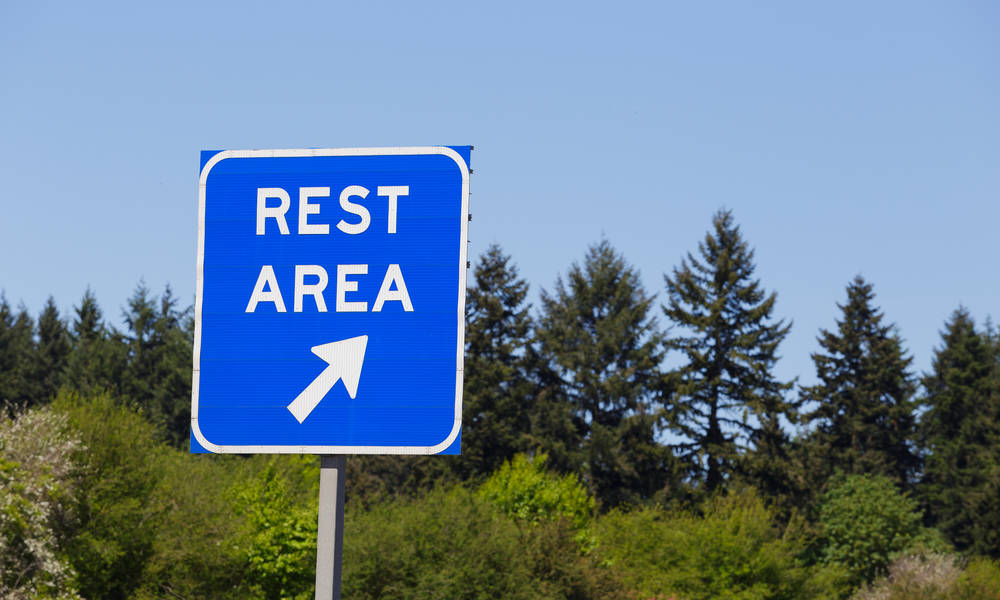
For nearly 60 years, federal law has prohibited businesses from operating at rest stops located directly on the nation’s interstate highways—a policy that, among other things, created the modern truck stop industry.
As with most policies, there are exceptions: Rest stops along the East Coast that already had restaurants or stores when the law passed were grandfathered in. But proposals to loosen restrictions to allow private businesses to operate at other rest stops—including President Trump’s recent infrastructure proposal and initiatives supported by New York Gov. Andrew Cuomo (opens in a new tab)—have a number of industry groups speaking up.
One group strongly opposed to the idea is the National Association of Truck Stop Owners, whose recent study, Rest Area Commercialization and Truck Parking Capacity, makes the case that commercialized rest stops run by the government and located directly on the interstate right-of-way, as opposed to private truck stops located off-highway at exits, would cut down on the number of places for truckers to park their vehicles.
“This reaffirms the industry’s position that truck parking is best handled by the private sector, which provides nearly 90 percent of the nation’s truck parking,” NATSO President and CEO Lisa Mullings said in a news release (opens in a new tab).
NATSO was recently joined by the National League of Cities (NLC) in urging lawmakers to oppose rest stop commercialization initiatives.
“Commercializing rest areas would effectively displace property tax revenue that cities and towns near interstates depend on,” NLC Executive Director and CEO Clarence E. Anthony said in a joint press the release (opens in a new tab). “This loss of revenue would directly impact the ability of municipalities to pay for their own infrastructure needs, widening the nation’s infrastructure gap.”
Meanwhile, the New York Association of Convenience Stores is fighting Cuomo’s proposal to increase the number of commercial rest stops, which often include built-in Taste NY shops that sell locally produced goods.
“At a time when New York convenience stores are struggling to grow sales in order to keep up with state-imposed labor cost mandates, NYACS strongly opposes this as an unwelcome, unnecessary, and inappropriate disruption of the existing retail environment,” NYACS President Jim Calvin said, according to Convenience Store News (opens in a new tab).
Privatized rest stops have cropped up in a few places. In New Hampshire, a public-private partnership led to the creation in 2015 of a welcome center (opens in a new tab) that, due to a regulatory quirk, can serve alcohol.
Conservative think tanks like the Heritage Foundation (opens in a new tab) and American Enterprise Institute are supporting the idea. In a recent Wall Street Journal piece, AEI visiting scholar R. Richard Geddes, director of the Cornell Program in Infrastructure Policy, argued (opens in a new tab) that commercializing rest stops would create jobs, generate revenue to pay for infrastructure, and even encourage local culture.
“Rest stops that aren’t subject to federal restrictions illustrate the possibilities,” he wrote, citing the privately owned Iowa 80 Truckstop (opens in a new tab), which includes a library, dental practice, movie theater, and barber shop.
While the policy could change in the future, for now many rest stops are limited in their commercial options to vending machines and, occasionally, selling their names (opens in a new tab).
(joshuaraineyphotography/iStock/Getty Images Plus)

Comments
Comments are for ASAE members. Learn more about comments on this site.
Log in to your member account or join ASAE!