
Getting to Zero: Maritime Climate Change Effort Earns Plaudits
With a major emphasis in trade and transport, the maritime industry is responsible for more than its fair share of greenhouse gas emissions. But with broad support, the industry is looking to turn a corner with a new coalition.
Heads up: this content is over 5 years old, so some information may be out of date.
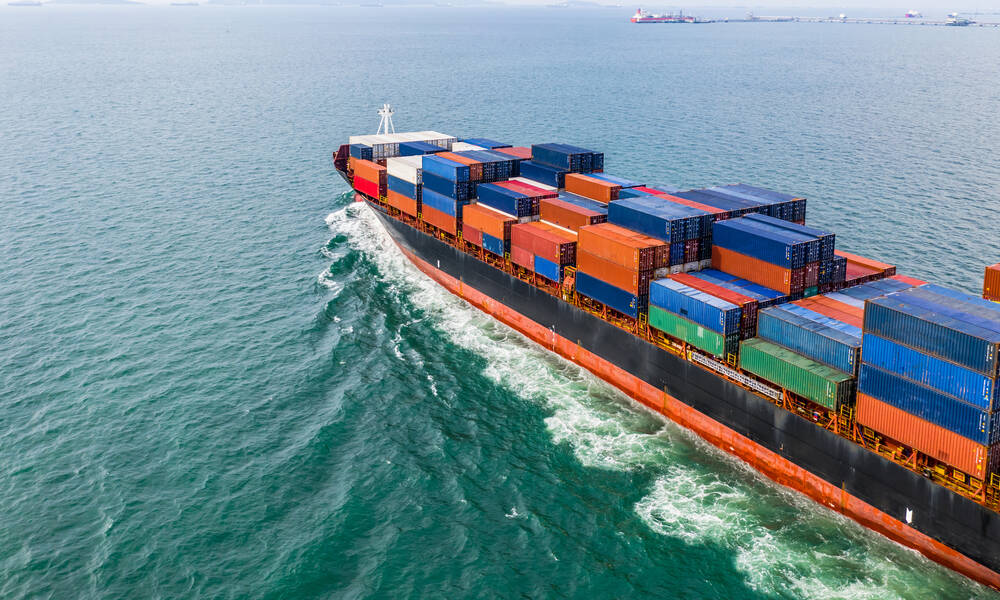
The maritime field—in the midst of all the trade and transport it helps manage—has a big collective impact on greenhouse gas emissions.
And with the risks of those emissions, already representing 2 to 3 percent of all emissions created annually, growing even more in the decades to come, the industry is working to do something about it.
Last fall, a number of groups—led by the World Economic Forum, the Global Maritime Forum, and Friends of Ocean Action—launched the Getting to Zero Coalition, an effort that aims to deliver zero-emission vessels on deep-sea routes by 2030 and cut emissions by half in 2050 compared to 2008. First announced at the United Nations Climate Action Summit (opens in a new tab)—the same one teenage activist and noted maritime traveler Greta Thunberg (opens in a new tab) made headlines at—the initiative drew positive notices that have evaded other climate efforts in recent months.
In a blog post, Aoife O’Leary, Natacha Crete, and Marie Hubatova of Environmental Defense Fund Europe said that Getting to Zero showed the industry was taking the problem seriously.
“It sends the strong signal that shipping is ready to make a clean break from the oil derived sludge that currently powers the world’s largest vessels,” the authors wrote (opens in a new tab). “The industry has zero emissions vessels clearly in their sights in order to regain the green moral high ground.”
The initiative started with around 75 partners—and now it’s drawing in even more. Last month, Carnival Corporation joined the coalition (opens in a new tab), and the engine maker MAN Energy Solutions also recently came on board. In comments to Ship Technology, the company’s senior vice president, Bjarne Foldager, said that the long operation times of maritime fleets mean that zero-emissions vehicles operating in 2030 will remain in transit in 2050—the year the coalition aims to reach 100 percent decarbonization.
“We don’t want to be part of the problem, we want to be part of the solution, and it is the right thing to do to make sure our business is sustainable in the long term,” Foldager told the website (opens in a new tab).
He added, however, that the process will not be easy—as the solutions that MAN Energy and others come up with “have to be business viable.”
“If they have a competitive edge, I think they have a chance to move much faster,” he said.
In a news release, Carnival Senior Vice President of Maritime Affairs Tom Strang noted that while the challenge was difficult, the business case was strong.
“The health and vitality of our oceans and seas, along with the hundreds of communities we visit across the globe, are absolutely essential to our business,” Strang said (opens in a new tab). “We have a deep commitment to safety, environmental responsibility and consistently exceeding guest expectations, and being an active part of the Getting to Zero Coalition is another important step for the environment.”
(AvigatorPhotographer/iStock/Getty Images Plus)

Comments
Comments are for ASAE members. Learn more about comments on this site.
Log in to your member account or join ASAE!