
Article Marketing / Communications 3 min read
How a Canadian Group is Fighting COVID-19 by Battling Online Misinformation
The Canadian Association of Science Centres joined forces with other groups to launch #ScienceUpFirst, a social media campaign designed to combat online misinformation about COVID-19 and vaccination.
Heads up: this content is over 5 years old, so some information may be out of date.
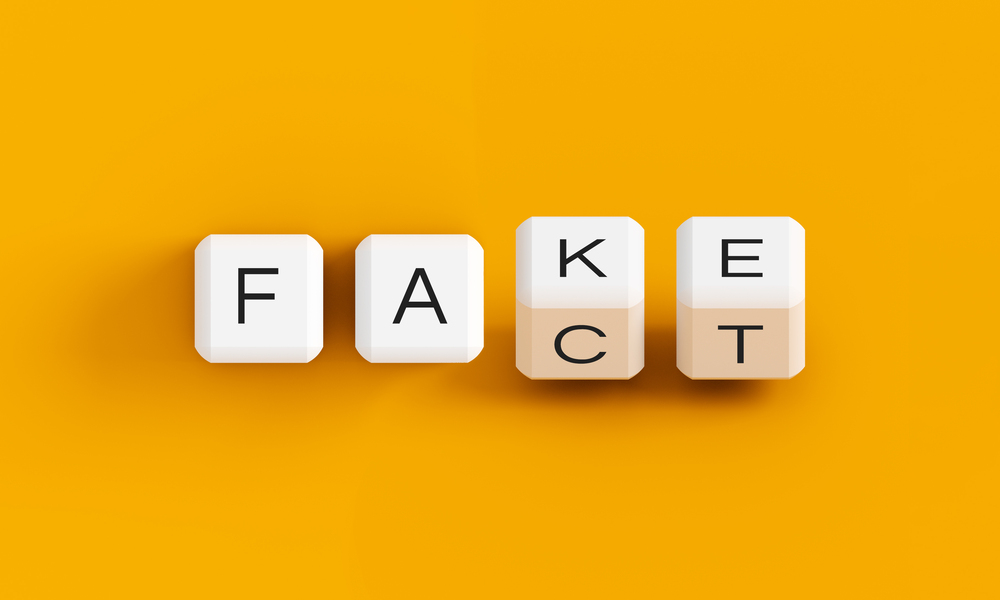
With misinformation about COVID-19 and vaccination running rampant in multiple countries, many organizations are also seeing bad information circulate in their own realm and wondering how to stop it. The Canadian Association of Science Centres realized that communication could be its tool in the fight against this insidious problem.
“The World Health Organization has declared what is happening an infodemic (opens in a new tab),” said Marianne Mader, Ph.D., executive director of CASC. “We got together and asked, ‘What can we do about it?’ And our solution was to focus on social media channels.”
CASC partnered with COVID-19 Resources Canada and the Health Law Institute at the University of Alberta to create the #ScienceUpFirst (opens in a new tab). Launched in late January (opens in a new tab), the initiative aims to fight online misinformation with information.
“There are some outdated theories that people with information bias won’t pay attention when you put the facts out there,” Mader said. “There are studies showing (opens in a new tab) that—contrary to what some people might believe—putting accurate information out there makes a difference. If you leave a gap, that’s when it is going to get filled with misinformation.”
The campaign aims to fill the gaps with accurate information produced by the nation’s leading research organizations. Mader said it was important for the organizations involved to join forces because it helps address a nationwide deficiency in disseminating science information.
“In Canada, with research that’s done, there is no clear mandate that it needs to be communicated to the public and no clear funding to help do that,” Mader said. “As a result, we have a disconnect often between scientific studies and sharing the results with the public. The longer-term legacy of this initiative will be that it’s creating a framework, which doesn’t really exist in Canada now, to create strong bridges between the science communication sector and our research sector.”
While #ScienceUpFirst is initially focused on Facebook, Twitter, and Instagram, it will be deployed over a wide array of channels over time.
“The intent is to build a movement, where this hashtag, ScienceUpFirst, has a life and people are proud to use that and identify with it,” Mader said. “People will say, ‘Yes, I want to share accurate information and be part of this movement to pass on this information.’”
Once the campaign builds some traction, CASC also hopes to offer a targeted approach using its many member science centers. “I would say one of the key functions we are looking to do—a little bit down the road—is create resources that community organizations that communicate science to their audiences can use themselves and remix in a way that’s appropriate for their audience,” Mader said. “When we get to the stage, when we can create these information kits for community partners, they will also be going out to our members.”
While CASC hopes to expand its reach and be more targeted, Mader acknowledges that there are limits to what the campaign can do. “I don’t think we can claim this campaign will affect deep deniers, but certainly people who already trust science information, or those who are unsure about what is true, it can help,” she said. “There are studies showing the majority of the population of Canadians want to share true information. … For that audience in particular, I think ScienceUpFirst will be really helpful.”
In addition, Mader said the campaign is poised to be effective because CASC members hold a unique place among the nation. “Public trust surveys have shown, in Canada, where people go to seek reliable science content. Number one, they trust universities. Number two, they trust science centers and science museums,” she said. “Knowing that the community organizations they trust are sharing accurate information, we think will make a difference.”
How has your organization used communication to combat a problem in your field? Share in the comments.
(Anton/iStock/Getty Images Plus)

Comments
Comments are for ASAE members. Learn more about comments on this site.
Log in to your member account or join ASAE!