
Article Marketing / Communications 2 min read
The War for Consumer Data: How Big Retail Creates Big Value
A Grocery Manufacturers Association study shows the increasing sophistication of consumer data — though some worry it could smother competition.
Heads up: this content is over 5 years old, so some information may be out of date.
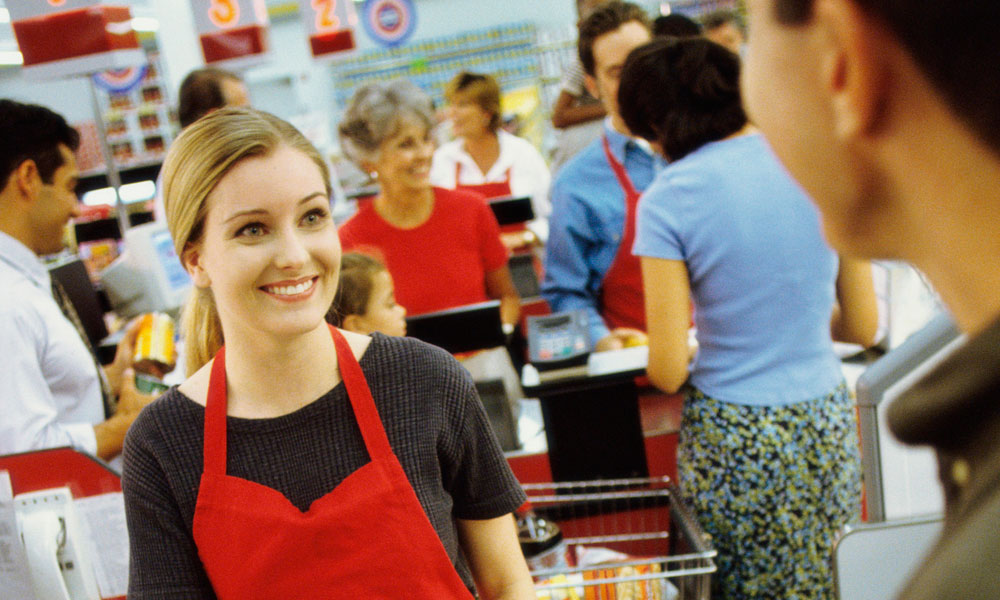
Does it seem like the grocery store always has the stuff you like? That’s no accident.
For years, grocery chains across the country have used sophisticated techniques to track spending by consumers, and that data has often proven extremely valuable to those companies, allowing them to do market research so that they know just where to place a new store, what items to place in that store, and the shopping habits of the community.
A new study by the Grocery Manufacturers Association explains the nature of this growing marketing science:
What needs to be recognized is that this manufacturer business model skews heavily to the capabilities of the largest retailers.
“As marketers increasingly come to understand that consumer behavior is not always a predictor of shopping behavior, they are becoming more focused on what drives shopper choice, both in online and physical stores,” the study states [PDF] (opens in a new tab).
How effective is it? Very. Harvard Business Review, for example, cites Kroger (opens in a new tab), which (through the help of its partner, dunnhumbyUSA) makes millions of dollars each year through the sale of its consumer data (opens in a new tab).
HBR’s Gary Hawkins, however, notes that there may be a dark side to this level of knowledge about consumers — in that it could hurt smaller businesses that can’t compete with that degree of sophistication.
“What needs to be recognized is that this manufacturer business model skews heavily to the capabilities of the largest retailers,” Hawkins writes. “It’s simply much easier for the brands to execute by deploying entire teams of people against a Safeway or Target or Walmart. It is much harder to interact with hundreds or thousands of independent retailers.”
And there is a bit of a “creepy” factor, as well — one that occasionally catches the eye of the general public.
Earlier this year, a Forbes article with the headline “How Target Figured Out A Teen Girl Was Pregnant Before Her Father Did (opens in a new tab)” received nearly 2 million views after the story went viral — far more than its original source, a New York Times piece titled “How Companies Learn Your Secrets (opens in a new tab).”
What if we took this out of the context of groceries? What do you know about your members? What do your competitors know about your members? How do these techniques translate — and what is the value proposition of this kind of data? And is there a danger in turning your members off?
Leave your thoughts in the comments.

Comments
Comments are for ASAE members. Learn more about comments on this site.
Log in to your member account or join ASAE!