
Group Expresses Concern About the Hazy Definition of “Organic”
While the use of the term "organic" is regulated at the federal level, home and personal-care products, like soaps and clothing, don't fall under that scrutiny. Some associations would like to see more oversight—though one major grocery chain has proved helpful with cleaning up the industry.
Heads up: this content is over 5 years old, so some information may be out of date.
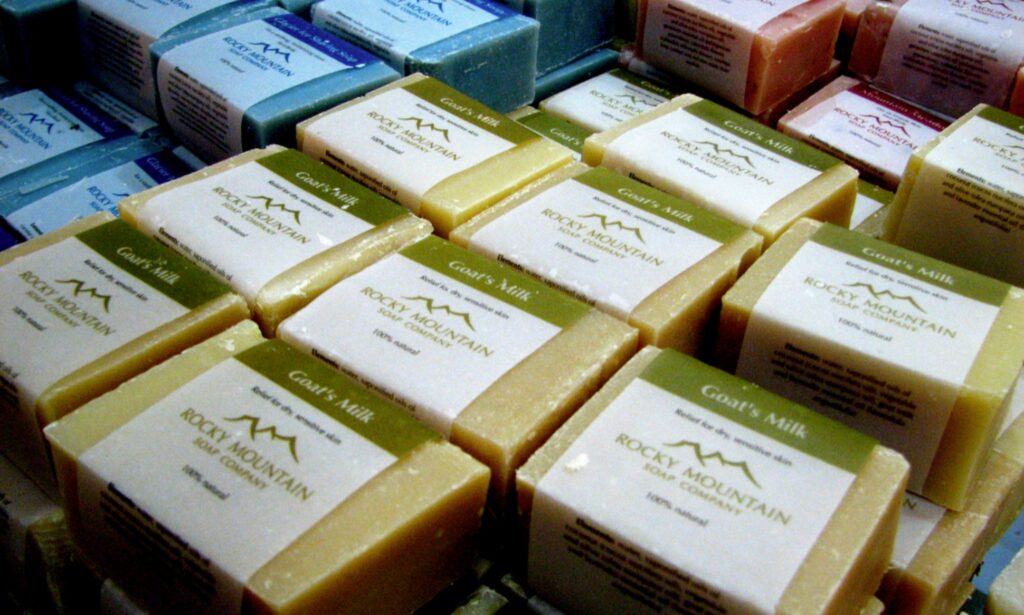
That organic facial cleaner you’ve been using may not really be organic after all, at least not in the way you think of the word.
That’s because the U.S. Agriculture Department (USDA) doesn’t regulate organic products besides food, leaving major gaps on store shelves. One trade group wants to see those gaps filled. More details:
The problem: Nonedible organic products represented a $2.8 billion industry last year, according to the Organic Trade Association (OTA), but regulations are loose on the use of the term, which is often associated with clothing, household cleaners, cosmetics, even mattresses. The USDA organic symbol found on a carton of soy milk is generally used only on food or agricultural products. This causes problems for some vendors, such as Dr. Bronner’s Magic Soaps, which has faced competition from brands that don’t manufacture their products according to the same exacting standards. But worse, it causes issues for consumers, who aren’t aware of the difference. “The consumer should not need a law degree to read a label,” OTA President Laura Batcha told the Associated Press (opens in a new tab).
Other industries see the problem, too: The problem isn’t limited to just what can be purchased in stores. Businesses often use the term “organic” as well, and a lack of regulation often makes it hard to spot the difference between the fakes and the genuine. Dry cleaners, for example, often call themselves “organic” even if they use petroleum-based solutions, and while that may be true based on the dictionary definition, it’s not generally what the public understands the term “organic” to mean. Drycleaning and Laundry Institute CEO Mary Scalco advises the organization’s members to clarify for customers the definition of “organic.” “Because there is no real regulation on this right now, you want to make sure you don’t mislead the public,” Scalco told the AP.
Whole Foods to the rescue: With the federal government failing to solve the regulatory issue, the private sector has had to step in. In 2010, Whole Foods Market announced that manufacturers of cosmetics or personal-care items sold in its stores had to meet either the USDA’s National Organic Program standard or NSF International’s 305 ANSI standard (opens in a new tab) by mid-2011. By 2012 all of the personal-care products sold at the store met the company’s standards. “Believe it or not, there are no Federal laws that regulate how the word ‘organic’ can be used on personal care products. Our shoppers don’t expect the meaning of organic to change between store aisles, and neither do we,” Jeremiah McElwee, global coordinator of the personal-care department, wrote at the time (opens in a new tab).
While the steps taken by Whole Foods have helped, trade groups would like to see greater changes. In a policy brief, OTA emphasizes (opens in a new tab) that it would like to see the USDA’s National Organic Program take ownership of regulation for personal-care products—though the association admits that may be a long road.
“However, we believe it is the right solution for the long term,” OTA states.
(photo by Dave O/Flickr)

Comments
Comments are for ASAE members. Learn more about comments on this site.
Log in to your member account or join ASAE!