
As Cars Get Smarter, Auto Groups Make Privacy Pledge
With automobile technology ensuring that cars will someday be as connected as mobile phones, industry groups are getting ahead of federal regulations to reassure that drivers’ privacy will remain safe.
Heads up: this content is over 5 years old, so some information may be out of date.
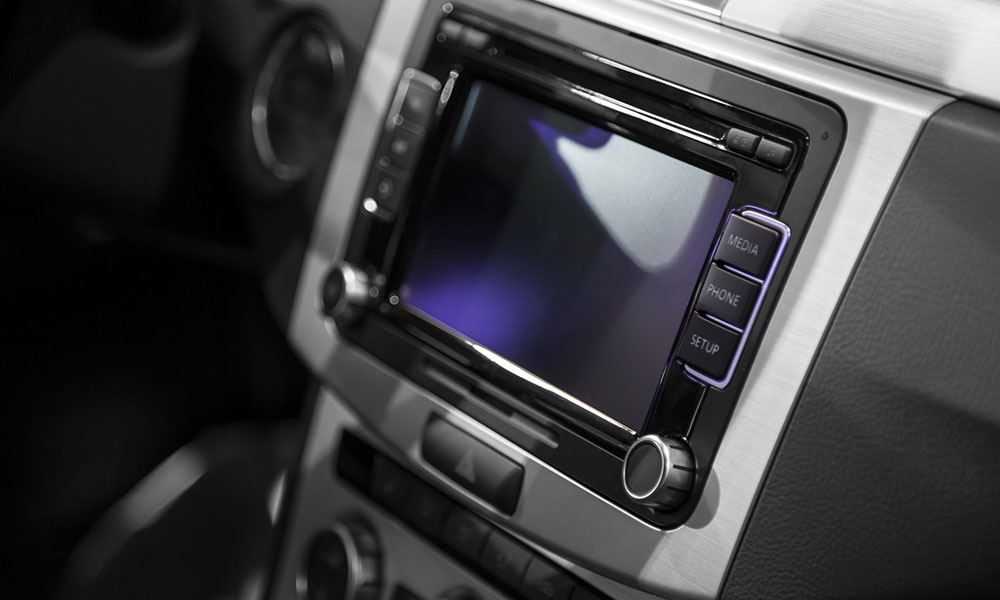
The age of the connected car is creating a need for something that auto manufacturers didn’t have to deliver before: a promise that your privacy is secure, no matter what the underlying technology can do.
On Wednesday, 19 automakers—represented by Global Automakers and the Alliance of Automobile Manufacturers (AAM)—vowed to follow voluntary standards for driver privacy. The standards include (opens in a new tab) [PDF], among other things:
- A promise that automakers will be transparent about the information they collect from vehicles and consumers, through the usage of clear privacy practices
- Limits on the information that automakers can collect from users, specifically regarding where a person is driving
- Assurances that automakers will share data with government authorities only in limited circumstances
“Our principles build on the long-standing Fair Information Practice Principles, Federal Trade Commission guidance, and the White House Consumer Privacy Bill of Rights,” AAM President and CEO Mitch Bainwol said in a statement (opens in a new tab). “These landmark privacy frameworks, when applied to automobiles, should reassure auto customers that their privacy is taken seriously.”
In a statement of his own, Global Automakers President and CEO John Bozzella echoed Bainwol’s sentiment (opens in a new tab): “As modern cars not only share the road but will in the not too distant future communicate with one another, vigilance over the privacy of our customers and the security of vehicle systems is an imperative.”
Technology Rising
The pledge, which was sent to the Federal Trade Commission on Wednesday, comes at a time when technology promises to reinvent the way we drive. Already, mobile apps like Waze have helped gamify the driving experience, and cars have gained much in the way of technology in recent years: Rear-view cameras, voice-activated systems, and dashboard screens are becoming increasingly common.
And even more innovations are coming shortly down the road, including vehicle-to-vehicle communication technology, cars with Ethernet connections rivaling most server racks, and (of course) Google’s self-driving vehicles.
But the new technologies are raising concerns about cars becoming vehicles for targeted advertising. The Associated Press notes (opens in a new tab) that the wording of the automakers’ pledge still leaves that door open, but AAM’s Bainwol emphasized that such messaging would be opt-in, not opt-out.
“Google may want to become an automaker, but we don’t want to become Google,” he said.
Critics remained skeptical of the approach, with some arguing that, even as the voluntary commitment goes into effect, federal regulation would provide stronger protections.
“You just don’t want your car spying on you,” Electronic Privacy Information Center Executive Director Marc Rotenberg told the Associated Press. “That’s the practical consequence of a lot of the new technologies that are being built into cars.”
(iStock/Thinkstock)

Comments
Comments are for ASAE members. Learn more about comments on this site.
Log in to your member account or join ASAE!