
Article Marketing / Communications 2 min read
National Association of Police Organizations: At the Center of a Storm
How the National Association of Police Organizations has managed two high-profile cases involving deaths of unarmed citizens at the hands of police officers. Also: Are virtual teams better than those that share offices?
Heads up: this content is over 5 years old, so some information may be out of date.
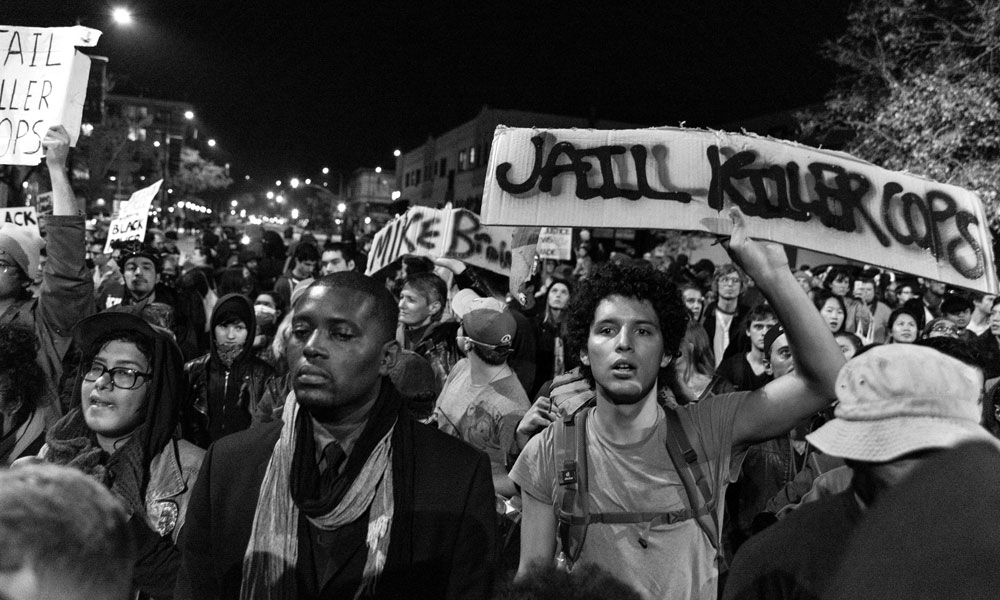
2014 might go down as the year that online-driven mass protests truly hit scale in the United States.
Large-scale protests organized and fueled by social media have helped shape politics in countries such as Egypt and Ukraine. But in the U.S., it took two cases—the deaths of Michael Brown and Eric Garner at the hands of police—to ignite wide-scale protests in cities nationwide.
Imagine the challenge of running a police association in the midst of all that anger and passion. In today’s Social Media Roundup, read about one group that’s rising to it.
What It’s Like
Life inside a #police (opens in a new tab) association as protests rage over #Ferguson (opens in a new tab), Staten Island. http://t.co/cZUCxvuKkM (opens in a new tab) #assnchat (opens in a new tab) pic.twitter.com/QwdZhdnr1z (opens in a new tab)
— Connectivity (@CQConnectivity) December 8, 2014 (opens in a new tab)
The emotions around the recent grand jury decisions not to indict police officers in the deaths of Brown and Garner have put a lot of pressure on police nationwide—and the associations that represent them.
Last week, CQ Roll Call‘s Glen Justice highlighted (opens in a new tab) how the National Association of Police Organizations has handled the outcry around the two cases. Other associations have responded to these cases, Justice notes, “but the National Association of Police Organizations represent street cops, the very people at the heart of the two incidents. And that’s a different situation entirely.”
The group’s executive director, William Johnson, explained the strategy the group has undertaken to counter misinformation, to fight for a fair process for the officers, and to support its members.
“We want to have credibility with the people we speak to, whether that’s the public or politicians or the press,” Johnson said. “It’s important to acknowledge when horrible things happen.”
Head over to CQ Roll Call‘s Connectivity site (opens in a new tab) to learn more. (ht @CQConnectivity (opens in a new tab))
Virtually Better?
Well-managed virtual teams can actually outperform others @ferrazzi (opens in a new tab) @HarvardBiz (opens in a new tab) http://t.co/fA85B3wDHD (opens in a new tab) #assnchat (opens in a new tab) #hrchat (opens in a new tab)
— Jay S Daughtry M.Ed. (@ChatterBachs) December 8, 2014 (opens in a new tab)
Remote teams often get a bad rap—stories like the one involving abuses by employees of the U.S. Patent and Trademark Office (opens in a new tab) tend to have that effect.
But as this month’s Associations Now cover story reported, remote teams can be efficient and productive, and a new Harvard Business Review article reinforces that proposition.
Keith Ferrazzi, CEO of consulting and training firm Ferrazzi Greenlight, writes (opens in a new tab) that plenty of research shows virtual teams can perform well—and, in some cases, better than teams working in the same office—but the secret to making that formula work is all in the execution.
“So how do you create and lead an effective virtual team? There’s a lot of advice out there, but through our research and our experience helping organizations navigate collaboration challenges, we’ve concluded that there are four must-haves: the right team, the right leadership, the right touch points, and the right technology,” Ferrazzi writes.
Be sure to check out the full article (opens in a new tab) for more tips. (ht @ChatterBachs (opens in a new tab))
(Annette Bernhardt/Flickr)

Comments
Comments are for ASAE members. Learn more about comments on this site.
Log in to your member account or join ASAE!