
Association GR Departments Adapt Amid Government Shutdown Threats
In the wake of last week’s brief federal shutdown---and anticipating future ones---associations are planning ahead, and advocating for bills that don’t make support for their industries and employees contingent on the next continuing resolution.
Heads up: this content is over 5 years old, so some information may be out of date.
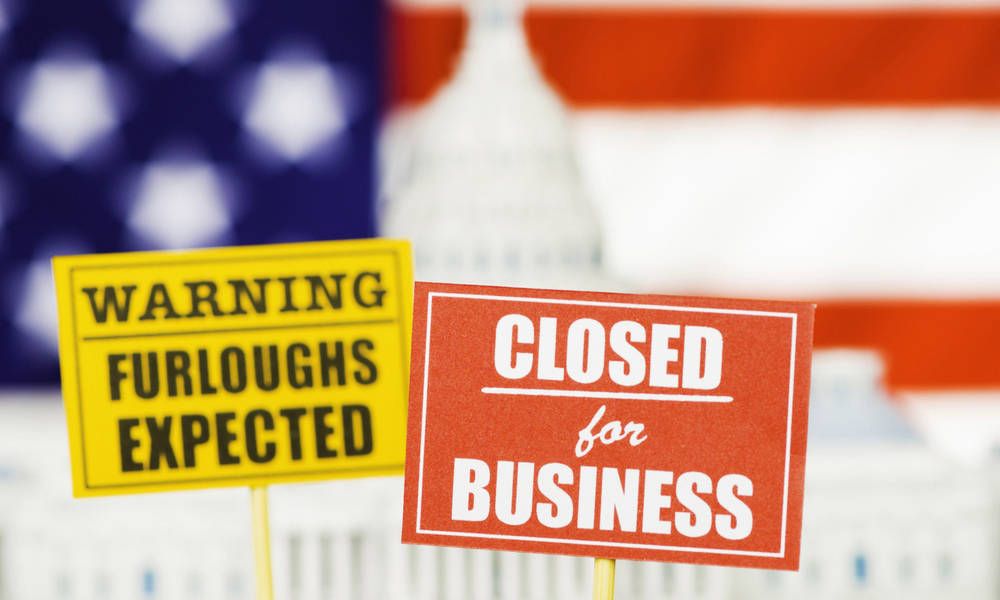
The persistent threat of a federal government shutdown in recent months—and the actual shutdown that lasted three days last week—has had an impact on association members. It’s affected how associations handle government relations as well.
You really have to anticipate the needs of your members.
John Boling, vice president of government affairs for the Institute of Makers of Explosives, says that in advance of the most recent shutdown, IME determined who among its members were at risk to be affected by it—in its case, ATF and DHS employees. “You really have to anticipate the needs of your members,” he said. “Where are they going? Where was the pinch point? People are in a state of confusion, so you try to help them plan. We try to figure out [which agencies] are open and who isn’t.”
Boling has had plenty of company. In the days leading up to the shutdown, many organizations took to Twitter (opens in a new tab) to voice their concerns about what the failure to fund the government would mean for their members. And it’s prompted some associations to advocate for new funding structures for government programs related to their industries in anticipation of shutdowns.
For instance, the National Flood Insurance Program is contingent on government funding and is required in many flood-risk communities to close home sales, prompting multiple associations to speak out. Randy Noel, president of the National Association of Home Builders, told Louisiana newspaper Acadiana Advocate last week that NAHB has been pursuing ways to detach NFIP from continuing-resolution funding (opens in a new tab) to avoid having home sales delayed or nullified because of shutdowns. “If this thing goes on for a while, it could be a problem,” he said.
In a related statement, the National Association of Professional Insurance Agents said the shutdown “demonstrates the need for Congress to pass a long-term reauthorization of the program (opens in a new tab). Lapses in the NFIP, even very short ones, have a negative effect on consumers.”
The shutdown also moved associations to support bills that anticipated its direct effects. Last week, for instance, the American Federation of Government Employees supported a bill that guaranteed back pay for any federal workers furloughed (opens in a new tab) during a shutdown, which was passed last week. “AFGE is encouraged that lawmakers came to their senses and passed the backpay bill (opens in a new tab), shielding the employees from the impact of the crisis they didn’t create,” the union said in a statement.
Thinking in advance of future potential shutdowns, IME’s Boling stresses the importance of gathering data from members about the impact of a government closure. “If we’re looking at another potential shutdown or a longer-term shutdown, we may have to drop whatever we’re doing and pivot so that we go to the government to say, ‘Listen folks, this is how it’s impacting us.’ So we have to go back to our members, figure out what this sort of delay is costing them, then turn around and then regurgitate that in a helpful manner to government to say, ‘You need to open up.’”
Anticipating those crises and responding to them early is critical, Boling said, since the flurry of activity before and during a shutdown can render many government contacts inaccessible. “When they’re not there, it’s kind of hard to figure out who you need to talk to,” he says. “So you just end up with voicemails. And that’s the most difficult part is you then have to find the political person higher up. But their voicemails are full because everybody is calling them too.”
(CatLane/iStock/Getty Images Plus)

Comments
Comments are for ASAE members. Learn more about comments on this site.
Log in to your member account or join ASAE!