
How Associations Can Help End Sexual Harassment
Heads up: this content is over 5 years old, so some information may be out of date.
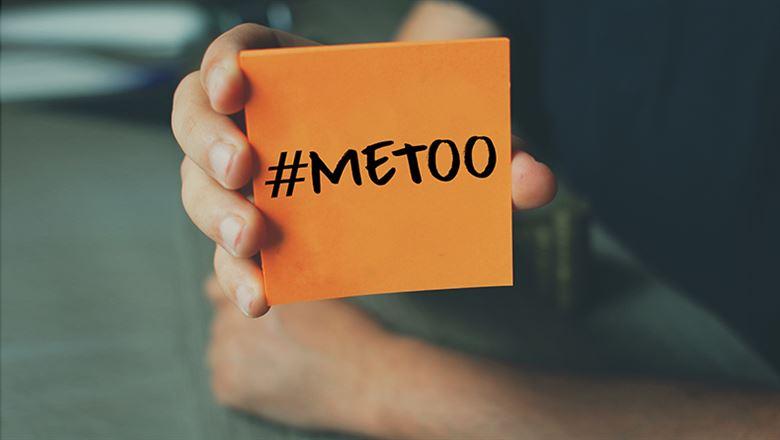
Two years before the #MeToo movement, the American Astronomical Society faced a sexual harassment firestorm. A prominent astronomer—a college professor who had once been honored with a prestigious AAS award—was found to have harassed multiple women and ultimately resigned from his post at the University of California-Berkeley. Then-AAS President C. Megan Urry, writing in Scientific American (opens in a new tab), called it a “wake-up call to reform our field.”
“As a professional astronomer, I have seen this behavior push women out of science, technology, engineering, and math (STEM),” Urry wrote. “I am angry that so many bright, ambitious, eager young scientists have had their dreams crushed, and I am sad that the world will not benefit from the discoveries and innovations those women (and it is most often women who are targeted) would have given us.”
AAS set out to explore the scope of harassment in the field, and the findings were stark. In a survey of more than 400 astronomers and planetary scientists, “a quarter of the respondents said they felt unsafe in their workplace in the last five years as a result of their gender,” says Christina Richey, former chair of the society’s Committee on the Status of Women in Astronomy and coauthor of the study, published in the Journal of Geophysical Research last July.
“It’s something that we need to understand for the betterment of our community and our science,” Richey says. “If we want to do the best science possible, we need to have truly the best people doing it. You can’t do that if you’re not in the room. Part of the study showed that people were skipping professional events because they felt unsafe.”
That’s the opposite of just about any association’s mission. While some organizations have been dealing with sexual harassment in their professional communities for many years, the recent stream of revelations about high-profile harassers and abusers has shown its pervasiveness in all segments of society. In some industries, rampant harassment is pushing people out of the profession or causing them to isolate themselves from their colleagues.
So the problem extends beyond individuals’ safety, security, and well-being to the association’s organizational health and the future of the field it represents. As conveners of professional communities, associations are in a unique position to influence the conversation about what conduct is acceptable, particularly as their members may face harassment—or perpetrate it—in various settings, including at association meetings.
Risk and Responsibility
The revelations have prompted many associations to develop or strengthen their member codes of conduct, sometimes sharpening language to specify exactly what kind of behavior and language is considered harassment.
Julia Judish, special counsel at Pillsbury Winthrop Shaw Pittman, LLP, says she’s seen a sharp uptick in concern among her firm’s association clients about sexual harassment and their role in protecting members.
“A member who experiences sexual harassment at an association-sponsored event could bring a negligence claim if the member believes that the association is somehow at fault for failing to take reasonable steps to prevent it, or for being on notice of the risks and not taking remedial steps,” Judish says. “Beyond any potential legal liability, most associations want to make sure members can come to their events and be safe—lawsuit or no lawsuit.”
I thought we didn’t have a problem.
— Rosina Romano, CMP, Entomological Society of America
Even thornier questions arise when a member is the alleged harasser. In perhaps the best-known case, the Academy of Motion Picture Arts and Sciences expelled producer Harvey Weinstein after well-publicized disclosures about sexual misconduct. But in a less extreme case, what would warrant expulsion or other forms of member discipline?
Associations need to define what conduct is relevant to membership, Judish says.
“Some professional societies or credentialing organizations have policies that view as relevant to holding the credential even conduct that occurs outside the context of the member’s professional activities,” such as fraud or dealing drugs, she says. But many “don’t take disciplinary action based on conduct in the member’s personal life that’s not somehow linked to their activities as a member or their qualifications for membership.”
Where the harassment occurs can create a gray area, such as when members harass people at their universities or labs. AAS’s Richey points out that society members often work in isolated settings, such as field sites and labs. “Students and postdocs are so reliant on their advisors for data and for publishing,” she says. “That’s where you get a really strong power dynamic, and that can be dangerous.”
Whatever conduct policies an association adopts, members must understand them, and the organization must apply them fairly, Judish says. “Courts have recognized that private membership organizations owe their members a common-law duty of fairness, essentially, which would require that membership organizations treat members consistently and follow their procedures.”
Making Meetings Safe
Because meetings often are the site of harassment, associations should have meeting-specific policies in place, require attendees to agree to them, and communicate them to attendees repeatedly, experts say. In a survey of people in scientific fields (opens in a new tab) [PDF], 60 percent of respondents reported experiencing harassment at a meeting. Harassers often target association staff, exhibitors, and poster session presenters, says Sherry Marts, president and CEO of S*Marts Consulting, LLC, who conducted the survey.
In 2014, the Entomological Society of America enacted a code of conduct that specified different types of harassment and intimidation at meetings. “I thought we didn’t have a problem,” says Director of Meetings Rosina Romano, CMP. But, since then, ESA has received harassment complaints every year, and it has occasionally banned members from meetings.
Last year, ESA revised the code to state more explicitly what behaviors are prohibited. “Our ability to communicate is evolving over time,” Romano says. “There’s no manual for this. You just want to tell everyone, ‘You’re adults. Be good to each other!’”
“The attendee conduct rules should be broad enough to cover member-to-member conduct as well as the conduct of members toward association staff, volunteers, and employees of vendors at the conference venue,” Judish says. The rules should also allow the association to eject a harasser from a meeting or disqualify him or her from attending future meetings, she adds.
Marts recommends “taking every opportunity” to educate participants about the code of conduct: “Make it a ‘check-off’ at registration, put it up on signs and slides, announce it at the start of sessions, and make sure it is in the program book and online material.”
She also suggests putting the policy on one of the slides that rotate between presentations. “Saying it out loud and saying that you’re serious about enforcing it can actually reduce the number of incidents within a single meeting,” she says.
But having a policy in place isn’t enough. Associations should have “an easy, simple, direct way for meeting participants to report incidents,” and it should be publicized along with the code of conduct, Marts says. She recommends designating and training a contact person or two. “You want somebody who’s a good listener, who’s going to help calm people down and get all the details without re-traumatizing the target.” She advises using staff or a consultant rather than volunteer leaders, because of potential conflicts of interest.
Depending on your circumstances, you may also want to coordinate with security and law enforcement personnel. “I always bring in the security of the headquarters hotel and let them know this has been an ongoing issue,” says ESA’s Romano.
ESA has struggled to decide how much to tell members about incidents. Romano says many members don’t realize any problems have occurred. “Now they’re looking for a little bit more transparency from us to vocalize that this policy is in place, and that we’re taking action on it,” she says.
Marts suggests training meeting staff on bystander intervention, along with how to respond when someone approaches them about an incident. “The first time we received a complaint, it went to a temporary staff registration person who didn’t know what to do with it,” Romano says.
Training can be offered at meetings for anyone interested, including members, Marts notes. Workshops can cover topics like harassment resistance, bystander intervention, and ally skills.
A Broader Problem
An organizational culture that allows harassment to persist can cause harm far beyond the individual target, according to experts. The effects extend to “the people who see it, who hear about it, and who read about it on the Twitter feed,” Marts says. And sexual harassment may be the most visible problem right now, but association leaders say harassment based on race and other factors is a problem as well.
“Harassment can have very detrimental effects on member and employee morale and productivity,” says National Association of Realtors Vice President and Deputy General Counsel Lesley Walker. “So having an anti-harassment policy and code of conduct in place can help create a more respectful workplace, lower turnover, and increase motivation and retention.”
When more than 200 women in national security signed an open letter labeled #metoonatsec, the National Defense Industrial Association issued a statement (opens in a new tab)in support. “NDIA feels responsible to set the mark, and set it high, for conduct between and among its employees, associates, members, volunteers, and event participants,” says James Boozer, NDIA chief of staff. Sexual harassment and abuse weaken the association’s mission but also “could cost us the talent we’ve worked so hard to acquire and foster,” he says.
Richey echoes that sentiment. “We’ve lost many people in our field due to hostile environments,” she says. “I’m tired of us losing fantastic scientists who are capable of greatness.”

Comments
Comments are for ASAE members. Learn more about comments on this site.
Log in to your member account or join ASAE!