
Article Marketing / Communications 3 min read
Seven Social Media Platforms to Keep an Eye On
Now is a great time to expand your knowledge of social media beyond Facebook, Twitter, and Instagram, thanks to a new crop of social venues.
Heads up: this content is over 5 years old, so some information may be out of date.
If your association is still trying to get a grasp on Snapchat, you may be behind the times when it comes to social media trends.
Despite the fact that the dominant social networks—Facebook, Twitter, Instagram, and YouTube—get the most attention, social media is continuing to evolve, and there are some interesting social networks worth watching even if you don’t have a use for them yet.
Among them:
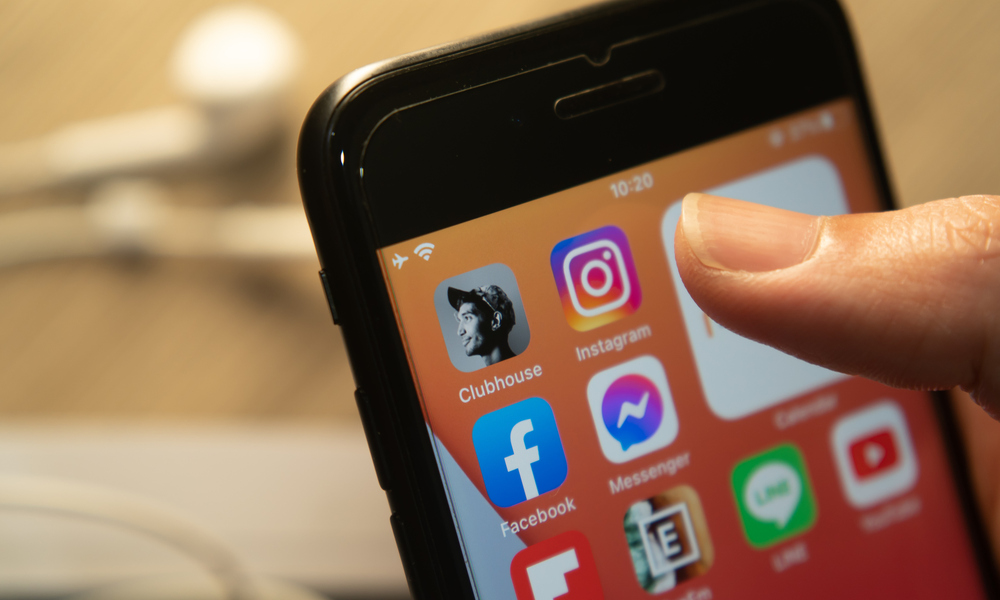
Clubhouse. (opens in a new tab) The most high-profile of recent social media apps, this tool (opens in a new tab) features breezy audio conversation, creating a level of intimacy missing from large social networks. (Other factors creating heat: The network was originally invite-only, iOS-only, and loaded with celebrities.) The concept is hot enough that both Twitter (opens in a new tab) and Facebook (opens in a new tab) have started working on competitors of their own.
Discord. (opens in a new tab) Akin to a more mainstream version of Slack, Discord first gained popularity in the gaming community because it allows conversations over voice, video, and traditional text chat. (Signifying its gaming roots: Its logo looks like a controller.) Despite initially being seen as niche, Discord has broadened its appeal, doubling in size during the pandemic (opens in a new tab) to more than 120 million monthly active users. That surge puts it on pace for growth similar to Snapchat (opens in a new tab) (265 million daily active users), Pinterest (opens in a new tab) (459 million monthly active users), and Twitter (opens in a new tab) (192 million daily active users).
Signal. (opens in a new tab) A desire for more privacy mixed with a growing concern about larger social networks has helped draw attention to this secure chat application, which broke through to mainstream audiences last fall. According to Fast Company (opens in a new tab), its success is partly due to a privacy policy update by one of its primary competitors, the Facebook-owned WhatsApp, that was unpopular with users because it allowed more data to be shared with third parties.
Caffeine. (opens in a new tab) Twitch is clearly the biggest player among live video-streaming networks, and YouTube’s live offerings are also popular, but the pandemic has helped raise up other players as well. One new entry to the field is Caffeine, formed by a team of former Apple executives (opens in a new tab) in 2018, which serves as a platform for what founder Ben Keighran calls “social broadcasting.” (opens in a new tab) Caffeine has attracted a slate of celebrities by offering a way for them to stream content directly to their audiences.
Planetary. (opens in a new tab) A big concern among social media fans is centralization, in part because of factors such as openness, privacy, and moderation. This concern has been driving the creation of alternative social network experiences, such as Mastodon. The brand-new Planetary, which launched to the public just last month, is an attempt to create a mainstream version of a social network built on distributed principles. Its founder, Evan Henshaw-Plath, was Twitter’s first employee. (Henshaw-Plath is also helping with a formative effort to decentralize Twitter (opens in a new tab).)
EarBuds. (opens in a new tab) An audio platform like Clubhouse, EarBuds encourages curators to share what they’re listening to with a broader audience. Founded by a former football player (opens in a new tab) and directly inspired by his experiences on the field, EarBuds and other similar tools could help bring back an intimacy lost in the digital era.
Text messaging. Bet you didn’t expect to see this here, did you? Well, texting is having a bit of a renaissance because of new tactics that could help organizations reach broader audiences. Recent tools such as Subtext (opens in a new tab), which works sort of as a Substack for texting, have emerged to take advantage of the broadcast capabilities and high response rates of text-based social media.
Clubhouse (top right) is winning some quick fans these days. (Wachiwit/iStock Editorial/Getty Images Plus)

Comments
Comments are for ASAE members. Learn more about comments on this site.
Log in to your member account or join ASAE!