
Article Membership 6 min read
The Innovators: Alliance for Women in Media Embraces Free Membership
Some might call it free membership—and they’d be right. But Erin Fuller calls her stroke of brilliance “radical inclusiveness,” and it’s helping the Alliance for Women in Media thrive.

Heads up: this content is over 5 years old, so some information may be out of date.
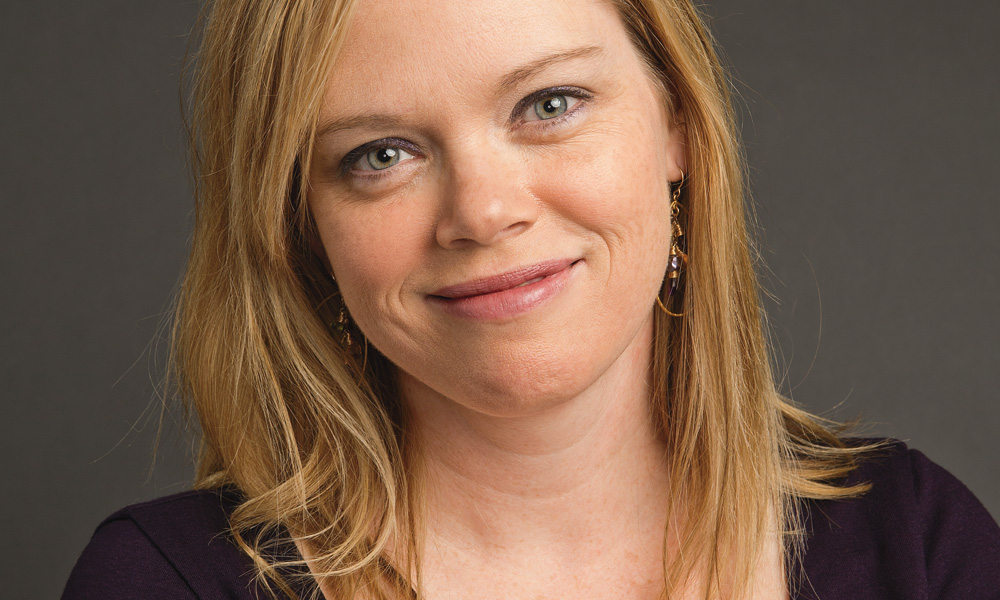
From a young age, Erin Fuller, FASAE, CAE, understood a thing or two about customer service. Her mother, the CEO of a small nonprofit, solicited young Erin’s help at health fairs and tradeshows. She would register participants, collect surveys, and hand out water. The service element stuck with her, and today, more than anything, she understands the needs of communities—and knows how to meet them and bring them into the fold.
In the short time that Fuller has served as president of Alliance for Women in Media (AWM), she has made sweeping changes in the association, yielding a more robust web presence, more streamlined communications, and a complete transformation of the membership structure, which—counter to tradition—eliminated annual dues for most members. Two years after the “freemium” model was launched, AWM enjoys better than 400 percent growth, expanding from 1,500 members in the paid structure to about 7,000 in the AWM community today.
“We are a media organization, and our members are influential, tech-savvy media professionals who work at places like Time Warner and Sony,” Fuller says. “If they have a lackluster experience in terms of communications, they won’t want to engage in the community.”
From Old School to Modern Cool
With the speed at which things move in the media world today, it should be no surprise that, to AWM, 2010 seems like eons ago. Early that year, Fuller was working as group president of strategy and innovation for Coulter Nonprofit Management (a position she still holds today), which manages AWM.
When I looked at membership from a business perspective, I thought, what if we just got rid of it?
“AWM was very much an old-school membership organization,” she says. “But really, what the organization does is recognition programs like the Gracies [annual awards honoring the best media programming created for women, by women, and about women], which drives about 65 percent of the overall revenue. When I looked at membership from a business perspective, I thought, what if we just got rid of it?”
Fuller says the goal was to increase AWM’s advocacy clout and make it more attractive for sponsorship dollars. She brainstormed with staff on various membership models, and at the end of the process, in July 2010, AWM asked her to become president. Her thought: “Oh, no. Now I have to implement this!”
But Fuller was well positioned to spearhead the revolution. She has worked in association management for two decades and is recognized as an expert on women’s economic empowerment. In executing the new membership model, she had strong support from the AWM board. Yet she insists the move wasn’t as risky as it might have seemed. “I say to people, ‘You might think I’m a genius, but it wasn’t that much money,’” she says. Membership dues represented about 10 percent of AWM’s total revenue, and she figured that they could easily replace that and devote more staff to some neglected areas, including the website.
Not long before Fuller arrived, the organization had changed its name from American Women in Radio and Television. In her first six months—in addition to the decision about membership—she nixed AWM’s print magazine, added an electronic newsletter called FastForward, relaunched the website, changed chapters to affiliates, and created a new logo—which happened in her first 30 days.
AWM Executive Vice President Amy Lotz, CAE, says there was some anxiety among staff members about all the changes, but they knew it was the right direction for an industry engulfed in change. One of the keys was concurrently strengthening the brand—through the logo and website, for example—and changing the membership. “It’s like [pulling off] a Band-Aid,” Lotz says with a laugh. “You have to do it quickly. The longer you drag it out, the more challenging it becomes.”
Valerie Blackburn, immediate past chair of the AWM board and head of finance for six CBS Radio stations in Los Angeles, says the change was a calculated risk. “People in their 20s and 30s aren’t used to paying to belong to something,” she says. “They don’t pay for Facebook or Twitter.” In retrospect, she says, implementing Fuller’s changes was “the best thing we’ve ever done.”
Restructuring Membership 101
In eliminating membership dues, AWM gave “community members” free access to the website and all AWM communications. Those who pay a $75 fee (versus dues of $110, previously) enjoy benefits such as the ability to vote for officers and purchase event tickets before other members. One of the most dramatic changes with the new business model was the shift away from an old-fashioned approach to data fields on membership applications. AWM had more than 24 of them; today there are five.
“We read studies that for each additional field, people are less likely to sign up,” Fuller says. “Our philosophy is radical inclusiveness. We want to include as many people as possible.” Since the information-gathering process was abridged, not once has Fuller wished they had more data.
The surge in membership led to an increase in awareness of the organization’s annual Gracie Awards. Applications increased by 26 percent over previous years, without any additional marketing. Increased cash flow from that event and new symposia (such as “Women’s Media Ownership” and “Digital Literacy and Girls”) in various cities have combined to make up for revenue lost through membership.
Two Years Later
Today, AWM sends out a weekly e-newsletter. The eclectic content ranges from updates about women advancing in electronic media to pop culture gems like the rollout of Media Barbie. Fuller feels strongly about not adding to the gridlock in members’ inboxes. “Our members are all mobile, and email is their life,” she says. “We promise we won’t bombard them.”
With its membership growth, AWM has broadened its reach. But more than ever, the association depends on its celebrity members—with hundreds of thousands of Twitter followers—to help spread the word. Katie Couric, for example, tweeted about an AWM panel that she moderated, and ESPN’s Hannah Storm tweeted that she was honored to receive her fourth Gracie Award.
Certainly, the economy remains a challenge, especially as it affects corporate giving. According to Fuller, it takes a lot longer these days to go from an introduction to a donation. She had hoped to reach projected contribution levels a year early—in 2012. But she says the tight fundraising environment has pushed that back to the initial plan, reaching her goals in 2013.
“All of us in the for- or nonprofit world have had a very difficult few years,” Blackburn says. “To that end, some people would have sat back and gone, ‘Whew. This was a bad year. Hope next year is better.’” She says Fuller and her team turned lemons into lemonade by, for instance, creating the event that Couric tweeted about, adding tens of thousands of dollars to AWM’s coffers in a short time.
“Under a different leader, we might still be talking about this, but with Erin we’re miles ahead,” Blackburn says. “She’s a force to be reckoned with, and I mean that in the best way. Without her, we’d still be languishing by the side of the road.”
Erin Fuller, FASAE, CAE of the Alliance for Women in Media (photo by Bill Cramer)

Comments
Comments are for ASAE members. Learn more about comments on this site.
Log in to your member account or join ASAE!