
Article Marketing / Communications 4 min read
Could Film Be the Medium for Telling Your Members’ Stories?
The Emergency Nurses Association found creative success with a documentary film about the lives of its members—and was even able to pivot its message after COVID-19 hit. It’s a script that other associations could find inspiration from.
Heads up: this content is over 5 years old, so some information may be out of date.
Emergency room nurses face a lot of challenges in their work—treating opioid overdoses, gunshot wounds, and other traumatic injuries. It’s a heavy job, and one that those nurses are on the front lines for.
And that was before COVID-19 dramatically changed the nature of their work.
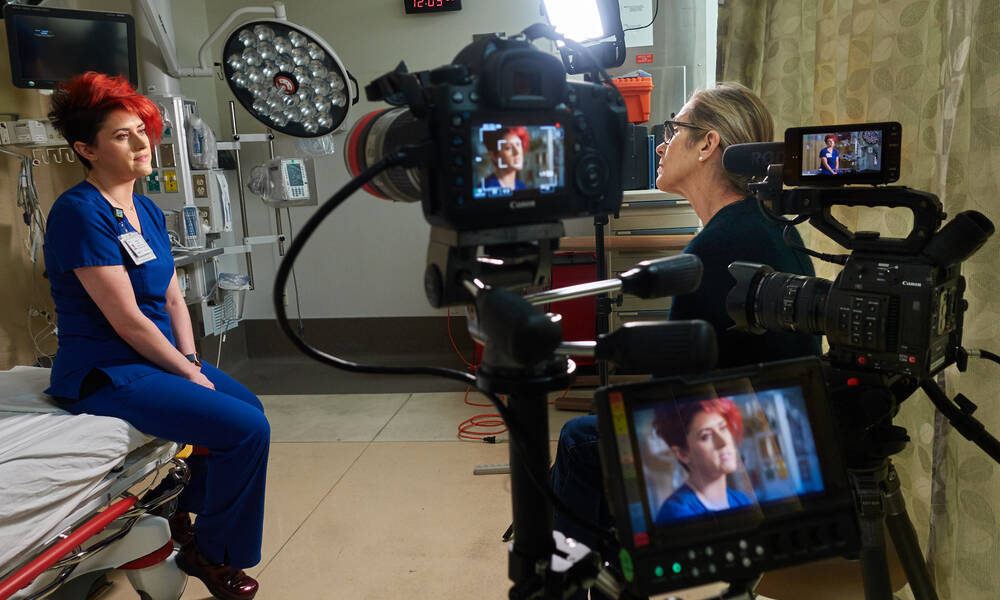
A new documentary feature funded with support from the Emergency Nurses Association (opens in a new tab), In Case of Emergency, depicts these conditions in an unflinching way, highlighting the difficulty, the adrenaline, and the emotional weight that comes with a role in the emergency room.
It’s a role that Terrence D. Sykes, ENA’s chief development officer and a producer of the film, said the association hoped to highlight for audiences outside of the field—especially given ENA’s 50th anniversary this year.
“We thought, it would be a great tribute to the emergency nurses, but a great eye opener for the community at large to see—to get a glimpse of what it is that happens every day, what they carry, what they do, and how they do it,” he said.
A Strong Creative Partnership
Working with director Carolyn Jones and producer Lisa Frank—a team that has produced multiple documentaries about nursing—ENA put its stamp on a film that shows the nursing industry in unvarnished action.
“We wanted to provoke; we wanted that emotion to be there,” Sykes said. “We wanted the tension at times to be there, and then, you know, there was joy at times.”
Sykes said that he and others who worked on the film offered input on the types of storylines and messages they wanted in the film—though Jones kept the final cut.
COVID-19 Changes
Documentaries are often changed significantly by their environment—as was the case with In Case of Emergency.
“We were supposed to premiere this in May, and the obvious thing of COVID happened,” Sykes said. “Theaters were closed, and so now we’re thinking, ‘Oh my goodness, what are we going to do?’”
Ultimately, the film adapted with the times. While the bulk of the footage dates to before COVID-19, approximately 15 minutes was added at the beginning and end that focuses on the pandemic, bringing back one of the primary subjects of the film, Cathlyn Robinson, a clinical nurse specialist at St. Joseph’s University Medical Center in Paterson, New Jersey.
And instead of premiering in theaters, the film gained an online release (opens in a new tab). The creators took advantage of this shift to hold a virtual live screening, complete with a Q&A session (opens in a new tab) with many of the main figures involved. More than 8,500 people took part.
Could Your Association Be in Pictures?
ENA’s goal of giving an inside look of its field to people who may only get a limited view of an emergency room was designed to help the public better understand what its members do.
The board showed the vision, courage, and excitement of creating something that had the potential to be as transformational as we believe it will be.
“It certainly allows you to broaden your message, broaden your visibility in a way that the normal run rate of marketing and doing what you do in associations aren’t really seen,” he explained.
He says that other associations could borrow inspiration from this strategy, even if the final result isn’t a full-length feature film, given the financial investment. In ENA’s case, Sykes worked with Jones to formulate a plan to show to the association’s board, which bankrolled the film through a fund designed for innovative projects that support ENA’s mission outside of its traditional budget.
“The board showed the vision, courage, and excitement of creating something that had the potential to be as transformational as we believe it will be,” he said. He noted that a key aspect of the final result was strong support from ENA’s board, along with a collaborative relationship with the film’s creative talent.
“This couldn’t have happened if our board didn’t see the vision in providing for someone like Carolyn to go out and create something that we think is important,” he said. “But you know there’s a lot of trust, because she has the creative independence to do this as she sees fit. So you have to have a partner that you trust.”
Nurse Michelle Lyon, shown with Carolyn Jones, the director of “In Case of Emergency.”

Comments
Comments are for ASAE members. Learn more about comments on this site.
Log in to your member account or join ASAE!