
Article Marketing / Communications 3 min read
Technology Pro Tip: Get Ready for a Google Analytics Sunset
A significant upgrade is coming to Google Analytics, and it could affect the way you track your data. Here’s what users should understand.
Heads up: this content is over 2 years old, so some information may be out of date.
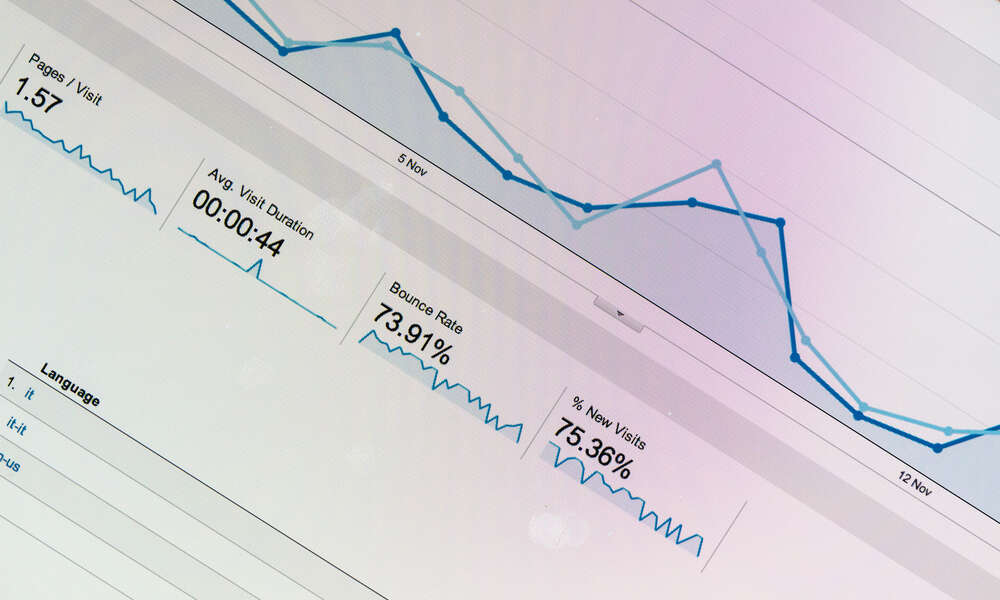
No, Google Analytics—a key element of many organizational data strategies—isn’t going away.
But starting in mid-2023, it will look a lot different for the majority of people. And if you’re not keeping it on the radar, it could throw your data teams completely off-whack.
Here’s what you need to know.
What’s Changing?
Last month, Google revealed that it would be sunsetting its Universal Analytics tool, which makes it possible to measure websites, mobile apps, and other sources of data.
In its place: Google Analytics 4, originally released as a beta in 2019. It’s essentially a top-down rewrite of the existing platform, but the new platform is no longer directly compatible with Universal Analytics’ data infrastructure—something that has slowed the uptake of Google Analytics 4. But Google has decided to push users to upgrade, setting a hard deadline for the change in July 2023.
The driving factor is a desire to increase privacy for end users—something Google Analytics 4 was built to do, wrote Russell Ketchum, Google Analytics’ director of product management, in a blog post (opens in a new tab).
“Though Universal Analytics offers a variety of privacy controls, Google Analytics 4 is designed with privacy at its core to provide a better experience for both our customers and their users,” Ketchum wrote. “It helps businesses meet evolving needs and user expectations, with more comprehensive and granular controls for data collection and usage. Importantly, Google Analytics 4 will also no longer store IP addresses.”
How This Will Affect You
Simply put, your analytics are about to change—a lot—and it’s a significant enough change that you might need to plan ahead for it. (It’s also a very controversial change (opens in a new tab) among website operators, as you might imagine.)
During a recent webinar (opens in a new tab) on Google Analytics, Dan Scheeler, CAE, executive vice president of client engagement with Results Direct, noted that the way Google Analytics works with the new version is fundamentally changing.
“Google Analytics 4 has thrown out things like page views in favor of events,” Scheeler said during the presentation. “Everything is an event in Google Analytics.”
This will create a bit of a learning curve, so having a plan for it will help ease the process. On the plus side, the design of the new application is visually similar, and the new setup does simplify some organizational processes that once required custom setups. On the downside, it measures things differently, which will alter how analytics reports are measured and may affect historical stats.
One challenge to consider: There will be no way to move data from the Universal Analytics software into GA4. It’s going to be a clean (if painful) break.
What You Can Do Now
There are a handful of options here—you could always move to another analytics tool if you so choose (two examples are Plausible (opens in a new tab) and Heap (opens in a new tab)), and you can set up a plan for long-term upgrades.
If you do plan to set up Google Analytics 4 now, it is possible to install both Universal Analytics and GA4 on your website, so you can get an idea of the impact and differences in the two analytics suites ahead of the big changeover.
The one thing you can’t do is nothing—so get ready for what is destined to be an uncomfortable shift.
(lelepado/iStock Unreleased)

Comments
Comments are for ASAE members. Learn more about comments on this site.
Log in to your member account or join ASAE!