
Article Organizational Strategy 6 min read
Associations Built to Last 100 Years
Heads up: this content is over 5 years old, so some information may be out of date.
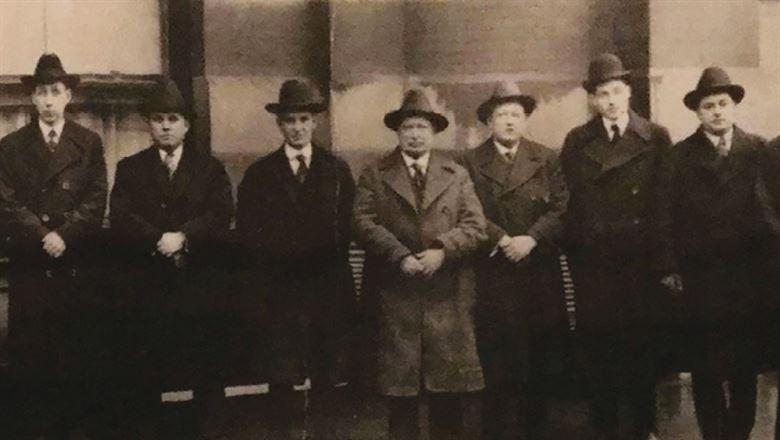
A lot can change in 100 years, even for things that are built to last a century.
Consider, for instance, the walls in your home or office: wall frame, insulation, drywall, paint. All stuff in the background that you don’t even notice most of the time. But as Steven Etkin, executive vice president and CEO of the Association of the Wall and Ceiling Industry, explains, there’s been a surprising amount of transformation in the seemingly straightforward business of wall construction. Plaster and lath versus drywall. Union versus nonunion contractors. Builders versus suppliers.
All this has posed an ongoing challenge for AWCI to embrace change, manage conflict, invite new people into the fold—and then keep them there, decade after decade. “The industry was very, very factionalized early on,” says Etkin. “And people who are not in the construction industry don’t really realize how factionalized it is even today.”
For associations like AWCI, which celebrated its centennial last year, surviving for 100 years and more has largely depended on three factors:
- a willingness to rethink and expand who belongs in the organization
- a capacity to explore new ideas
- a disciplined financial strategy
Stubborn focus on those themes has helped AWCI increase its general fund from a few hundred thousand dollars when Etkin took the reins in 1995 to $11 million today. “I’m not the guy that sits around waiting for anybody to come up with ideas,” he says.
It’s a useful survival mantra for any association of any age.
Strategic Expansion
When what is now the Cedar Shake and Shingle Bureau (CSSB) launched in 1915, it represented a niche within a niche: West Coast lumber manufacturers who made shingles. In its first five decades, the group expanded to include more members, for a time taking on the awkward name of the Red Cedar Shingle and Handsplit Shake Bureau.
“Can you imagine answering the phone?” says Lynne Christensen, CAE, the association’s CEO.
CSSB adopted its less tongue-twisting name in 1988. Christensen notes that its history has been defined in large part by bringing in similar groups to strengthen its position, while not straying from its core mission.
“What we’ve done is merged and amalgamated,” she says. “There were probably three other shake- or shingle-type associations over the years that we’ve merged with, but the basic product line has not changed. We’re an association with members using machines that are 75 to 100 years old and still in production.”
Similarly, the Association of Chamber of Commerce Executives has broadened its scope since its launch in 1914 as a group of 50 commerce secretaries. In time, it grew into a national organization, the American Chamber of Commerce Executives. But as more global members began taking an interest in ACCE’s services, the association did what many global-minded groups have done and embraced expansion. It finally dropped the “American” from its name in 2014.
“For most of our history, we really were a U.S.-based organization,” says CEO Sheree Anne Kelly. “But we realized that there is a need for this kind of service at chambers of commerce all over the world—there are thousands of them. So we’ve opened up our membership to non-U.S. chambers, and we’ve had to adjust what kinds of services and resources we can deliver.”
The American Association for Anatomy is currently undergoing a similar transformation: In January its membership voted to change its name from the American Association of Anatomists to attract more people within the discipline and expand its membership base. It’s only the group’s second name change since its founding in 1888.
“Even though [the name change] seems small, it’s huge,” says AAA Executive Director Shawn Boynes, FASAE, CAE. “‘Anatomy’ includes cell biology, developmental biology, neuroscience, paleontology, and we could even reach as far as the allied health sciences—physical therapists, nurses, physician’s assistants. They’re not on our radar right now. Those are some of the targeted groups that we can invite to come and play in the sandbox with us.”
Openness to Innovation
Even before that name change, Boynes says, AAA has long looked for ways to adapt its structure to the changing face of the discipline. One crucial decision came in 1999, when it decided to create dedicated board seats for students and postdoctoral trainees. The move, Boynes said, helped the association’s leadership better connect with its emerging professionals.
“A lot of times, organizations realize they have a demographic of membership that’s not being served or not being heard, but they talk about that group or constituency without really getting firsthand feedback from them,” he says. “And the best way to leverage that is to have those people be part of leadership.”
Meanwhile, NASPA, which represents student-affairs professionals in higher education, has taken a similarly expansive and inclusive approach to governance as its membership has diversified. Its board now includes representatives from universities, community colleges, and international members, as well as a position focused on equity and inclusion issues. (See “Owning Your Past, Improving Your Future,” this page.)
NASPA has also expanded voting rights within membership. “In the early iterations of our association, the only people that got to vote were at top of the organization,” says CEO Kevin Kruger. “Now everybody votes. So there’s a philosophy of equity that’s built in that counters any kind of elitism that might have existed in the early days.”
For CSSB’s Christensen, the most effective innovations have been at the product level. She says her association has thrived in part because it’s supported its membership as it developed new technologies for longer-lasting, more fire-resistant products. Its Certi-label designation for those technologies has become an industry standard and imprimatur of quality for the association and its members.
“It shows the ability of members to work together and plan for the future, because they saw this was a consumer need and want,” she says.
Financial Stability
No money, no mission, the line goes. And groups like AWCI have benefited from expanding their member base to improve the bottom line. Bringing manufacturers into the fold, Etkin says, has been a boon for both membership and budget.
“They’re strategic partners in the industry, and you can’t be a successful contractor if you can’t work well with your manufacturers and suppliers,” he says. “And it’s also a way of broadening the income stream for AWCI.”
Beyond creating a solid financial footing, successful associations have also looked to invest for the future. AAA’s Boynes is proud of the organization’s $10 million in reserves on a $2 million operating budget. But rather than let those reserves sit in investments, it’s put some of those resources to work among membership through its Innovation Program, which provides grants of up to $50,000 for projects that connect to AAA’s strategic plan.
“That’s not something we would ever be able to do if we didn’t have the strength of a very healthy reserve,” Boynes says. “This organization has done a good job managing and building those reserves. Now we’re trying to leverage them to keep the organization going as well as stay future-focused.”
That commitment to innovating within the mission is a hallmark of many century-old associations. When NASPA was exploring its archives in advance of its centennial, Kruger took note of the association’s changes. But he noticed a certain consistency, too.
“One of the things we discovered was there was a fair amount of stickiness or persistence on key issues that were part of why we were founded as a profession and as an association,” he says. “And they’re still compelling today.”

Comments
Comments are for ASAE members. Learn more about comments on this site.
Log in to your member account or join ASAE!