
Article Marketing / Communications 6 min read
The Innovators: Let’s Talk With My Energy Truth
The Colorado Oil and Gas Association’s My Energy Truth campaign is a model of advocacy in the social media age.
Heads up: this content is over 5 years old, so some information may be out of date.
Facts aren’t what they used to be. Before the age of partisan TV networks and heated website comment threads, data from established authorities—polling firms, government agencies—carried, well, authority.
Changing the conversation from the industry to how it’s really about the public and how the public uses energy. That was really the impetus for the campaign.
Today, anybody with an internet connection and a strong opinion can reject facts out of hand. This is a common headache for journalists and academics. It’s no different for associations, particularly those that work in public policy. People may want facts about what your organization is lobbying for, but many might not care to hear it, and they also want a chance to sound off themselves. To which the Colorado Oil and Gas Association has said: Let ’em.
Last spring, Jill McClure, CMP, CAE, chief operating officer at COGA, took part in a quarterly strategy session with the association’s management team. Regulations and voter initiatives related to the environment—particularly the controversial issue of hydraulic fracturing, commonly called “fracking”—have been a leading concern for COGA. McClure’s idea was to take advantage of the strong public sentiment around these issues and encourage discussion and sharing.
“Changing the conversation from the industry to how it’s really about the public and how the public uses energy,” McClure says. “That was really the impetus for the campaign.”
The campaign that emerged, called My Energy Truth, is a social-media-driven awareness project built around a host of tools, including videos, Twitter, Facebook, and Pinterest. It also includes a pledge people are encouraged to sign regarding responsible energy use, engagement in energy discussions, and “avoiding fear and hyperbole-driven misinformation.” It’s a tough subject handled with a light touch: McClure and COGA’s effort is a lesson in managing the message while simultaneously promoting openness.
Diverse Voices
At the heart of the My Energy Truth campaign are five videos, featuring a diverse set of voices talking about how they address conservation generally and misperceptions about the oil and gas industry. One is a lawyer practicing oil and gas law in Denver. Another splits his time between working on a rig and working at a tattoo parlor. (COGA found him through a Craigslist ad when they were looking for participants in the campaign.) Two others discuss their work in the industry, and the fifth describes himself simply as a 23-year-old small-business owner in Colorado.
“We pulled in a variety of people,” McClure says. “Some are connected to the industry, some are not. I was looking for people who were different ages, different backgrounds, really representing a spectrum with different perspectives.”
The campaign was pulled together quickly: The first strategy meeting took place in May, and the videos were ready in time for COGA’s Rocky Mountain Energy Epicenter conference in August. The theme of the conference was “Technology, Economy, and the Public,” and its promotional materials stressed the need to “face the reality of unprecedented public concern, misinformation, and attention” the industry receives.
Much of COGA’s advocacy work focuses on fracking, a drilling procedure for natural gas that many environmentalists claim pollutes waterways. To make its case that fracking is safe, COGA has published white papers, released PSAs (including one recorded by Colorado Governor John Hickenlooper), and advocated against statehouse bills it says would overly regulate the industry. COGA fiercely lobbied against a ballot initiative in the Colorado town of Longmont to ban fracking, but the ban passed decisively.
Longmont is top-of-mind for Ken Wonstolen, COGA’s general counsel, when he talks about the My Energy Truth campaign. “One of the older and more traditional ways of looking at public policy is that if you can get the facts out, people will make rational decisions,” he says. “I think that’s changing. People aren’t even agreeing on what that facts are, whether it’s climate change or anything else. It’s becoming more of a challenge.”
My Energy Truth’s approach is to favor a conversation about energy use over a debate over the details of fracking. The campaign’s Pinterest board, for instance, mixes infographics about Americans’ energy use with visualizations of the fracking process and conservation suggestions.
“We’ve looked at Pinterest initially as a design board for how we want our houses to look, or recipes, or that sort of thing,” McClure says. “But in reality, Pinterest can be used for any kind of display of action. We’re trying to empower people to take action, and by sharing on Pinterest, people can see, ‘This is what I can do. This is how I can take action when it comes to my own energy use.’ ”
Long-Term Impact
My Energy Truth was produced on a relative shoestring: McClure estimates the campaign’s costs at approximately $6,000 in addition to staff time. And though it came online too late to have an effect in a contentious issue like the Longmont initiative, a campaign like My Energy Truth can have long-term benefits. Amy Showalter, founder of advocacy consulting firm the Showalter Group, says a video-based campaign is a good baseline, especially when it focuses on the emotional responses of people engaged in your mission. But, she adds, videos need to be part of a larger context. “You have to be realistic about what it can do, because your opponents are doing it, too,” she says.
To expand COGA’s message and shift public opinion—especially in a way that allows the public to take ownership of the conversation—striking up a broader discussion in a variety of media can be effective. “Let’s face it: Lawmakers act according to public opinion,” Showalter says. “Trying to make the public more aware, so that when fracking regulations come up, legislators aren’t as afraid to vote with a particular organization—that’s huge.”
Being that kind of discussion-starter is what McClure wants for My Energy Truth.
“I think that social media really is the best forum for this type of conversation and this kind of social movement to happen,” she says.
“It’s a shift away from that traditional communications style—here’s what we want to you think—to, here’s a conversation we’re having and you can join in, and here are some concepts for us to think about and discuss, and things we can do together. It’s really a shift from an old-school style of communication to really embracing the social media world that we live in now.”
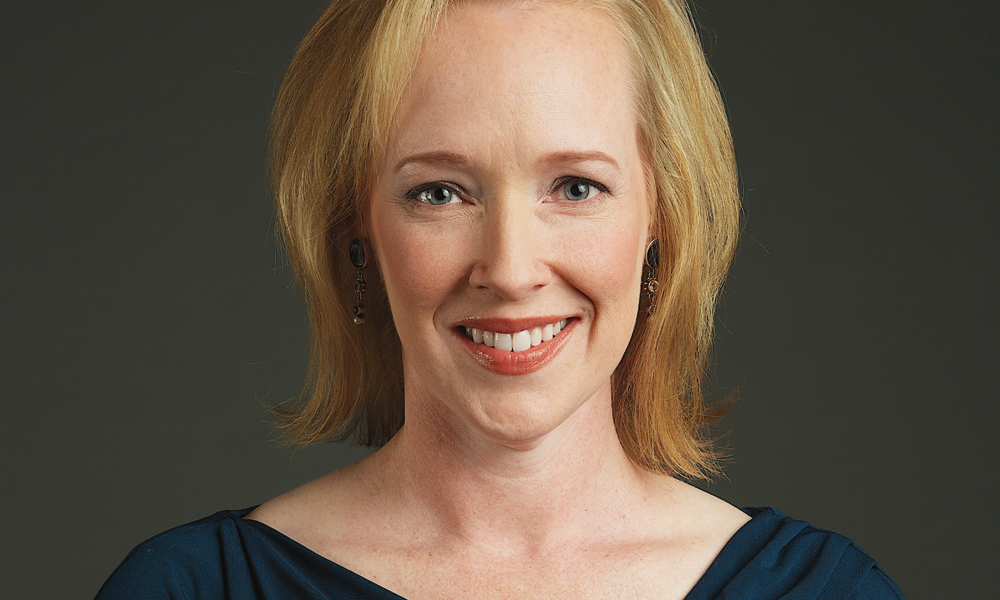
Jill McClure, CMP, CAE of the Colorado Oil & Gas Association (Photo by John Johnston)

Comments
Comments are for ASAE members. Learn more about comments on this site.
Log in to your member account or join ASAE!